Clean Air Blog

White Dehumidifer Air Purifier Combo Unit with condensation on window in background

Clean Air Blog

Air Purifier Dehumidifier Combos: Worth It? (NZ Guide)

on May 28 2026
If you're dealing with a damp, musty home and also want cleaner air, it's natural to wonder whether one device can handle both. Combo air purifier dehumidifier units exist, and they sell on the promise of convenience: less clutter, one purchase, two problems solved. The reality is more complicated. Both functions require very different internal hardware, and combining them in one box means compromises on at least one side. This doesn't mean combo units are useless, but it does mean you should understand what you're trading off before deciding. This article explains: How air purifiers and dehumidifiers work differently Why combining them into one unit creates trade-offs What the combo units available in NZ actually look like in terms of specs When a combo might make sense, and when two separate devices are the better call Quick Summary: Air Purifier & Dehumidifier Combos Air purifiers and dehumidifiers solve different problems with very different technology inside Combining them into one unit means compromising on at least one function Most combo units on the NZ market have weak CADR figures relative to their price High-end combos are expensive; a better-performing separate purifier and dehumidifier can be bought for less For most homes, two focused devices will outperform one combo unit at the same or lower cost If space is genuinely limited and your needs are modest, a high-end combo can work for a small room Table of contents 1. Why these two devices are more different than they look 2. What the NZ market actually looks like 3. The case for two separate devices 4. When a combo unit might actually make sense 5. Does running a dehumidifier help air quality at all? 1. Why these two devices are more different than they look It's easy to assume that because both a purifier and a dehumidifier deal with air, they'd combine neatly. In practice, the hardware they rely on is almost completely different. An air purifier works by pulling air through a filter, usually a HEPA filter for particles and a carbon filter for odours. The key performance metric is CADR: Clean Air Delivery Rate, measured in cubic metres per hour. More CADR means more clean air delivered. The filter does all the work, and the fan speed determines how much air moves through it. A dehumidifier works by chilling a surface inside the unit so that water vapour in the air condenses on it, like a cold glass on a humid day. That condensed water drains into a tank. The mechanism involves a compressor and refrigerant coils, which are bulky and generate heat. The key metric is how many litres of moisture it can remove per day. These two mechanisms have almost no shared components. To put both in one box, manufacturers have to fit a compressor, refrigerant coils, water tank, fan, and a filter system into a single casing. Something has to give, usually the fan size and filter surface area, which directly affects CADR. A dehumidifier compressor and an air purifier filter system have almost nothing in common. Fitting both into one box means compromising the size of each, and CADR is usually what suffers most. 2. What the NZ market actually looks like We looked at the combo units available in New Zealand and compared them on the two metrics that matter most: CADR for air purification and litres per day for dehumidification. As a reference point, our entry-level air purifier, the Sqair, has a CADR of 315 m³/h and is priced at $349.99. A standalone dehumidifier with decent moisture removal starts at around $200 to $300 and removes 10 to 25 litres per day. Device Price (NZD approx) Moisture removal (L/day) CADR (m³/hr) Phillips Series 5000 ~$1,200 25 270 Breville Smart Dry 2-in-1 ~$600 21 195 Smart Air Sqair Purifier $350 n/a 315 Standalone Dehumifier ~$200 - $300 up to 25 n/a High-end combo units The Philips Series 5000 sits at the top of the market at around $1,200. It offers moisture removal of 25 litres per day and a CADR of 270 m³/h. That CADR is reasonable but still lower than the Sqair, and the price is about four times as much. The Breville Smart Dry 2-in-1 comes in at around $600 and removes 21 litres per day, with a CADR of around 195 m³/h. That's roughly equivalent to running a Sqair on medium speed, at twice the price. Budget combo units Budget models from brands like Sheffield and My Genie don't publish CADR figures at all. Given their small size and modest dehumidification performance (some remove as little as 750 mL per day), it's fair to assume air purification performance is limited to the smallest spaces. Without published CADR, you're essentially buying blind on the air purification side. 3. The case for two separate devices When you buy two separate devices, each one is built to do its job well. A standalone air purifier has more filter surface area, a larger fan, and higher CADR for the price. A standalone dehumidifier has a properly sized compressor and water tank for meaningful moisture removal. There are also some practical advantages worth thinking about: Flexibility. You don't need to run both functions all year. In a damp NZ winter you might run the dehumidifier constantly and the purifier as needed. In a dry spring, you might switch that around. Two devices let you do this without any trade-offs. Replacement parts. Combo units can leave you stuck if replacement filters become hard to source, a common complaint from owners of discontinued models. With separate devices, you're not reliant on one manufacturer keeping both components available. One point of failure. If a combo unit breaks, you lose both functions. If a standalone purifier or dehumidifier needs servicing, you still have the other one running. More options. With separate devices, you can match the right purifier to your room size and needs, and the right dehumidifier to your moisture problem. Combo units force a compromise. Two focused devices will usually outperform one combo unit at the same or lower total price. The trade-off with combos is real, and it shows up in the specs. Smart Air SA600: Good coverage for living spaces and larger bedrooms Key features: 508 m³/h CADR on high; handles rooms up to around 60 m² Quieter than you'd expect: 16 dB on Speed 1, meaning you can leave it running overnight in a bedroom without noticing H13 HEPA filter captures dust, pollen, mould spores, and fine particles including PM2.5 Carbon filters included as standard for odour reduction Five speeds give flexibility to run quietly for sleep or at higher output when you need to clear the air fast No Wi-Fi or app required; simple controls, nothing to configure Shop Smart Air SA600 4. When a combo unit might actually make sense To be fair, there are situations where a combo unit is a reasonable choice. If you have a very small room, say a single bedroom or a laundry, and you're genuinely short on floor space, a high-end combo might be a practical compromise. The Philips and Breville units do provide meaningful moisture removal alongside decent (not outstanding) air purification for a smaller area. If the alternative is having no dehumidifier at all because you can't fit or afford two separate devices, a combo unit with published CADR figures is still better than relying on a budget purifier and no dehumidification. The decision largely comes down to room size and what you're prioritising. For most people with a typical NZ home, two separate devices are the better outcome. 5. Does running a dehumidifier help air quality at all? One thing worth understanding: dehumidifiers do contribute to air quality indirectly, even without a HEPA filter. Mould needs moisture to grow. By keeping relative humidity below around 60%, you reduce the conditions that let mould establish itself and release spores into the air. So a dehumidifier helps prevent a particle problem from developing, even though it doesn't filter existing particles. That said, if there's already mould present in your home, a dehumidifier and an air purifier together won't fix the underlying issue. The mould source needs to be physically removed and the moisture problem addressed at the source (leaks, poor ventilation, structural dampness). An air purifier will help filter mould spores that are airborne in the meantime, but it's not a long-term substitute for fixing the source. A dehumidifier helps prevent mould by removing moisture from the air. An air purifier helps filter mould spores that are already airborne. They complement each other, but neither replaces dealing with the source. Wrapping up: Combo or separate? For most NZ homes, two separate devices deliver better results and more flexibility than a single combo unit. A combo unit requires both mechanisms to share one casing, which limits the fan and filter size, directly affecting CADR Most combo units on the NZ market are priced significantly higher than equivalent standalone devices High-end combos (Philips, Breville) perform reasonably for small rooms but are expensive relative to what you get Budget combos without published CADR figures offer no real way to assess air purification performance Two separate devices give you flexibility, better performance per dollar, and independent control of each function A combo unit can make sense if space is very limited and your needs are modest for both functions Simple, effective HEPA air purifiers for NZ homes These purifiers focus on what actually matters: strong CADR, honest specs, and HEPA filtration that handles particles well. Pair with a standalone dehumidifier if moisture is also an issue. See Product See Product Do combo air purifier dehumidifier units work? Yes, but with trade-offs. The best units on the NZ market (Philips, Breville) offer reasonable performance in both functions, but their CADR figures are lower than you'd get from a comparably priced standalone purifier. Budget combo units generally don't publish CADR at all. What's better: a combo unit or separate devices? For most people, two separate devices will outperform a combo unit at the same or lower total cost. You get stronger air purification, better moisture removal, more flexibility, and the ability to replace parts independently. Can an air purifier help with mould? It can filter mould spores that are already in the air, which helps reduce what you're breathing. But it won't fix the underlying moisture problem that's causing mould to grow. That needs to be addressed at the source. Does a dehumidifier improve air quality? Indirectly, yes. By keeping humidity below around 60%, you reduce the conditions that allow mould to develop, which keeps spore counts lower over time. A dehumidifier doesn't filter particles though; that's what a HEPA purifier is for. What CADR should I look for in an air purifier? A useful rule of thumb: multiply your room size in m² by 7.5 to get a minimum CADR target for about 3 air changes per hour. So a 20 m² bedroom wants at least 150 m³/h CADR. Running the purifier at a comfortable speed on a larger unit often beats running a smaller unit flat out. Can I run an air purifier and dehumidifier at the same time? Yes. They don't interfere with each other. Running both together is actually a good approach in damp conditions: the dehumidifier tackles moisture and reduces mould risk, while the purifier filters what's already airborne. Why don't some combo units list their CADR? CADR is an independently verifiable performance standard, and publishing a weak figure is commercially awkward. If a unit doesn't list CADR, it's usually because the number wouldn't stack up well compared to standalone purifiers. Relevant Articles: The Best Air Purifiers in New Zealand: 2025 Comparison Read more Ionisers Explained: Why We Don’t Use Them (and Why Some Brands Do) Read more The Misleading Room Size Claims of Air Purifier Brands Read more
Smart Air SA600 air purifier with bedside lamp shining on it next to a bed with pink wall in background

Clean Air Blog

Air Purifiers for Sleep: What Actually Matters (NZ Guide)

on May 28 2026
A lot of people start thinking about air purifiers after a run of bad nights. Waking up with a blocked nose, dry throat, or itchy eyes is a reasonable prompt. The air in a closed bedroom can build up particles throughout the day and evening, and when you shut the door and go to sleep, those allergens and fine particles don't just disappear. Running a HEPA purifier in your bedroom overnight can genuinely help, but there's a practical catch: if it's too loud, you'll just turn it off. The goal is finding something that actually keeps the air clean at a speed quiet enough to sleep through. This guide walks through how to think about that tradeoff. This guide explains: Why bedroom air quality matters overnight (including a note on CO2) The noise versus cleaning power tradeoff How to size a purifier for your room How the Sqair and SA600 compare for bedroom use Practical tips for overnight use Quick Summary: Air Purifiers & Sleep Fine particles like dust, pollen, and pet dander stay airborne in a closed bedroom overnight Aim for noise under 30 dB at the speed you'll actually run it on CADR at a quiet speed matters more than peak CADR at full power A larger purifier on low is often quieter and more effective than a smaller one on high No display lights is worth prioritising, as they're more disruptive in a dark room than most people expect Table of contents 1. Why bedroom air quality matters overnight 2. The core tradeoff: noise versus cleaning power 3. Sizing: how much airflow does a bedroom actually need? 4. The Sqair and SA600: how they compare for bedrooms 5. Don't overlook the lights 6. A note on white noise 7. Practical tips for overnight use 1. Why bedroom air quality matters overnight The bedroom is one of the best places to run a purifier consistently. You're typically in there for 7 to 9 hours with the door closed, breathing the same air the whole time. During the day, dust, pollen, pet dander, smoke particles, and other fine particles make their way into your home. They settle, get stirred up, and circulate. When you close the bedroom door for the night, a lot of that is still floating around in the air. It doesn't disappear just because you're asleep. For people with allergies, hayfever, dust sensitivity, or pets that come into the bedroom, this is often when symptoms are at their worst. A HEPA purifier running overnight gradually reduces the background level of those particles. Many people notice the difference within a few nights, though results do vary and it won't fix underlying issues. A note on CO2: There's another overnight air quality factor worth knowing about, even though an air purifier can't help with it. In a closed bedroom, CO2 levels build up from your breathing and can climb well above 1000 ppm by morning. At those levels, some people notice poorer sleep quality or that groggy, stuffy feeling on waking. An air purifier won't reduce CO2, as it doesn't bring in fresh air. The fix for CO2 is ventilation: a cracked window or door is usually enough to keep levels reasonable. The upside is that if you're ventilating overnight, a purifier is a good companion. It helps filter whatever particles come in with that fresh air, so you're not trading one problem for another. It's not a cure for anything. But running a purifier alongside good ventilation covers both bases: fresher air and fewer particles. Dust, pollen, and pet dander don't disappear when you go to sleep. In a closed bedroom, they stay airborne for hours. A purifier running overnight keeps working while you rest. 2. The core tradeoff: noise versus cleaning power Here's where most people run into trouble. A purifier might be rated for your room size, but that rating is typically based on running at higher speeds. Drop it to a quiet, sleep-friendly speed and many units deliver significantly less airflow, sometimes not enough to make a meaningful difference. So you end up choosing: run it loud enough to actually clean the air, or run it quietly and hope for the best. The better solution is a purifier with enough CADR at a low speed to clean your bedroom properly, so you don't have to choose. That's usually where stepping up one model size pays off. A larger unit running on low delivers more airflow than a smaller one on medium, and does it more quietly. Under 30 dB is the general target for sleep. A quiet room typically sits around 30 to 35 dB. Below 30 dB is whisper-quiet, and most people can't pick it up over ambient room noise. A larger purifier running quietly on low often cleans more air than a smaller one running flat-out, and you won't hear it. 3. Sizing: how much airflow does a bedroom actually need? The most useful way to think about this is air changes per hour (ACH): how many times the purifier can cycle through the full volume of your room each hour. For a bedroom, 3 or more air changes per hour is a reasonable target. It keeps particle levels down through the night without needing the unit on high speed. A rough rule of thumb: multiply your room size (m²) by 7.5 to get a minimum CADR to aim for. Room Size Minimum CADR for ~3 ACH 9m² ~65m³/h 12m² ~90m³/h 15m² ~115m³/h 20m² ~150m³/h 24m² ~180m³/h The key thing to check is whether a purifier can hit that CADR at a speed that's also quiet enough to sleep through. If it only reaches your target on medium or high, it's probably not the right fit for overnight use. One thing worth knowing when comparing purifiers: it's common for manufacturers to quote their headline CADR figure at full speed, and their noise figure at the lowest speed. Those two numbers never apply at the same time. So a purifier that looks quiet on paper might only achieve that noise level when it's barely moving any air, and the impressive CADR might only apply when it's running loud. It takes a bit of digging to find out what a unit actually delivers at a quiet, sleep-friendly speed. Which is why we publish the full figures for every speed setting across our range. 4. The Sqair and SA600: how they compare for bedrooms We've kept this focused on two models, the Sqair and the SA600, as they're the best fit for most bedroom situations. Smart Air Sqair The Sqair is a simple 3-speed purifier with an H12 HEPA filter and carbon included as standard. For smaller bedrooms up to around 9m², the Sqair on low hits 3 air changes per hour at a near-silent 23 dB. For bigger rooms you'd need to run it higher, and 43 dB on medium is audible, especially at night. A solid option if your bedroom is on the smaller side and budget is a factor, or you don't mind some white noise. View The Sqair Speed CADR Space Cleaned (3x/hour) Noise Low 65m³/h 9m² 23dB Med 180m³/h 24m² 43dB High 315m³/h 43m² 52dB Smart Air SA600 The SA600 has 5 speeds and a dual-inlet design, giving it considerably more range than the Sqair. Speed 1 runs at just 16 dB, below what most people can even perceive in a quiet room, while still delivering enough airflow for bedrooms up to around 18m². Step up to Speed 2 for more cleaning power with barely any added noise. For most NZ bedrooms, it's the more versatile pick. Quiet enough on low for sleep, and plenty of headroom for daytime use including in larger areas like living rooms. View The SA600 Speed CADR Space Cleaned (3x/hour) Noise Speed 1 125m³/h 18m² 16dB Speed 2 180m³/h 24m² 28dB Speed 3 240m³/h 32m² 34dB Speed 4 320m³/h 43m² 41dB Speed 5 508m³/h 68m² 51dB 5. Don't overlook the lights It's a small detail, but display lights and indicator panels can be more disruptive in a dark bedroom than you'd expect. Most of our purifiers have no lights or displays at all. The SA600 does have a small indicator panel, but it includes an auto do-not-disturb mode that switches all lights off after two minutes. So once you've set your speed and settled in, there's nothing left to disturb the room. If you're comparing other brands, it's worth checking whether the display can be fully switched off, as many can't. 6. A note on white noise Some people actively like a low hum (like a fan) in the room overnight. It can mask other sounds and become part of a sleep routine. If that sounds like you, you have more flexibility on noise, and running the purifier a step up from its lowest speed can be worth it for the extra airflow. If you're a light sleeper or noise-sensitive, the sub-30 dB figures are the ones to focus on. 7. Practical tips for overnight use Start it before bed. Running the purifier for an hour before you sleep means it's already made a dent in particle levels by the time you're in the room. Then drop it to a quiet speed for the night. Keep the door mostly closed. The purifier works best when it's cleaning a defined volume of air rather than an open-ended space. Placement matters a little. Somewhere with decent airflow around it works better than a corner tucked behind furniture. It doesn't need to be perfectly positioned, just not blocked. Wrapping up The bedroom is probably the highest-value place to run a purifier consistently. Here's what to keep in mind: Dust, pollen, pet dander, and fine particles stay airborne in a closed bedroom overnight — a purifier running quietly through the night reduces what you're breathing Aim for 3+ air changes per hour at a speed quiet enough to sleep through Under 30 dB is the target for most people; the SA600 on Speed 1 runs at 16 dB A larger purifier on low is often quieter and more effective than a smaller one on high If you also notice that stuffy feeling in the morning, a slightly cracked window alongside your purifier covers both bases: fresh air in, and a filter to clean whatever comes with it Check that any purifier you're comparing publishes CADR and noise figures at the same speed setting, many don't Find your bedroom purifier These HEPA air purifiers are quiet enough for overnight use, honestly specced, and built to run continuously without fuss. See Product See Product Can I run an air purifier in my bedroom all night? Yes. All our purifiers are designed for continuous use. At low speeds they draw very little power and are quiet enough to leave on indefinitely. What noise level is quiet enough for sleeping? Most people don't notice anything below about 30 dB. The SA600 on Speed 1 runs at 16 dB, which is genuinely below what most people can perceive over normal ambient room sounds. Do air purifiers help with morning congestion? They can help by reducing airborne particles like dust, pollen, and pet dander that build up overnight. Many people notice a difference within a few nights of consistent use, though results vary depending on the underlying cause. Is bigger always better for a bedroom? Not necessarily, but a unit with more headroom can run at a lower percentage of its power range, which usually means quieter operation for the same or better cleaning effect. What if my partner is more noise-sensitive than me? The SA600 on Speed 1 at 16 dB is a good starting point. It's about as quiet as a purifier gets while still delivering useful airflow. Will an air purifier reduce CO2 in my bedroom overnight? No. Air purifiers filter particles from the air already in the room. They don't bring in fresh air, so they don't affect CO2 levels. If your bedroom feels stuffy in the morning, a slightly open window or door is the most effective fix. The good news is that a purifier works well alongside ventilation. It helps filter the particles that come in with fresh air, so you get the benefit of both. Relevant Articles: The Best Air Purifiers in New Zealand: 2025 Comparison Read more Best Air Purifiers for Allergies (NZ Guide) Read more The Misleading Room Size Claims of Air Purifier Brands Read more
How Often Do You Need to Replace Air Purifier Filters? - Snap Air

Clean Air Blog

How Often Do You Need to Replace Air Purifier Filters?

on May 26 2026
Filters are what actually do the work in an air purifier, so keeping them in good shape matters. But "how often should I replace them?" doesn't have a single answer. It depends on how hard the purifier is working, what it's dealing with, and which filter you're asking about. This article covers what to expect from HEPA and carbon filters across the Smart Air range of air purifiers, and how to tell when each one needs changing. This article covers: How long HEPA filters typically last, with estimates per model Why carbon filter lifespan is harder to predict How to tell when each filter needs replacing Why separate HEPA and carbon filters are a practical advantage Quick Summary: Air Purifier Filter Lifespan HEPA filter lifespan depends mainly on air quality and how many hours the unit runs, however approximate lifespans are available In NZ conditions, HEPA filters generally last longer than in more polluted environments Carbon filter lifespan is much harder to predict, it varies significantly based on VOC levels in the air A very rough ballpark for carbon filters is every 3 to 6 months for the Sqair and SA600, and longer for the Blast and Blast Mini (which contain more carbon) The absence of standardised testing across manufacturers makes comparing filter claims from different brands difficult Looking at the filter and doing a smell test are the most reliable ways to know when it's time for a change 1. HEPA Filters: How Long Do They Last? HEPA filters work by physically trapping particles: dust, pollen, mould spores, PM2.5, and so on. Over time, those particles build up and the filter gradually becomes less effective. Eventually, it needs replacing. The main factors that determine how long a HEPA filter lasts are: The level of airborne particles in your environment How many hours per day the purifier runs The surface area of the filter (larger filters last longer) Colour is a useful guide. A HEPA filter that's gone from white to grey or black is ready to be swapped out. The SA600 and QT3 also have a filter replacement indicator light that triggers after a set number of running hours. Worth taking as a prompt to check the filter visually, rather than treating it as a hard deadline. Since these are based on overseas standards, normally the filter(s) will have plenty of life left. The cleaner your environment, the longer your HEPA filter will last. Estimated HEPA filter lifespans (based on Smart Air's testing, using average NZ pollution levels):  Model Lifespan (hours) Lifespan (months) QT3 (Travel) 1200 10   Sqair 2550 10 SA600 4750 19   Blast Mini Mk II 7800 32   Blast Mk II 10200 42 Heavier environments (think cooking a lot, pets, dusty trades, or nearby traffic) will shorten lifespan. Cleaner air and fewer running hours will extend it. We give estimates in both hours and months for this reason. Two months for someone running a purifier 24/7 in a wood-burner home is very different to two months for someone running it overnight in a clean bedroom. 2. Carbon Filters: Why Lifespan Is Harder to Pin Down Carbon filters tackle odours and gases: VOCs from cooking, cleaning products, smoke, off-gassing from new furniture or fresh paint. Unlike HEPA, there's no visual cue for when a carbon filter is spent. The main variables are: The type and concentration of VOCs in your air How much carbon the filter contains How often the purifier is running A carbon filter in a home where someone cooks a lot, has pets, or burns a wood fire is going to work much harder than one in a relatively low-odour space. In heavier environments, filters can saturate in weeks. In lighter ones, they can last many months. Our purifiers use actual carbon pellets rather than a thin carbon-coated mesh, which makes a meaningful difference to both performance and lifespan. The Blast and Blast Mini have significantly more carbon per filter than the Sqair and SA600, which is why their carbon filters tend to last longer even in comparable environments. As a very rough guide: Sqair and SA600: somewhere in the range of 3 to 6 months in a typical home. However this could easily be just 1 month, or over 12 months depending on the environment. Blast Mini and Blast: generally longer, depending on conditions These are ballpark figures only. There's no reliable industry standard for testing carbon filter lifespan, which makes any manufacturer's "12-month" claims hard to take at face value without knowing the conditions they're based on. The most reliable way to check is the smell test. Take the carbon filter out and give it a sniff. If you notice a sour or chemical smell coming from the filter itself, it's done its job and needs replacing. For a step-by-step on how to do this For more detail on performing this test, Smart Air has a helpful guide here. There's no standardised test for carbon filter lifespan across the industry. 3. Why Separate HEPA and Carbon Filters Make a Difference All our purifiers keep the HEPA and carbon filters separate, so you can replace them independently. This matters more than it might seem. HEPA and carbon filters wear out at different rates, and the rates depend on different things. Your HEPA filter might still have months of life in it while your carbon filter is well past its best, or the other way around. Replacing them at the same time just because they come as a set doesn't make much sense. A lot of purifiers on the market use 2-in-1 or 3-in-1 combined filter systems. Once one layer is spent, you're replacing the whole thing, including whatever's still working. Over time that's both more expensive and more wasteful. With separate filters, you replace what needs replacing, when it needs replacing. Wrapping Up Filter lifespan comes down to how hard your purifier is working and what it's up against. HEPA filters have a reasonably predictable lifespan you can track by hours and visual colour. Carbon filter lifespan is more variable, but the smell test gives you a reliable signal. HEPA filter lifespan is mainly driven by air quality and running hours In NZ conditions, most people get close to or beyond the estimated lifespans above Carbon filter lifespan varies too much to generalise. Use the smell test Separate HEPA and carbon filters let you replace only what's actually worn out Claimed lifespans from different brands are difficult to compare without knowing the test conditions Filter replacements for the Smart Air range Replacement filters for all our models are stocked locally in NZ and available to order any time. Shop Replacement Filters FAQS How do I know when my HEPA filter needs replacing? Check the colour. A filter that's gone from white to grey or black has done its job and needs swapping. The SA600 and QT3 also have a filter indicator light that triggers after a set number of running hours. It's a useful reminder to check, but a visual inspection is the best confirmation. How long do HEPA filters last? It depends on your environment and how often the purifier runs. Based on Smart Air's testing, estimated lifespans at average NZ pollution levels range from around 10 months for the QT3 and Sqair, up to 42 months for the Blast. Heavier use or higher pollution will shorten that; cleaner conditions will extend it. How do I know when the carbon filter needs replacing? The most reliable way is the smell test. Remove the filter and sniff it. If it smells sour or chemical, it's time for a replacement. If it smells clean, it's probably still working fine. How long do carbon filters last? There's no single answer. In a typical NZ home, the Sqair and SA600 carbon filters tend to last in the range of 3 to 6 months. The Blast and Blast Mini filters contain more carbon and generally last longer. Heavy cooking, smoke, or chemical VOCs can shorten lifespan significantly. Do HEPA and carbon filters need to be replaced at the same time? No, and they generally shouldn't be. They wear out at different rates. Because our purifiers use separate filters, you can replace each one when it actually needs it, rather than swapping both just because one is worn. Why do manufacturer lifespan claims vary so much? There's no standardised method across the industry. A "12-month filter" from one brand might be tested at 4 hours per day in clean air. Another brand's figures might assume 24-hour use in a more polluted environment. That's why we give estimates in both hours and months, which gives a more useful picture regardless of how you run your purifier.
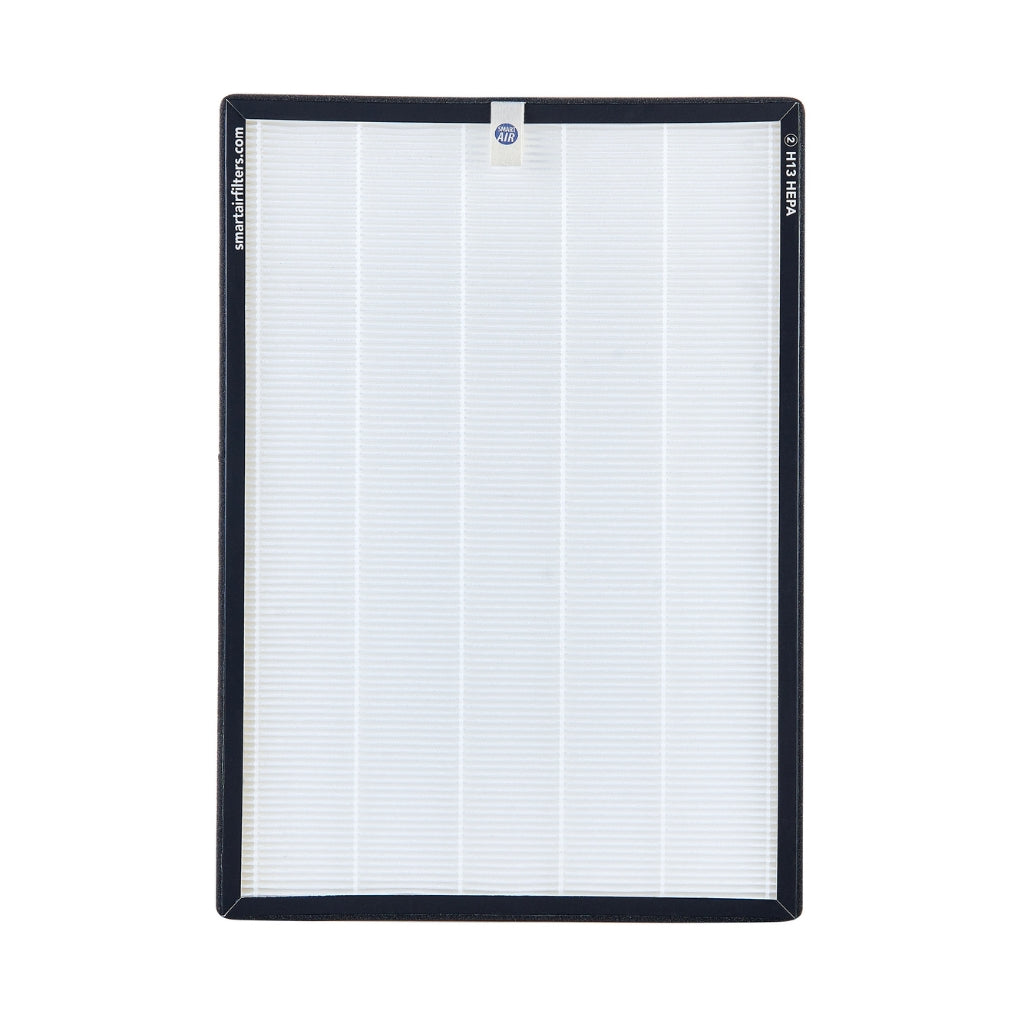
Close up of Smart Air Sqair H12 HEPA filter

Clean Air Blog

Do You Need an H13 HEPA Filter in Your Air Purifier?

on May 04 2026
If you've been shopping for an air purifier, you've probably seen filter grades used as a selling point. H13 HEPA. Hospital grade. 99.97% particle capture. It sounds like more is always better, and many brands lean hard into that idea. But the reality is a bit more nuanced. Filter grade is one piece of the puzzle, and for most home and office situations, it's not the most important one. This article explains what the grades actually mean, what they don't tell you, and why a different number tends to matter more for real-world air quality. This article explains: What HEPA filter grades (H11, H12, H13) actually mean How filter grade relates to real-world air cleaning performance Why CADR and air change rate often matter more than filter grade How to choose the right purifier for your space Quick Summary: HEPA Filter Grades HEPA grades describe capture efficiency at the hardest-to-catch particle size, around 0.3 microns "Hospital grade" is a marketing term, not an official certification All grades capture dust, pollen, and pet dander very effectively and handle nanoparticles well too H13 HEPA is a step up, but it only makes a difference if the purifier has enough CADR to clean your room regularly CADR and air change rate are more important than the step from H12 to H13 For most homes, a stronger H12 unit will outperform a weaker H13 unit in practice Table of contents 1. What the HEPA grades actually mean 2. Why throughput matters more than filter grade alone 3. What is CADR, and how does it connect to this? 4. When H13 does make a genuine difference HEPA air purifiers for clean, everyday air 1. What the HEPA grades actually mean Before getting into the numbers, it's worth addressing the "hospital grade" label. This isn't an official certification or a regulated term. It's a marketing phrase that companies use to describe H13 filters, playing on the association with clinical environments. The actual grading system is straightforward and has nothing to do with whether a product is certified for hospital use. HEPA stands for High Efficiency Particulate Air. The grades (H11, H12, H13) describe how efficiently the filter captures particles at the "most penetrating particle size" (MPPS), which is around 0.3 microns. This is the hardest size to trap, so it's used as the standard test point. You'll sometimes see lower grades written as E11 and E12 rather than H11 and H12. The E stands for EPA (Efficient Particulate Air), which sits just below the full HEPA threshold in the European classification system. For practical purposes in home air purifiers, E12 and H12 are often used interchangeably. You may also see H13 described as "true HEPA" by some manufacturers to distinguish it from the grades below. Grade Efficiency at MPPS Common Description H11/E11 95% H11 Grade HEPA/ HEPA type filter H12/E12 99.5% H12 Grade HEPA/ HEPA type filter H13 99.97% Hospital Grade/ True HEPA These numbers describe single-pass capture rate at a specific particle size under controlled lab conditions. They don't describe how well the filter performs in your actual room, at your actual air volumes, over time. One thing worth clearing up: the 0.3 micron MPPS is the hardest particle size to catch, not the lower limit of what these filters handle. For larger particles like dust, pollen, pet dander, and mould spores, which typically range from 1 to 100+ microns, all three grades perform extremely well. And at the other end of the scale, HEPA filters are also highly effective at capturing very small nanoparticles. This is because at the nano scale, particles don't travel in straight lines. They bounce around erratically due to collisions with air molecules, a phenomenon called Brownian motion, which means they end up hitting and sticking to filter fibres rather than slipping through. Scientists call this capture mechanism diffusion. Smart Air has a good explainer on how diffusion works if you want to go deeper. The short version: 0.3 microns is the weak spot in the middle of the size range, not the bottom of it. 0.3 microns is the hardest particle size to catch, not the smallest. HEPA filters handle both larger particles and tiny nanoparticles extremely well, the middle is where the challenge is. 2. Why throughput matters more than filter grade alone Here's a way to think about it. Picture vacuuming a hallway that people keep walking through. If you vacuum once and your machine picks up 99.97% of what's on the floor, that sounds excellent. But if the family keeps coming and going, the hallway gets dirty again regardless. Vacuum twice as often with a machine that picks up 99.5% each pass, and by the end of the day the floor is going to be cleaner, because you've been keeping pace with the mess being made. Air works the same way. Cooking, pets, opening doors, people moving around. All of these continuously add particles back into the room. A purifier that cleans your room's air once an hour at 99.97% efficiency is doing less useful work than one cleaning it twice an hour at 99.5%. The air doesn't stay clean between passes. Smart Air tested this directly with the Sqair, measuring airflow with an anemometer. The H12 filter produced 23% higher airflow than H13 in the same unit, which in real terms meant more clean air delivered overall. The weaker filter actually came out ahead because of what it gave back in throughput. This is what CADR measures. And it's why we focus on it. 3. What is CADR, and how does it connect to this? CADR stands for Clean Air Delivery Rate. It tells you how much clean air a purifier delivers per hour, in cubic metres. More CADR means faster particle removal. To figure out how many times per hour your purifier is cleaning your room's air, you use a simple calculation: ACH (air changes per hour) = CADR / room volume (m³) Room volume is floor area (m²) multiplied by ceiling height. A typical NZ bedroom at 10m² with 2.4m ceilings comes out to about 24m³. For most everyday use, aim for at least 3 air changes per hour. For allergy or asthma support, 4 to 5 ACH is a more useful target. For high-pollution events like wildfire smoke, higher is better. So if you're choosing between a compact H13 unit with 100 m³/h CADR and a well-sized H12 unit with 315 m³/h CADR, the H12 unit is going to do far more work in a real room. The filter grade difference is largely academic if the air isn't moving through the filter enough. In virtually all situations, a purifier with high CADR and an H12 (or even H11) filter will outperform a weaker H13 unit. Throughput wins! Smart Air Sqair: A strong H12 HEPA purifier for most homes Key features: 315 m³/h CADR on high cleans up to 43m² in 20mins Simple 3-speed dial; no app, no Wi-Fi, nothing to configure H12 HEPA captures dust, pollen, pet dander, PM2.5, and mould spores very effectively Carbon filter included as standard for odour reduction Great CADR-to-price ratio, one of the best value options in the range No ionisers or ozone-producing technologies Shop Smart Air Sqair 4. When H13 does make a genuine difference It's worth noting that several of our purifiers, the SA600, Blast Mini Mk II, and Blast Mk II, use H13 filters. At the CADR levels those units operate at, you get both strong throughput and H13 efficiency on every pass, so there is no trade-off to speak of. But H13 only earns its place when the CADR is there to back it up, and that's worth understanding before you use filter grade as a buying shortcut. You'll sometimes see "medical grade" used alongside H13 as a selling point. In genuine medical settings like hospital ventilation systems, air often passes through a filter just once before being distributed, so single-pass efficiency is everything and H13 or above makes sense. A home or office purifier works differently. It continuously recirculates the room's air, which means you're getting pass after pass through the filter. That changes the equation considerably. Where H13 can earn its place in a purifier are when: You're comparing two purifiers with similar CADR. H13 gives you a real if modest improvement in per-pass capture, with no throughput trade-off. You're in a higher-risk environment like a clinic with vulnerable people present, and you're pairing H13 with a unit that has a high CADR to match. You want maximum filtration and aren't giving anything up in airflow to get it. The short version: H13 is a good thing when CADR is equal. It becomes a liability if it comes at the cost of airflow. Wrap-up: Does filter grade really matter? It does, but probably less than you'd think from the marketing. For most homes, the bigger wins come from getting the CADR right for your room size and making sure the purifier can run consistently at a noise level you're comfortable with. H11, H12, and H13 all capture dust, pollen, pet dander, and mould spores very effectively The step from H12 to H13 is real, but only meaningful if the CADR is there to match A slower H13 unit will generally clean your air less well than a faster H12 unit in the same room "Hospital grade" and "medical grade" are marketing terms, not regulated certifications Air change rate matters more than single-pass efficiency in a recirculating home purifier HEPA air purifiers for clean, everyday air These purifiers focus on the fundamentals: H12 and H13 HEPA filtration and strong airflow, without ionisers, ozone, or unnecessary complexity. See Product See Product See Product Is H13 better than H12? In terms of single-pass capture efficiency at the hardest particle size, yes. But in a recirculating home purifier, that difference only matters if the CADR is strong enough to keep air moving through the filter regularly. A high-CADR H12 unit will clean a room more effectively than a slow H13 unit. What's the difference between E12 and H12? E12 is from the European classification, but the terms are often used interchangeably for home purifiers. If you see E12 on a product, it refers to the same practical filter grade as H12. What does "hospital grade" or "medical grade" actually mean? Neither is a regulated certification. They're marketing terms used loosely to describe H13 filters. In real medical settings, filtration requirements go well beyond filter grade alone and involve specific ventilation design that home purifiers don't replicate. Will an H11 filter catch dust and pollen? Yes, very effectively. Dust, pollen, and pet dander are much larger than the 0.3 micron test particle used to grade HEPA filters, and all grades capture them well. What's more important: filter grade or CADR? For most homes, CADR matters more. It determines how often the air in your room is actually being cleaned. Filter grade is secondary; useful when CADR is equal between two options, but not a substitute for adequate airflow. Should I get an H13 unit if I have allergies? Not necessarily. Focus first on whether the unit delivers enough air changes per hour for your room size, and whether it can run quietly enough to leave on overnight. Those factors will generally have more impact on how you feel than the difference between H12 and H13. Relevant Articles: The Best Air Purifiers in New Zealand: 2025 Comparison Read more What features matter when choosing an Air Purifier (NZ Guide) Read more
Image of Bromley showing oxidation ponds

Clean Air Blog

Can Air Purifiers help with the Bromley Wastewater Treatment Odour?

on Mar 25 2026
Can air purifiers help with the Bromley wastewater smell in Christchurch? We tested carbon-heavy setups in a local home to see what actually works indoors.
Woman taking rubbish bag out of bin with kitchen drawers in background

Clean Air Blog

Can Air Purifiers Remove Odours? A Practical NZ Guide

on Feb 10 2026
Odours and chemical smells are one of the most common reasons people start looking into air purifiers. Whether it’s cooking smells, pet odours, smoke, or off-gassing from everyday products. Air purifiers can help reduce odours and VOCs, but only when they’re used correctly and paired with the right type of filter. They’re also not a silver bullet, ventilation still plays a critical role. This guide explains: What causes odours and VOCs indoors How air purifiers help (and where they don’t) What actually matters in a carbon filter How to set realistic expectations Quick Summary: Air Purifiers and Odours Odours are caused by gases (VOCs), not particles HEPA filters alone do not remove odours Activated carbon is required for odour and VOC reduction More carbon = better performance (measured by weight) Ventilation is still the most effective way to clear smells Table of contents 1. What causes odours and VOCs indoors? 2. HEPA vs carbon: Why odours are different 3. How carbon filters actually work 4. Why "carbon filter included" often means very little 5. Realistic expectations: what air purifiers can (and can’t) do 6. Odours & VOCs in specific situations 7. How our purifiers handle odours and VOCs 8. Carbon filter lifespan: a common question 1. What causes odours and VOCs indoors? Most odours indoors come from volatile organic compounds (VOCs). These are gases released by everyday activities and materials. Common sources include: Cooking (especially frying, oils, spices) Pet odours and litter trays Smoke (fires, wood burners, tobacco) Cleaning products and sprays Paints, glues, sealants, and new furniture Workshops, 3D printing, resin, and hobby spaces Because VOCs are gases, they behave very differently to dust or pollen. This is why filter choice matters so much. 2. HEPA vs carbon: Why odours are different This is a key point that’s often misunderstood. HEPA filters capture particles like dust, pollen, mould spores, and PM2.5. They are excellent at this, but they do not remove gases or smells. To reduce odours and VOCs, you need activated carbon filtration. If a purifier doesn’t contain meaningful amounts of activated carbon, it won’t do much for odours. Regardless of how good other filter(s) are. 3. How carbon filters actually work Activated carbon works by adsorbing gases onto its surface. The effectiveness depends on three main factors: 1. Carbon Form Carbon pellets or granules are far more effective than thin carbon-coated meshes. 2. Carbon Quantity More carbon means more surface area and longer‑lasting odour reduction. This is why carbon weight (grams or kilograms) matters. 3. Airflow (CADR) A purifier needs sufficient airflow to pull odours and VOCs from around the room and pass them through the carbon filter. If airflow is too weak, much of the polluted air simply never reaches the filter. This is a common issue with small or low‑powered purifiers marketed for odours. Even if they contain carbon, insufficient airflow means odours don’t get a proper chance to be treated. 4. Why "carbon filter included" often means very little Many air purifiers advertise that they include a “carbon filter” or “VOC layer”, but in practice this can be: A very thin carbon sheet Only a small amount of carbon Designed more for marketing than performance These filters may slightly reduce smells at first, but they saturate quickly and provide limited ongoing benefit. 5. Realistic expectations: what air purifiers can (and can’t) do Air purifiers with proper carbon filtration can: Reduce everyday odours over time Lower background VOC levels Improve perceived air freshness They won't: Instantly remove strong smells Eliminate odours embedded in walls, carpets, or furniture Replace ventilation For persistent or strong odours, ventilation is still the most effective solution. That means opening windows and doors, or using mechanical systems like HRV, extraction fans and kitchen rangehoods. 6. Odours & VOCs in specific situations Cooking Smells Carbon filters can help reduce lingering smells, but kitchen extraction and ventilation remain important. Pet Odours Carbon helps with odours; HEPA helps with dander and allergens. To learn more, check out our article on purifiers and pets Smoke Smells Air purifiers can help with airborne smoke particles (HEPA filtration) and some smells. However smoke, especially from cigarettes often permeates furnishings and building materials. This means a purifier won't provide as much help when it comes to removing smells from a long term smoker house. Workshops, resin, and 3D printing Carbon filtration becomes much more important here. Many people underestimate how much carbon is needed for chemical vapours. For ongoing hobby or workshop use, larger carbon amounts and good ventilation are strongly recommended. New home smells and renovations If you’re dealing with new home smells, renovations, paint, or off‑gassing materials, we cover that in more detail in our dedicated article on new home smells and VOCs. VOCs in New Homes & Renovations Guide 7. How our purifiers handle odours and VOCs We focus on real, measurable carbon filtration, paired with enough airflow to actually circulate room air. Smart Air Sqair Carbon filter included as standard 140g of carbon pellets per filter Additional carbon filters can replace the HEPA for heavier VOC use Add up to 5 extra carbon filters in total for increased odour reduction View Smart Air Sqair Smart Air SA600 2x Carbon filters included as standard 170g carbon pellets per filter Can add 2 additional carbon filters for higher VOC loads Quiet enough to run continuously View Smart Air SA600 Smart Air Blast Mini Mk II Optional carbon filter 550g carbon pellets per filter Quiet enough to run continuously View Smart Air Blast Mini Mk II Smart Air Blast Mk II Optional carbon filter 900g carbon pellets per filter Quiet enough to run continuously View Smart Air Blast Mk II 8. Carbon filter lifespan: a common question Carbon filter lifespan is very difficult to estimate, as it can vary massively depending on: Type and concentration of VOCs Room size and airflow How often the purifier is running In light odour environments, carbon filters may last many months. In heavier VOC settings (painting, resin, smoke), they can saturate much faster. Weaker carbon filters may only last a matter of hours in these situations. Many people replace carbon filters when odours stop improving or based on the smell test Final Takeaway: Air purifiers can play a useful role in managing odours and VOCs - but only when they include meaningful amounts of activated carbon and enough airflow to circulate room air effectively. For best results, pair air purification with good ventilation and realistic expectations. Do air purifiers remove smells completely? Air purifiers can reduce odours over time, but they rarely eliminate them completely. Strong or persistent smells often come from surfaces, furnishings, or building materials, which air purifiers can’t clean. Ventilation remains essential. Do HEPA filters help with odours? No. HEPA filters are designed to capture particles like dust, pollen, and smoke particles, but they do not remove gases or smells. Odour and VOC reduction requires activated carbon. How much carbon do I need for odours? There’s no single answer, but more carbon generally performs better. Purifiers with only a thin carbon layer may help briefly, while units with hundreds or thousands of grams of carbon provide longer‑lasting odour reduction. Can air purifiers help with smoke smells? They can help reduce airborne smoke particles and some smell, but smoke, especially from cigarettes often penetrates walls, carpets, and furniture. In those cases, air purifiers have limited impact on lingering odours. Relevant Articles: The Best Air Purifiers in New Zealand: 2025 Comparison Read more New Home Smell Making You Sick? Tackle VOCs with These Tips Read more How to Stay Safe in Smoke | NZ Guide to Clean Indoor Air Read more
Smart Air SA600 in foreground with family and pets on couch in background

Clean Air Blog

Air Purifiers for Pets | What Actually Helps (and What Doesn’t)

on Feb 02 2026
Living with pets means dealing with extra dust, dander and smells in the air. For many people, that leads to looking for an air purifier for pets. Whether it’s to help with allergies, reduce odours, or simply keep the home feeling fresher. A properly chosen air purifier can help with some of these issues. Others are often misunderstood or over-marketed. This guide explains what actually makes a difference in pet-friendly homes, and what to keep realistic expectations about. This guide explains: How air purifiers help with pets What matters most for pet dander and odours What air purifiers can’t do Whether air purifiers are safe to use around pets Quick Summary: Air Purifiers for Pets Air purifiers can help reduce pet dander, fine dust, and odours HEPA filtration is key for airborne dander and allergens Carbon filters help with pet smells Air purifiers don’t remove pet hair from floors or furniture Simple, filter-based purifiers are safe for use around pets Table of contents 1. How pets affect indoor air quality 2. How air purifiers help pet owners 3. HEPA filtration and pet dander (why it matters) 4. Airflow matters: why CADR is just as important 5. Pet hair, pre-filters, and a common misconception 6. Pet odours and smells 7. Are air purifiers safe to use around pets? 1. How pets affect indoor air quality Pets contribute to indoor air quality in a few different ways: Pet dander, tiny skin flakes that stay airborne Fine dust stirred up by movement Odours from litter trays, bedding, or wet fur Hair, which mostly settles on surfaces While pet hair is the most visible issue, it’s usually pet dander and fine particles that affect air quality and trigger allergies. 2. How air purifiers help pet owners Air purifiers help by continuously pulling air through a filter and removing fine airborne particles. What air purifiers can help with: Capturing airborne pet dander Reducing fine dust stirred up by pets Helping with pet-related odours Improving overall indoor air quality This can make a noticeable difference, especially in: Living areas where pets spend time Bedrooms where people sleep Homes with multiple pets 3. HEPA filtration and pet dander (why it matters) Pet dander particles are extremely small, much smaller than visible hair. This is why HEPA filtration matters. HEPA filters physically trap fine particles as air passes through the filter, including: Pet dander Fine dust Pollen and other allergens Without HEPA filtration, these particles stay airborne for much longer. 4. Airflow matters: why CADR is just as important Filtration alone isn’t enough. The purifier also needs to move enough air through the filter. This is where CADR (Clean Air Delivery Rate) comes in. CADR tells you how much clean air a purifier can deliver per hour. For pet owners, higher CADR helps because: Pets are constantly moving and stirring particles into the air Dander is continuously being released The air needs to be cleaned repeatedly, not just once Important to know: For pets, HEPA filtration + sufficient CADR work together. A strong filter without enough airflow (CADR), or airflow without proper filtration won’t deliver consistent results. Smart Air SA600: A practical air purifier for pet owners If you’re looking for an air purifier that handles pet dander and everyday odours without unnecessary features, the SA600 is a great all-round option. Why it works well for pets: HEPA filtration for fine pet dander and dust Built-in carbon filter for everyday odours High CADR to keep up with active households Quiet operation for continuous use Simple, filter-based design with no ionisers or UV Shop Smart Air SA600 5. Pet hair, pre-filters, and a common misconception One of the biggest points of confusion around air purifiers for pets, is pet hair. A lot of that confusion comes from how air purifiers are marketed. You’ll often see claims around “pet hair filters” or purifiers designed “specifically for shedding pets”. The reality is a little different to what the marketing says. The key thing to understand: Pet hair isn't an airborne problem. Air purifiers aren't designed to remove it from your home. Pet hair is relatively heavy. Most of it: Falls onto floors, furniture, and bedding Gets removed by vacuuming or cleaning Never stays airborne long enough to reach a purifier This is why even the best air purifier won’t significantly reduce visible pet hair around your home. What air purifiers actually help with in pet homes: Pet dander (tiny skin flakes that stay airborne) Fine dust stirred up by pets moving around Odour-causing gases from litter trays, bedding, or wet fur Where pre-filters fit in Pre-filters are useful, but often misunderstood. A pre-filter: Catches hair and larger debris that pass close to the purifier Protects the HEPA filter from clogging too quickly Helps extend filter life It doesn’t: Remove large amounts of pet hair from the room Replace vacuuming or cleaning The simple takeaway: For pet owners, the real air-quality benefit comes from HEPA filtration for fine dander and dust, supported by a pre-filter that stops hair from clogging the system. Not from trying to remove all visible pet hair from the home. 6. Pet odours and smells Pet-related smells are another common reason people look for an air purifier for pets. How air purifiers help with smells Odours are caused by gases, not particles. To help reduce them, an air purifier needs a carbon filter. Carbon filters can help with: Litter tray smells Wet dog odours General pet-related smells However, not all carbon filters are the same. Why carbon quality matters Many air purifiers include a token carbon layer or thin carbon mesh. While this allows them to claim odour or VOC filtration, it often makes little difference in real use. What actually matters is: Carbon pellets or granules, not just a coated mesh Carbon weight, more carbon means more odour-absorbing capacity Airflow through the carbon, so odour-laden air actually passes through it Light carbon filters may help with mild, everyday smells, but they won’t cope well with stronger or persistent pet odours. 7. Are air purifiers safe to use around pets? This is an important question, especially for smaller or more sensitive animals. The short answer: yes, when designed properly.  Standard air purifiers (like ours) are essentially: A fan A filter Air movement and suction are not strong enough to pose a risk to pets. What to be cautious of Ionisers or negative ion generators, which can produce ozone UV lights Unprotected fans These are best avoided, particularly for small pets like birds which are more sensitive to ozone. Simple HEPA-based purifiers, without added technologies, are safe to use around animals. Wrap-up: the honest takeaway for pet owners: Air purifiers won’t stop pets shedding or replace cleaning. But they can help reduce airborne pet dander, fine dust, and everyday odours. For pet owners, the most effective approach is: HEPA filtration for fine particles Enough airflow to keep up with daily activity Carbon filtration for smells A simple, safe design without extra technologies Air purifiers for pet owners These HEPA air purifiers are designed to handle the realities of pet-friendly homes. From airborne dander to everyday odours, while running quietly and safely. See Product See Product See Product Do air purifiers help with pet allergies? They can help by reducing airborne pet dander, which can improve symptoms for some people. However, everyone is different so results may vary. Will an air purifier remove pet hair? No. Pet hair usually settles on surfaces. Air purifiers help with fine airborne particles, not visible hair. Are air purifiers safe for pets? Yes, as long as they don’t use ionisers, ozone, or UV light. Simple fan-and-filter purifiers are safe around pets. Do I need a specially designed “pet” air purifier? Not really. A well-sized HEPA air purifier with sufficient airflow works just as well. Relevant Articles: The Best Air Purifiers in New Zealand: 2025 Comparison Read more Ionisers Explained: Why We Don’t Use Them (and Why Some Brands Do) Read more Best Air Purifiers for Allergies (NZ Guide) Read more
The Best Air Purifiers for Asthma in New Zealand - Snap Air

Clean Air Blog

The Best Air Purifiers for Asthma in New Zealand

on Jan 12 2026
Asthma is one of the most common reasons people look into air purifiers. Whether it’s for themselves, their children, or other family members. While air purifiers aren’t a treatment for asthma, they can play a useful supporting role by reducing airborne triggers like dust, pollen, smoke, and fine particles that can worsen symptoms. This guide explains: How air purifiers can help with asthma What features actually matter Which types of purifiers tend to work best in NZ homes Quick Summary: Air Purifiers & Asthma Improving indoor air quality can help reduce exposure to common asthma triggers Typical indoor triggers include dust mites, pollen, pet dander, mould spores and fine particles Air purifiers work by continuously filtering airborne particles and recirculating cleaner air For asthma, HEPA filtration and sufficient CADR matter far more than extra features Effective air cleaning is usually much simpler than marketing makes it sound Ionisers and “active” tech often adds unnecessary risk and complexity Table of contents 1. Can air purifiers help with asthma 2. What actually matters in an air purifier for asthma 3. HEPA filtration and asthma 4. Sizing a purifier properly (room size → CADR) 5. Ionisers and why they're a concern for asthma 1. Can air purifiers help with asthma Asthma symptoms are often triggered or worsened by airborne irritants, including: Dust and dust-mite debris Pollen Pet dander Smoke and fine particulate matter (PM2.5) Air purifiers help by reducing the concentration of these particles in indoor air. This can make the home environment more comfortable, especially in rooms where people spend long periods of time. However, it’s important to keep expectations realistic: Air purifiers don’t replace medication or medical advice They work best as part of a broader asthma management approach Consistent use matters more than short bursts 2. What actually matters in an air purifier for asthma When choosing an air purifier for asthma, the fundamentals matter far more than advanced features or marketing claims. What to look for HEPA filtration to physically capture fine particles and irritants Enough cleaning power for your room size Quiet operation, so the purifier can run for long periods A simple, proven design without added technologies These factors determine whether a purifier can realistically keep indoor air cleaner throughout the day and night. Understanding CADR You’ll often see air purifiers described using a term called CADR, which stands for Clean Air Delivery Rate. In simple terms, CADR tells you: How much clean air a purifier can deliver per hour For asthma, CADR matters because airborne triggers are constantly being stirred back into the air as people move around the home. A purifier needs to clean the air repeatedly, not just once. A unit with too little CADR may technically filter the air, but not fast enough to make a noticeable difference. Why CADR matters for asthma: Allergens and irritants don’t stay settled. Walking, cleaning, opening doors, or sitting on furniture all reintroduce particles into the air. For asthma, it’s usually better to have: A purifier that cleans the air multiple times per hour Rather than one that cleans slowly but looks impressive on paper 3. HEPA filtration and asthma HEPA filters work by physically trapping particles as air passes through the filter. This includes dust, pollen, pet dander and fine particulate matter (PM2.5), which are common asthma triggers. You may see different grades mentioned (H11, H12, H13). Higher grades filter slightly finer particles, but in homes the combination of  HEPA filtration and sufficient CADR is what delivers the biggest benefit. A well-designed purifier with slightly lower HEPA grade but strong airflow (CADR) will always outperform a higher-grade filter paired with weak airflow. 4. Sizing a purifier properly (room size → CADR) One of the most common points of confusion when choosing an air purifier is sizing. Many purifiers advertise large room sizes, but those claims can be misleading. A more reliable way to size a purifier is to look at CADR, which stands for Clean Air Delivery Rate. This tells you how much clean air a purifier can deliver per hour. In simple terms, it reflects how quickly the purifier can reduce airborne particles in a room. Quick rule of thumb : Multiply your room size (m²) by 7.5 to estimate the minimum CADR you should aim for. For example: 20 m² room → 150 CADR 40 m² room → 300 CADR For people with asthma, higher air change rates can be especially helpful during flare-ups, smoky days, or pollen season. Why noise matters as much as sizing Asthma-friendly air cleaning usually means running a purifier for long periods, not just occasionally on high speed. This is where noise becomes important. Some purifiers quote very low noise levels only on their lowest setting - where airflow (and CADR) may be minimal. Others deliver useful airflow but are too loud to run consistently. In practice, the goal is a purifier that: Has enough CADR for the room Can be run on a lower, quieter speed while still cleaning the air effectively Many people deliberately choose a purifier that’s more powerful than they require, so it doesn’t need to run at full power to be effective. Smart Air SA600: A practical example for asthma-friendly air cleaning Designed to deliver meaningful airflow at low noise levels, while still having enough power for larger living spaces. Why it works well for asthma: Runs as quiet as 16 dB on low, suitable for bedroom usage Scales up to cover living areas up to around 65 m² Reaches 51 dB at full power when maximum airflow is needed Uses true HEPA filtration for dust, pollen and PM2.5 No ionisers or ozone-producing technologies Shop Smart Air SA600 5. Ionisers and why they're a concern for asthma Some air purifiers include ionisers, sometimes labelled as negative ion, plasma, or air sanitisation technologies. These features are often marketed as an upgrade - but they deserve extra caution, especially for people with asthma or allergies. Important: Some ionisation technologies can produce ozone as a by-product. Ozone is a known respiratory irritant and is generally something people with asthma should try to avoid. How ionisers actually work Ionisers don’t capture particles in the same way a filter does. Instead, they electrically charge particles in the air so they clump together or settle onto nearby surfaces. In practice, this means: Particle levels can drop faster in lab tests But particles aren’t always removed from the room They may end up on floors, furniture, or walls instead of in a filter For people managing asthma or allergies, this isn’t ideal, particularly when simpler, proven options exist. Why this matters for asthma For asthma-friendly air cleaning, the goal is to purify what you breathe in, not introduce new substances into the air. Because of this: Ionisers don’t replace proper filtration Any potential ozone by-product is an added concern The benefits are often unclear compared to HEPA-only designs You’ll also see ionisation features marketed under different names, and a number of models sold in New Zealand include them by default, even if they’re not clearly labelled as ionisers. Our general advice It’s best to avoid ioniser-based air purifiers altogether. If a purifier already includes one, we recommend ensuring the feature is switched off and relying on HEPA filtration alone. Learn more about ionisers and air purifiers The takeaway for asthma sufferers : Air purifiers can’t treat asthma, but they can help reduce airborne triggers indoors. The most effective options are those that are properly sized, quiet enough to run consistently, and focused on proven filtration rather than added technologies. Air purifiers designed to support asthma-friendly homes These HEPA air purifiers are designed to reduce airborne irritants like dust, pollen and smoke in real NZ homes. Quiet enough for bedrooms, powerful enough for living spaces. See Product See Product Do air purifiers help with asthma? They can help by reducing airborne triggers like dust, pollen and smoke, which may improve comfort for some people. Can air purifiers replace asthma medication? No. Air purifiers are a supporting measure and should not replace medical treatment or advice. How long should I run an air purifier for asthma? For best results, many people run purifiers continuously or for long periods, especially in bedrooms overnight. Are ionisers safe for asthma? Many people with asthma prefer to avoid ionisers, as some technologies can produce ozone or other by-products. Is one purifier enough for the whole house? Usually not. Targeting the rooms you spend the most time in is more effective. Relevant Articles: The Best Air Purifiers in New Zealand: 2025 Comparison Read more Ionisers Explained: Why We Don’t Use Them (and Why Some Brands Do) Read more Best Air Purifiers for Allergies (NZ Guide) Read more
Girl with a Smart Air Blast Mini air purifier with teddy on top and visualised viruses in the air

Clean Air Blog

Air Purifiers for Viruses & Bacteria: What Works (Incl COVID)

on Jan 08 2026
Many people search for an air purifier for viruses after hearing claims about COVID, bacteria, or “air sanitising” technologies. The question is usually simple: do air purifiers actually help and if so, what kind works? The short answer is yes, a properly chosen HEPA air purifier can help reduce airborne particles that may carry viruses and bacteria. But it’s not a silver bullet, and not all purifier features contribute equally. In this guide we’ll cover: How air purifiers help with viruses and bacteria Why HEPA filtration and CADR matter most Common marketing claims to be cautious of How to size and use a purifier effectively Quick Summary: Air Purifiers for Viruses A HEPA purifier can help reduce airborne aerosols that may contain viruses and bacteria HEPA filters capture ultra-fine particles, including those smaller than 0.3 microns CADR (Clean Air Delivery Rate) determines how quickly air is cleaned Air cleaning helps most when used with ventilation + other layers (it’s not a standalone solution) Be cautious with “sanitising” add-ons like ionisation, ozone, plasma, and weak UV Table of contents 1. Do air purifiers help with viruses and bacteria? 2. HEPA filtration: clearing up a common misconception 3. CADR, room size, and air changes per hour (ACH) 4. How many air changes should you aim for? 5. Using an air purifier effectively 6. “Sanitising” add-ons: what to be cautious of 7. What air purifiers can't do 1. Do air purifiers help with viruses and bacteria? Viruses and bacteria don’t usually float around on their own. In indoor environments, they’re typically carried in respiratory aerosols. These are tiny particles released when people breathe, talk, cough, or sneeze. Air purifiers help by removing these airborne particles from the air, lowering the overall concentration that people are exposed to. The US EPA recognises portable air cleaners with HEPA filters as one way to help reduce airborne contaminants indoors, including in the context of COVID-19 - particularly when used alongside other measures like ventilation 2. HEPA filtration: clearing up a common misconception One of the most common misunderstandings about HEPA filters comes from how they’re described. You’ll often see HEPA filters defined as being 99.97% efficient at 0.3 microns, and some people interpret this to mean HEPA is less effective at capturing smaller particles. This includes viruses, which are often smaller - COVID for example is ~0.1 microns. In reality, this isn’t how HEPA filtration works. Why 0.3 microns is quoted According to the EPA, 0.3 microns is used because it’s the most difficult particle size for a HEPA filter to capture. That's known as the most penetrating particle size. Particles larger than this are easier to trap. Importantly, particles smaller than this are also captured even more effectively, due to diffusion. This is where ultra-fine particles move erratically and collide with filter fibres What this means in practice HEPA filters are effective at capturing ultra-fine and nanoscale particles Particles smaller than 0.3 microns are not “too small” for HEPA This applies to all genuine HEPA filters, not just specific brands Some purifier companies market their products as uniquely capable of capturing viruses or nanoparticles, implying other HEPA filters can’t. That’s marketing spin. Capturing ultra-fine particles is a core property of HEPA filtration itself, not a special add-on. The real differentiator isn’t whether a purifier can capture these particles, it’s how much air passes through the filter, which brings us to CADR. 3. CADR, room size, and air changes per hour (ACH) CADR (Clean Air Delivery Rate) tells you how much clean air a purifier can deliver per hour. In practical terms, it determines how often the air in a room can be cleaned, which depends on the size of the space. As the graphic above shows, the same purifier can achieve very different results in different rooms. In a smaller room, it may clean the air several times per hour. In a larger space, that same unit will clean the air less frequently. This is why relying only on “recommended room size” can be misleading. A more useful way to think about performance is air changes per hour (ACH). That's how many times the entire volume of air in a space is effectively filtered each hour. 4. How many air changes should you aim for? Ventilation guidance often references around 4 air changes per hour (ACH) in total as a reasonable baseline for reducing airborne risk. Most indoor spaces already achieve some air exchange through drafts, open doors, or mechanical ventilation. Because of this, we typically recommend aiming for at least ~3 ACH from air purification alone, with higher rates providing faster removal of airborne particles. This approach allows air purifiers to meaningfully reduce virus concentrations without needing to run constantly at full power. Higher air change rates can be especially helpful in: Busy or shared spaces Poorly ventilated rooms Periods of higher illness risk Why CADR matters more than "room size" labels HEPA determines what gets captured. CADR determines how quickly and how often the air is cleaned. Two purifiers with the same HEPA filter can perform very differently if one moves significantly more air than the other. This is why CADR is the most important number to compare when choosing an air purifier for viruses or bacteria. 5. Using an air purifier effectively Run the purifier while the room is occupied, not just occasionally Place it where air can circulate freely, rather than tucked into a corner or behind furniture In shared or higher-risk situations, positioning it closer to where people are breathing can help Use air purification alongside ventilation where possible Air purifiers are most effective when treated as part of a layered approach, rather than a standalone solution. A simple, proven approach for viruses and bacteria Key features: HEPA filtration for airborne aerosols High CADR for repeated air cleaning Quiet enough for continuous use No ionisers, ozone, or “sanitising” gimmicks Shop Smart Air SA600 6. “Sanitising” add-ons: what to be cautious of This is where purifiers for viruses marketing often gets confusing! Ionisers, plasma, and ozone-producing technologies Some purifiers use ionisation, plasma, or similar technologies that intentionally emit substances into the air. The EPA cautions that some of these technologies can generate ozone, which is a respiratory irritant. Even at relatively low levels, ozone can cause coughing, throat irritation, and chest discomfort. This is an emerging technology, and little research is available that evaluates it outside of lab conditions. As typical of newer technologies, the evidence for safety and effectiveness is less documented than for more established ones, such as filtration. Bipolar ionization has the potential to generate ozone and other potentially harmful by-products EPA: Air Cleaners, HVAC Filters, and Coronavirus (COVID-19) UV and germicidal technologies (GUV) Ultraviolet germicidal technologies can be effective when properly designed. The CDC and NIOSH discuss GUV as a useful tool in certain settings when exposure time, intensity, and placement are carefully engineered. However, inside most consumer air purifiers: Air moves through the unit very quickly UV exposure time is extremely short The system is often included to increase the price UV lights can also generate ozone In these cases, UV contributes far less than the HEPA filter itself. HEPA filtration already captures the airborne particles that may carry viruses, making UV unnecessary for most home and office use. “Active” and “sanitising” purification claims Some air purifiers are marketed using terms like “active purification”, “sanitising technology”, or “NASA-inspired” air treatment. These systems often advertise very large coverage areas, sometimes far exceeding what’s typical for conventional HEPA air purifiers. The difficulty with these products is transparency. Many don’t publish CADR figures, which are the standard way of comparing air purifier performance. CADR reflects how much clean air a unit actually delivers, making it possible to estimate air changes per hour and compare different models fairly. Instead, these systems often rely on proprietary technologies that are difficult to independently verify and in some cases are proven to be very exaggerated. Office Air Purifiers If you’re looking at air purifiers for shared office spaces, we’ve covered this in more detail in our guide to air purifiers for offices, including sizing, placement, and how to think about airflow in larger rooms. Office Air Purifiers Guide 7. What air purifiers can't do Air purifiers help with airborne particles. They don’t: Clean viruses off surfaces Replace ventilation Eliminate risk entirely They’re best understood as risk-reduction tools, not guarantees. Wrap-up: the honest takeaway: A properly sized HEPA air purifier with sufficient CADR can help reduce airborne particles that carry viruses and bacteria, including COVID-related aerosols. The most effective approach focuses on: Proven HEPA filtration Enough airflow to clean the air repeatedly Simple, continuous operation Using air cleaning alongside ventilation HEPA air purifiers for viruses and everyday indoor air These air purifiers focus on the fundamentals, HEPA filtration and strong airflow without ionisers, ozone, or unnecessary complexity. See Product See Product See Product Do air purifiers kill COVID-19? They’re better thought of as removing virus-carrying aerosols from the air, rather than killing viruses outright. What’s the best air purifier for viruses? One with HEPA filtration and enough CADR to deliver multiple air changes per hour in your space. Are ionisers safe to use for virus control? The EPA advises caution, as some ionising technologies can generate ozone and lack strong real-world evidence. Is UV worth it in a home air purifier? UV can work when properly engineered, but in most consumer purifiers it adds little compared to HEPA filtration. Relevant Articles: The Best Air Purifiers in New Zealand: 2025 Comparison Read more Boost Productivity | Top NZ Office Air Purifiers Read more Ionisers Explained | Why We Don’t Use Them (and Why Some Brands Do) Read more
Image of a warning sign saying 'Allergy Season Ahead' with countryside background behind

Clean Air Blog

Best Air Purifiers for Allergies (NZ Guide)

on Jan 05 2026
Allergies are one of the most common reasons people look at air purifiers - whether it’s pollen, dust mites, pet dander, or fine particles that trigger symptoms indoors. The good news is that a properly chosen air purifier can genuinely help with allergies. The less helpful news is that not all air purifiers work equally well, and many features that sound appealing don’t actually improve allergy relief. This guide explains: How air purifiers help with allergies Which allergy triggers purifiers can (and can’t) address How to size a purifier for effective, quiet use Which actually matters and which features to ignore For many allergy sufferers, a well-sized HEPA air purifier can noticeably reduce symptoms by lowering the amount of allergens in the air you breathe. Quick Summary: Air Purifiers for Allergies Air purifiers can help reduce common indoor allergy triggers HEPA filters are essential for capturing fine allergens CADR (Clean Air Delivery Rate) determines how effectively a room is cleaned Sizing and noise levels matter for day-to-day and overnight use Avoid ionisers and gimmicks that don’t improve real filtration Table of contents 1. How air purifiers help with allergies 2. What actually matters for allergy relief 3. HEPA filtration is the most important factor 4. Sizing a purifier properly (room size → CADR) 5. Features that don't necessarily improve allergy relief 1. How air purifiers help with allergies Allergies are triggered when your immune system reacts to airborne particles such as pollen, dust, pet dander, or smoke. Air purifiers don’t cure allergies. Instead, they can help by reducing how much of these particles you’re breathing in, especially indoors where allergens can build up. A good air purifier can: Capture pollen and outdoor allergens that enter through doors and windows Reduce dust and dust mite debris in the air Remove pet dander and fine hair fragments Lower PM2.5, which can worsen allergy and asthma symptoms Because allergens are constantly being stirred back into the air as you move around your home, purifiers work best when they’re run consistently, not just occasionally. 2. What actually matters for allergy relief HEPA filtration (H11, H12 or H13 can all work well) Enough cleaning power for your room size Quiet operation, so it can run for long periods A simple, proven design without added technologies such as ionisers These fundamentals matter far more than flashy features or long spec sheets. However, it's important to note that everyone has different triggers and sensitivities. For this reason we can't guarantee an air purifier will help, but for many allergy sufferers it does lead to an improvement in symptoms. Understanding CADR You’ll often see air purifiers described using a term called CADR, which stands for Clean Air Delivery Rate. In simple terms, CADR tells you: How much clean air a purifier can deliver per hour A higher CADR means the purifier can clean the air in a room more frequently, which is especially important for allergy sufferers. Many people focus on filter grade alone, but CADR is what determines whether the purifier can actually keep up with allergens in your space. Why CADR matters for allergies: Allergens don’t disappear after one pass through a filter. They’re constantly being reintroduced as you walk around, open doors, or sit on furniture. For allergies, it’s usually better to have: A purifier that cleans the air multiple times per hour Rather than one that cleans slowly but looks impressive on paper 3. HEPA filtration is the most important factor HEPA filters work by physically trapping particles as air passes through the filter. This includes most common allergy triggers like pollen, dust, pet dander, and fine particulate matter (PM2.5). You may see different grades mentioned (H11, H12, H13). Higher grades filter slightly finer particles, but in homes the combination of HEPA filtration and sufficient CADR is what delivers the biggest improvement. A well-designed purifier with slightly lower HEPA grade but strong airflow (CADR) will always outperform a higher-grade filter paired with weak airflow. 4. Sizing a purifier properly (room size → CADR) Many air purifiers advertise large room sizes, but those claims can be misleading. A more reliable way to size a purifier is to work backwards from CADR. Quick rule of thumb: Multiply your room size (m²) by 7.5 to estimate the minimum CADR you should aim for. For example: 20 m² room → 150 CADR 40 m² room → 300 CADR For allergy sufferers, higher air change rates often deliver better results, especially during pollen season or in homes with pets. Smart Air SA600: A practical example for allergy relief Designed to deliver meaningful airflow at low noise levels, while still having enough power for larger living spaces. Key features: Runs as quiet as 16 dB on low, suitable for bedroom usage Scales up to cover living areas up to around 65 m² Reaches 51 dB at full power when maximum airflow is needed Uses true H13 HEPA filtration for dust, pollen and PM2.5 No ionisers or ozone-producing technologies View Smart Air SA600 Why manufacturer room size claims can be confusing There's no single standard for how brands calculate room size recommendations, which leads to many manufacturers in New Zealand using very exaggerated room size claims. This means two purifiers could be similarly priced and claim the same effective room size, yet one may be several times weaker than the other. Noise levels - what matters in real use Noise plays a bigger role in allergy relief than many people expect. Because allergies are ongoing, purifiers often need to run for many hours at a time - sometimes all day and night. If a unit is too loud, it’s likely to be turned down or off. During the day: Living rooms & shared spaces In living areas: Higher fan speeds are often used to deal with cooking, cleaning, pets, or open windows Noise levels around 40–50 dB are usually acceptable This is when higher CADR is most useful, as allergens are actively stirred up A purifier that can scale up during the day and then run quietly later, offers much more flexibility. Overnight use: Bedrooms & allergy symptoms For many allergy sufferers, bedroom air quality overnight is critical. With purifiers often running for long periods, lower noise becomes much more important. As a guide: Under 30 dB is ideal for overnight use Lower is better if you are noise-sensitive Avoid any with lights that may be distracting Learn More About Air Purifiers & Sleep 5. Features that don't necessarily improve allergy relief Some features are often marketed as allergy upgrades, but don’t usually improve real-world results. Be cautious of: Ionisers or negative ion generators UV lights Auto modes based on built in sensors The takeaway for allergy sufferers: Air purifiers can make a real difference for allergies - but only if they’re sized properly, quiet enough to run consistently, and focused on proven filtration rather than gimmicks. For most homes, a simple HEPA-based purifier with sufficient CADR will outperform more complex models packed with extra features. Air purifiers designed for allergy relief Explore HEPA air purifiers designed to reduce airborne allergens like pollen, dust and pet dander in real NZ homes. Quiet enough for bedrooms, powerful enough for living spaces. See Product See Product See Product Do air purifiers help with specific allergies? Pollen allergiesYes. HEPA air purifiers are very effective when sized correctly and run consistently. Dust and dust-mite allergiesThey help reduce airborne dust and debris, though washing bedding and controlling humidity also matter. Pet allergiesPurifiers can significantly reduce airborne dander, but won’t remove allergens already settled on surfaces. Do air purifiers really help with allergies? Yes. When properly sized, HEPA air purifiers can significantly reduce airborne allergens like pollen, dust and pet dander. However, it's important to note everyone has different sensitivities - so results aren't guaranteed. How long does it take to notice a difference? Some people notice improvement within hours, while others see gradual benefits over a few days of continuous use. Should I keep windows closed when using an air purifier? During high pollen days, keeping windows mostly closed helps purifiers work more effectively. Ventilation can be balanced at other times. Relevant Articles: The Best Air Purifiers in New Zealand: 2025 Comparison Read more Ionisers Explained: Why We Don’t Use Them (and Why Some Brands Do) Read more The Best Air Purifiers for Asthma in New Zealand Read more
Smart Air SA600 Air Purifier with woman working on a laptop on a desk in the background

Clean Air Blog

What features matter when choosing an Air Purifier (NZ Guide)

on Dec 16 2025
Choosing an air purifier can feel overwhelming. Every brand highlights different features; sensors, modes, filters, apps. However, not all of them actually improve your air quality in a meaningful way. At its core, an air purifier does one job: move air through a filter and remove particles. How well it does that depends far more on airflow and filter quality than flashy features. This guide breaks down the features that genuinely matter when choosing an air purifier for NZ homes. We'll also show you where it’s easy to be misled by specs that look good on paper but don’t translate to cleaner air. Quick Summary: What features matter for air purifiers HEPA filtration matters more than fancy features CADR (airflow) is the most important performance number Room size claims vary, CADR makes comparison easier Bigger units can run quieter on lower speeds Carbon filters only help if they use real carbon pellets Ionisers and “active” tech often add complexity, not performance Table of contents 1. HEPA Filtration: The Foundation of Clean Air 2. Carbon Filters: Odours, VOCs & Why Weight Matters 3. CADR: The Most Important Number on the Spec Sheet 4. Sizing a Purifier Properly: CADR, Room Size & Noise i. Why Manufacturer Room Size Claims Can Be Confusing ii. Noise levels: What to look for in real use 5. Extra features: what to be cautious of (and why) Ionisers (negative ion/plasma modes) UV Lights Auto modes and built-in sensors Wi-Fi and app control (nice to have, not essential) 6. Wrap-up: Focus on the simple features Looking for an air purifier that ticks all the boxes? 1. HEPA Filtration: The Foundation of Clean Air HEPA filtration is the most important part of any effective air purifier. A HEPA filter works by physically trapping fine particles as air passes through it. These include dust, pollen, smoke, PM2.5 and many airborne allergens. These are the particles most commonly linked to respiratory issues and poor indoor air quality. HEPA grades and what really matters You’ll often see H13 promoted as the gold standard, and it is excellent. But lower grades like H12 and even H11 can still perform extremely well, provided the purifier has high CADR. A slightly lower-grade HEPA filter moving a lot of air will outperform a higher-grade filter with weaker airflow. What matters most is: HEPA filtration (not “HEPA-like” or proprietary names) Enough airflow to cycle the room regularly Avoid vague terms like: “HEPA-style” “HEPA-type” If a manufacturer won’t clearly state the HEPA grade, it’s usually a red flag. 2. Carbon Filters: Odours, VOCs & Why Weight Matters Carbon filtration plays a different role to HEPA. While HEPA filters remove particles, activated carbon helps absorb gases and odours, such as: Cooking smells Smoke odours Chemical fumes VOCs from furniture, paints or cleaning products Not all carbon filters are equal Many air purifiers advertise carbon or VOC filtration, but include only a thin carbon-coated sheet. These filters saturate quickly and have limited ability to absorb gases. What actually makes carbon effective: Carbon pellets or granules, not just a coating More carbon weight, which increases effectiveness and lifespan A light carbon layer may slightly reduce smells, but it won’t meaningfully address ongoing odours or VOCs. Carbon filtration is optional for many homes.  If particles are the main concern, HEPA does the heavy lifting. 3. CADR: The Most Important Number on the Spec Sheet If there’s one specification to pay attention to when choosing an air purifier, it’s CADR (Clean Air Delivery Rate). CADR tells you how much clean, filtered air a purifier can deliver per hour. In simple terms, it measures how quickly a purifier can remove particles like dust, pollen and PM2.5 from a room. Higher CADR means: Faster removal of particles Better performance in larger rooms More flexibility to run at lower, quieter speeds A purifier with high CADR will always outperform a weaker one in real-world use. 4. Sizing a Purifier Properly: CADR, Room Size & Noise Most people start by thinking about the size of the room, which is exactly the right place to begin. A simple, practical rule of thumb is: Multiply your room size (m²) by 7.5 to estimate the CADR (m³/h) you need This gives you a target CADR that will deliver around 3 air changes per hour in a standard-height room. Example: 20 m² bedroom × 7.5 = 150 m³/h CADR required 65 m² living area × 7.5 = 488 m³/h CADR required This approach makes it much easier to compare purifiers objectively. Need 500+ CADR? High power, and perfect for rooms up to 65m² Key features: Runs as quiet as 16 dB on low, suitable for bedroom usage Scales up to cover living areas up to around 65 m² Reaches 51 dB at full power when maximum airflow is needed Uses true HEPA filtration for dust, pollen and PM2.5 Includes a built-in carbon filter for everyday odours No ionisers or ozone-producing technologies Shop Smart Air SA600 i. Why Manufacturer Room Size Claims Can Be Confusing You’ll often see air purifiers in NZ advertised with room size ratings that don’t line up with this rule at all. That’s because: There is no single standard for how room size is calculated Some ratings assume very low air changes per hour (even less than 1!) As a result, two purifiers both advertised for “40m² rooms" can perform very differently in practice. Looking at CADR lets you cut through this and compare models on equal footing. ii. Noise levels: What to look for in real use Noise matters because air purifiers work best when they run for long periods, not just short bursts. Living rooms, offices and daytime use In shared or daytime spaces, a bit of background noise is usually acceptable if it means better air cleaning. As a general guide: Around 50 dB is typically fine TVs, conversation and appliances often mask purifier noise Medium fan speeds often give the best balance of airflow and noise Bedrooms and overnight use In bedrooms, purifiers often run for long periods while you sleep, so lower noise becomes much more important. As a guide: Under 30 dB is ideal for overnight use Lower is better if you are noise-sensitive Avoid any with lights that may be distracting Learn More About Air Purifiers & Sleep What to be aware of for real-world quiet performance: Some brands only quote noise at the lowest fan speed That lowest speed may deliver very little CADR Quiet on paper doesn’t always mean effective in practice Important: What matters is how much CADR the purifier delivers at a quiet setting, not just the decibel number. A well-sized purifier can often deliver enough airflow for a bedroom at around 16–25 dB, allowing it to run all night without disturbance. 5. Extra features: what to be cautious of (and why) Many air purifiers include additional features that sound appealing; UV lights, ionisers, smart sensors, Wi-Fi apps and automatic modes.  Some of these can be useful in the right context, but many don’t meaningfully improve air cleaning for most homes. This doesn’t mean these features are “bad”, but it’s worth understanding what they do, and what they don’t. Common features that don't always help: Ionisers or negative ion generators UV lights Auto modes based on built in sensors App control and Wi-Fi connectivity Ionisers (negative ion/plasma modes) Ionisers (sometimes called negative ion or plasma technologies) work by electrically charging particles in the air so they clump together or settle onto nearby surfaces. This can make particle levels drop faster in CADR lab tests, but it doesn’t necessarily mean those particles are being removed from your environment. In real homes, they can end up on floors, furniture, or walls instead of being trapped in the filter. Because of this, ionisers can make performance numbers look better without improving actual filtration. Some ionising technologies can also produce small amounts of ozone as a by-product, which is why many people prefer not to introduce additional substances into their indoor air. Learn More About Ionisers Important: Some purifiers allow the ioniser to be switched off (which we'd recommend), but manufacturers rarely publish the CADR with the ioniser disabled. That makes it difficult to know the purifier’s true, filter-only performance. UV Lights UV lights are often marketed as a way to neutralise bacteria and viruses in the air. In most consumer air purifiers, however, air normally passes the UV source too quickly for meaningful disinfection to occur. It’s also worth noting that HEPA filtration already captures the vast majority of airborne particles, including dust, pollen, PM2.5, and virus-containing aerosols. For everyday indoor air quality, a well-sized HEPA purifier is already doing the most important part of the job. UV tends to add cost and complexity without improving real-world air cleaning in most homes. Auto modes and built-in sensors Automatic modes sound convenient, but how effective they are depends heavily on the quality of the sensor and where it’s located inside the purifier. Things to be aware of: Built-in sensors vary widely in accuracy Many use very low-cost sensors that can be unreliable Readings are taken at a single point, where the air is cleanest on the purifier Air quality can be poor without triggering a noticeable fan response Because of this, an auto mode may leave the purifier running slowly even when air quality isn’t ideal. Many people prefer to run purifiers at a consistent manual speed, or use a separate, dedicated air quality monitor for better insight. Wi-Fi and app control (nice to have, not essential) Wi-Fi and app control can be convenient, but they don’t make a purifier clean the air any better. They also tend to add: Extra cost More complexity Another system that can fail or become unsupported over time The need to create and manage yet another app or account For many people, this ends up being a feature that’s rarely used after the initial setup. Our purifiers don’t rely on Wi-Fi or apps, but they work well with a simple Wi-Fi smart plug if you want basic scheduling or remote on/off control, without the complexity. 6. Wrap-up: Focus on the simple features Choosing an air purifier doesn’t need to be complicated. Most of the real-world performance comes down to a few core factors, not a long list of extra features. If you focus on: Proper HEPA filtration Enough CADR for your room size Noise levels that suit how you’ll actually use it You’ll usually get better results than chasing advanced modes or add-ons that look good on a spec sheet but don’t improve day-to-day air cleaning. Simple, well-sized purifiers that move plenty of air through a good filter tend to be quieter, more predictable, and easier to live with over the long term. Looking for an air purifier that ticks all the boxes? Explore HEPA air purifiers designed for real NZ homes. Quiet enough for bedrooms, powerful enough for living spaces, and free from unnecessary gimmicks. See Product See Product Is a higher HEPA grade always better? Higher HEPA grades (like H13/H14) are most critical in settings such as hospitals, clean rooms, or labs, where air may only get a single pass through the filter. In homes, air is continuously recirculated, so airflow (CADR) and regular air changes often matter more than filter grade alone. Well-designed purifiers using H12 or even H11 filters can perform extremely well when paired with sufficient airflow. How many air changes per hour should I aim for? As a baseline, we generally recommend at least 3 air changes per hour for homes. In busier or higher-risk environments, such as schools, offices, clinics, or shared spaces, this is often increased to 4–6 air changes per hour, depending on activity levels and occupancy. Are ionisers or UV lights needed for everyday use? For most homes, no. A properly sized HEPA purifier already captures fine particles, including smoke and virus-containing aerosols. Extra technologies may sound reassuring but often add cost and complexity without improving everyday air cleaning. Should I rely on auto mode or control the purifier manually? Auto modes can be convenient, but their effectiveness depends on sensor quality and placement. In many cases, running a purifier at a consistent manual speed that delivers enough airflow for the room provides more predictable results. Relevant Articles: The Best Air Purifiers in New Zealand: 2025 Comparison Read more Ionisers Explained: Why We Don’t Use Them (and Why Some Brands Do) Read more The Misleading Room Size Claims of Air Purifier Brands Read more
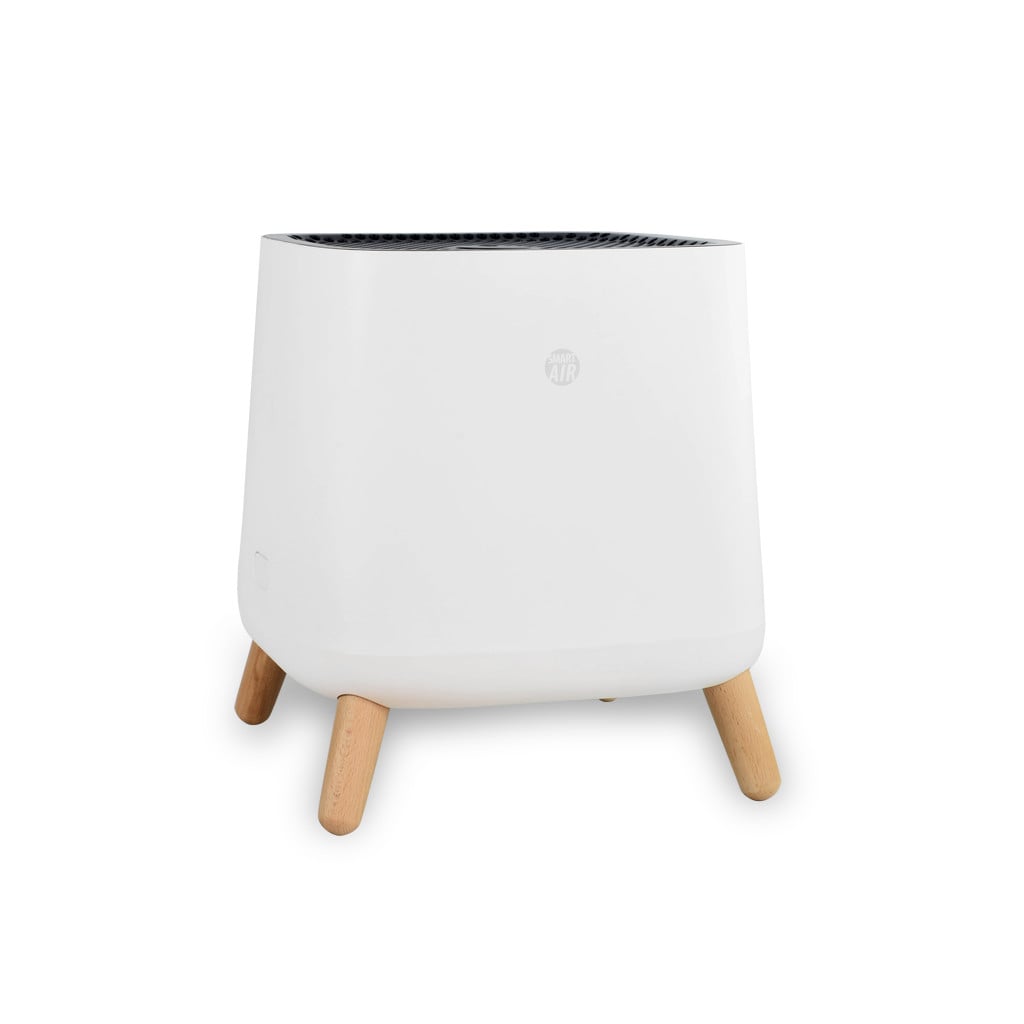
Smoke over the port hills in Christchurch, New Zealand

Clean Air Blog

Air Purifiers for Smoke in NZ | Woodburners, Fires & Winter Haze

on Dec 10 2025
Smoke can affect indoor air quality in more situations than many people realise. In New Zealand, this often isn’t just large bushfires. It also includes winter woodburner smoke, smoke from neighbours’ fires, outdoor burn-offs, and long‑range smoke drifting in from major fire events. When smoke enters your home, it brings very fine particles that are easy to breathe deep into your lungs and difficult to avoid without some form of filtration. Air purifiers can help reduce indoor smoke, but it’s important to understand what kind of smoke we’re talking about, how purifiers help, and what to look for when choosing one. This guide explains: How smoke affects indoor air quality Practical steps to reduce smoke exposure at home How to check the air quality in NZ How air purifiers help with smoke What to look for in an air purifier for smoke Quick Summary: Air Purifiers for Smoke Smoke from fires and woodburners contains very fine particles (PM2.5) Smoke can enter homes even when doors and windows are closed HEPA air purifiers can reduce indoor smoke particles Carbon filters help with smoke smell, not particle removal The purifier needs enough airflow (CADR) for the room size to be effective Table of contents 1. Why Smoke Is Harmful, Understanding PM2.5 2. Keeping Smoke Out of Your Home 3. How Air Purifiers Help with Smoke & PM2.5 4. Choosing the Right Air Purifier for Smoke 5. Using an Air Purifier During Smoky Conditions 6. Checking Air Quality in NZ 1. Why Smoke Is Harmful, Understanding PM2.5 Smoke contains a mix of gases and particles, but the main concern is PM2.5 - tiny particles small enough to enter deep into the lungs and even the bloodstream. PM2.5 can: Irritate the throat, nose and eyes Worsen asthma and allergies Aggravate heart and lung conditions Cause headaches and poor sleep Build up indoors unless removed In NZ, winter woodburners regularly cause PM2.5 spikes, especially on still nights that trap smoke near the ground. Large events like the Port Hills Fire or Australian bushfire drift can cause very high short-term levels as well. If you can see or smell smoke, assume PM2.5 levels are high 2. Keeping Smoke Out of Your Home Health New Zealand’s general advice during smoke events is simple: Stay indoors if possible Close all windows and doors Reduce outdoor air getting inside Here’s how to put that into practice at home: a. Close and seal your home Shut windows and doors Use curtains, door snakes, or towels to block gaps Avoid creating drafts b. Turn off ventilation systems that pull in outdoor air Systems such as HRV or positive-pressure ventilation often draw outside air in, and most cannot effectively filter out PM2.5. Turn these off during smoke events unless your system has a HEPA intake filter. Heat pumps are fine, they recirculate indoor air and don't draw in smoke. c. Reduce indoor PM2.5 contributors These activities make indoor smoke levels worse: Frying or grilling Burning candles or incense Vacuuming (which stirs up dust) Smoking indoors Keep indoor air as stable as possible. d. Create a Cleaner Air Space Indoors Pick a room (often a bedroom or living area) and keep the air in there as clean as possible by: Keeping windows and doors shut Reducing drafts Avoiding dust-creating activities Running a HEPA purifier This room becomes your safest indoor space during heavy smoke. 3. How Air Purifiers Help with Smoke & PM2.5 Air purifiers clean air by pulling it through filters that trap pollutants as air circulates around a room. HEPA filters remove smoke particles HEPA filters are very effective at capturing fine particles like smoke. When air passes through a HEPA filter, virtually all smoke particles are removed in a single pass. The main limitation isn’t filtration efficiency, it’s simply how much air the purifier can move through the filter over time. This applies whether the smoke source is a nearby woodburner, winter haze, or a larger fire event. Carbon filters help with smell & chemicals, not particles Activated carbon filters don’t remove smoke particles, but they can help reduce smoke odour and chemical gases that come with combustion. Carbon improves comfort, but it doesn’t replace HEPA filtration. If a purifier doesn’t contain meaningful carbon (measured in grams of pellets), it won’t do much for smoke smells 4. Choosing the Right Air Purifier for Smoke Not all air purifiers are equally effective for smoke. One of the most common issues is simply not having enough airflow. The best filter in the world is useless if air doesn't go through it. Why CADR matters CADR (Clean Air Delivery Rate) describes how much clean air a purifier can deliver per hour. Smoke events often require more airflow than everyday dust or pollen, because outdoor smoke keeps leaking back in. As a practical guide: Aim for a minimum of 3 air changes per hour (ACH) from purification alone Larger rooms or very smoky conditions benefit from more than this If the purifier is too weak, it will still work, just more slowly, and it may need to run on higher (and louder) speeds. In heavier smoke, it may also struggle to keep PM2.5 levels in healthy ranges. Manufacturer “room size” claims can be misleading, so focus on CADR rather than marketing numbers to avoid under‑sizing What to prioritise for smoke If you're looking for a purifier to help with smoke, focus on: HEPA filtration (for harmful particles) Enough airflow (CADR) for the room size Optional carbon if smoke smell is a concern No ionisers or ozone‑producing features Smart Air: Proven use during smoke events California wildfire response 800+ Smart Air Blast purifiers deployed by local air quality management districts Used to create clean air spaces in libraries, community buildings, and temporary shelters Designed to operate continuously during days or weeks of heavy smoke Why these purifiers are chosen Very high airflow → clears smoke particles quickly True HEPA filtration → removes the vast majority of smoke particles per pass No ionisers or ozone → safe for extended indoor use View Smart Air Blast Mk II 5. Using an Air Purifier During Smoky Conditions During winter smoke or fire events: Run the purifier continuously, not just for short bursts Use higher speeds during peak smoke, then lower speeds once air improves Keep doors and windows closed when outdoor air quality is poor Place purifiers in the rooms you spend the most time in 6. Checking Air Quality in NZ Smoke levels can shift quickly, whether from woodburners, fires, or drifting smoke. Checking air quality helps you know when to seal the home and when to ventilate. One challenge is that air-quality monitoring in NZ is limited. Even with community networks like PurpleAir and AirGradient, many towns and rural areas have no sensors at all. Official monitoring is even more restricted. These are the most useful tools: a. IQAir (best real-time map - aggregates multiple sources) IQAir combines: Official regional council monitors PurpleAir community sensors AirGradient sensors Other public/global data sources It’s often the most complete real-time view in NZ, especially if your town has no official station. View IQ Air Map b. LAWA Air Quality (official NZ data + long-term trends) LAWA provides verified PM2.5 and PM10 readings where regional councils have monitors, plus: Recent hourly data Long-term and seasonal trends Annual exceedances of NZ standards Great for understanding typical patterns, coverage varies. View LAWA Map c. Indoor air-quality monitors Outdoor data doesn’t always reflect what’s happening inside your home. An indoor PM2.5 monitor helps you see: How much smoke is leaking in When levels rise How effective your purifier is This is especially useful in older NZ homes that naturally draw in outdoor air. Check out our Indoor Air Quality Monitors The takeaway for dealing with smoke: Smoke from woodburners and fires contains very fine particles that can build up indoors. HEPA filters remove most of these particles each time air passes through, but the key limitation is CADR - how much air the purifier can clean.A correctly sized purifier, run consistently, can noticeably reduce smoke indoors. In heavier smoke, smaller units may struggle to keep PM2.5 at healthy levels, which is why sizing matters. Looking to reduce smoke indoors? Explore HEPA air purifiers designed to effectively tackle smoke. Quiet enough for bedrooms, powerful enough for living spaces, and free from unnecessary gimmicks. See Product See Product See Product See Product Do air purifiers help with woodburner smoke from neighbours? Yes. While they can’t stop smoke entering your home, they can reduce the amount of fine smoke particles once inside. Is carbon necessary for smoke? Carbon helps with smell and gases, but HEPA is the priority for health‑relevant smoke particles. Should I run a purifier overnight in winter? Yes, especially since smoke levels in colder areas tend to remain elevated overnight. Bedrooms often benefit the most. Can one purifier cover my whole house? Usually not. It’s more effective to place purifiers in key rooms rather than trying to cover the entire home with one unit. Relevant Articles: The Best Air Purifiers in New Zealand: 2025 Comparison Read more Unmasking the Winter Air Quality Issue in New Zealand Read more What features matter when choosing an Air Purifier (NZ Guide) Read more
Side by side image showing a negative ion generator with a red cross next to a HEPA Air Purifier with a green tick

Clean Air Blog

Ionisers Explained | Why We Don’t Use Them (and Why Some Brands Do)

on Dec 03 2025
Ionisers in air purifiers are often marketed as a bonus useful feature, but they're mostly there to boost lab test numbers, rather than actually cleaning your air. In this guide we'll explain: How ionisers work and why they can make performance numbers look better than they really are The potential downsides of ionising technologies, including ozone and misleading marketing claims What to look for instead if you want reliable, proven air purification Quick Summary: What you need to know about Ionisers Ionisers don’t capture particles, they just charge them so they fall onto surfaces. They don’t improve actual filtration. And the air isn’t cleaner, your surfaces just get dustier. A simple, proven design without added technologies Ionisers can create ozone and chemical byproducts, and increase visible dust on surfaces. HEPA-only purifiers with decent airflow are simpler, safer and more transparent. Table of contents 1. The benefits ionisers claim to offer 2. How ionisers inflate CADR scores without really cleaning the air 3. A very cheap add-on that creates a higher-priced product 4. The word ‘ioniser’ often goes by different names 5. They can increase visible dust, not reduce it 6. Health side: ozone, byproducts, and why NZ schools were told to avoid ionisers 7. So why doesn’t Snap Air sell ioniser purifiers? 8. What to look for instead of ionisers 1. The benefits ionisers claim to offer Manufacturers usually claim ionisers: “Freshen the air” “Neutralise pollutants” “Boost cleaning efficiency” “Tackle ultra-fine particles too small for filters” “Break down odours and VOCs” On paper it sounds impressive. In reality: Ionisers don’t capture particles, they just charge them so they fall onto surfaces. They don’t improve actual filtration. And the air isn’t cleaner, your surfaces just get dustier. What ionisers actually do is charge particles in the air so they stick to nearby surfaces (walls, furniture, your lungs, your skin) instead of staying airborne. 2. How ionisers inflate CADR scores without really cleaning the air This is the key reason manufacturers love ionisers. CADR tests (Clean Air Delivery Rate) measure how fast particle levels drop in a sealed test chamber. The test doesn’t care whether those particles were: Actually filtered through a HEPA filter, or Simply knocked out of the air and stuck to surfaces by the ioniser Ionisers make particles drop faster, so the CADR number gets a boost - even though the purifier hasn’t genuinely “cleaned” more air. 🚨Important: Most purifiers let you switch off the ioniser, but when you do, the CADR is often much lower than advertised. Manufacturers almost never publish the “ioniser off” CADR, so consumers are left thinking they’re buying a higher-performing unit than they actually are. A third-party test of a Blueair purifier shows how big this gap can be. With the ioniser turned off, CADR dropped dramatically across particle sizes. Smoke fell by 44%, dust by 19%, and pollen by 53%. The researchers concluded that around 20–50% of the purifier’s measured CADR came from the ioniser, not the actual filter. Read the full report here This is why brands love ionisers: Very low manufacturing cost Bumps up the test numbers Helps justify a higher pruce No obligation to reveal the real (possibly mediocre) filter only performance 3. A very cheap add-on that creates a higher-priced product Ioniser modules cost very little to manufacture. Far less than a better motor, fan, or filter. But because they artificially boost test numbers, brands often use them to justify: Bigger “high-performance” claims A higher RRP Positioning the unit as “premium” or “advanced” Ionisers aren’t added because they’re useful and effective. They’re added because they sound impressive and make the numbers look better. The Sqair: simple, ioniser-free air cleaning Key features: Runs as quiet as 23 dB on low, suitable for bedroom usage Scales up to cover living areas up to around 43 m² H12 HEPA filtration for dust, pollen and PM2.5 Built-in carbon filter for everyday odours No ionisers or ozone-producing technologies Shop Smart Air Sqair 4. The word ‘ioniser’ often goes by different names Because many people are wary of ionisers (especially due to ozone concerns), companies often rebrand them under different names, including:   “Plasma ion technology” “Plasmacluster” / “PlasmaWave” “Negative ion generator” “Cold plasma” “Hypoallergenic mode” “Nanoe” “Streamer" Different name, same mechanism: charging particles so they stick to surfaces. If a purifier advertises “ionic”, “plasma”, or “active air cleaning”, always double-check what it actually does. 5. They can increase visible dust, not reduce it Because ionisers push particles out of the air and onto surfaces, you often end up with:   More dust settling on furniture Black streaking on walls (common with bipolar/“plasma” units overseas) Dust build-up inside the purifier housing A proper HEPA purifier captures dust inside the filter and removes it from circulation entirely. 6. Health side: ozone, byproducts, and why NZ schools were told to avoid ionisers Ionisers can generate small amounts of ozone as a by-product. Even when the levels are low, ozone is a highly reactive gas. Indoors, it can react with everyday chemicals, things like cleaning products, perfumes, building materials and even the natural oils on skin and surfaces to create new VOCs and aldehydes. So instead of reducing chemical pollution, ionisers can unintentionally add extra byproducts to your indoor air. This is one reason many public health and education bodies advise against ionisation devices. In New Zealand, the Ministry of Education’s official ventilation guidance was very clear by requesting schools do not purchase air purifiers with ionisers for classrooms: “We recommend air cleaners with high-efficiency HEPA filters, and do not use emerging technologies that emit any substances into the air (for example ionisers, plasma discharge, ozone generators, photocatalytic oxidation or hydrogen peroxide).” Ministry of Education - 2022 That’s a strong signal that ionisers and other “active” purifier technologies aren’t yet considered safe or reliable in real-world indoor environments.For further reading, take a look at the following:1. California Air Resources Board: Hazardous Ozone-Generating Air Purifiers2. EPA: Ozone Generators sold as air cleaners 7. So why doesn’t Snap Air sell ioniser purifiers? Because they don’t fit what we stand for. No gimmicks to inflate CADR No cheap “add-on” used to justify a higher price No hidden chemistry that could add byproducts to your air All the purifiers we sell stick to transparent, well-understood tech: High airflow Proper HEPA filters Carbon filters where odours/VOCs genuinely need to be reduced No ionisers, no plasma marketing, no mystery “active” systems When you see a CADR figure on our site, it’s coming from actual filtered airflow, not ions knocking particles onto your floors. 8. What to look for instead of ionisers If you’re shopping around and want genuinely cleaner air, focus on: HEPA filter: H11 or greater for particles CADR / airflow: big enough for your room size and target air changes per hour Carbon filter: only if you need help with smells or VOCs Noise levels: so you can actually run it at an effective speed Honest specs: no vague “plasma”, “ionic shield” or “active molecular” language You don’t need fancy-sounding tech to get clean air. You just need a purifier with the following: A decent fan + a good HEPA filter + enough airflow for your space. Looking for a simpler, ioniser-free air purifier? If you’re after clean air without added technologies, our range of HEPA air purifiers focuses on what actually works. Strong airflow, proven filtration, and low noise. No ionisers, no ozone, and no unnecessary extras   See Product   See Product   See Product Are negative ion air purifiers safe to use? Some ionisers can produce small amounts of ozone as a by-product, which is why they’re often discouraged for indoor use. Even when ozone levels are low, many people prefer not to introduce additional substances into their indoor air when effective alternatives exist. Do ionisers actually clean the air? Ionisers can cause particles to clump together or settle onto surfaces, which may reduce airborne particle counts in tests. However, this doesn’t necessarily mean particles are being removed from the room, they may simply end up on furniture, floors, or walls instead of being captured in a filter. Why do so many air purifiers include ionisers? Ionisers are inexpensive to add and can make performance numbers look better in lab tests. They also sound advanced on a spec sheet, which can help products stand out - even if real-world benefits are limited. If I turn the ioniser off, is the purifier still effective? In many cases, yes, but performance may be lower than advertised. Manufacturers rarely publish CADR figures with the ioniser disabled, making it difficult to know the purifier’s true filter-only performance. What’s the safest alternative to an ioniser-based purifier? A properly sized air purifier that relies on HEPA filtration is the simplest and most proven option. HEPA filters physically capture particles like dust, pollen, viruses, smoke and PM2.5 without adding new substances to the air. Relevant Articles: The Best Air Purifiers in New Zealand: 2025 Comparison Read more What features matter when choosing an Air Purifier (NZ Guide) Read more Air Purifiers and Dust | What They Can (and Can't) Do Read more
SA600 air purifier in living room with grey couch in background with dusty overlay

Clean Air Blog

Air Purifiers and Dust | What They Can (and Can't) Do

on Nov 26 2025
Dust is one of those things every home has, and no air purifier can make it magically disappear. But a good purifier can make a noticeable difference - as long as expectations are realistic and you choose the right machine. This guide explains: How air purifiers help with dust (and their limitations) Why HEPA filtration matters for fine dust How CADR and airflow affect real-world dust reduction What to expect when using an air purifier for dust Quick Summary: Air Purifiers & Dust Air purifiers can help reduce airborne dust, but won’t remove settled dust HEPA filters are essential for capturing fine dust particles CADR (Clean Air Delivery Rate) determines how effectively a room is cleaned Higher airflow helps circulate dusty air through the filter Regular cleaning is still important alongside air purification Table of contents 1. Dust isn’t just one thing 2. So… can an air purifier get rid of dust? 3. What about ionisers and “negative ions”? 4. HEPA filters catch the fine stuff extremely well 5. What about “dusty rooms” or homes that get dusty very fast? 6. The bottom line 1. Dust isn’t just one thing Dust is a mix of all sorts of stuff: dead skin cells, fibres, soil, pollen and plenty more. Importantly, most of the dust you actually see tends to be the heavier bits. This is the kind that settle quickly on shelves, floors and TV stands. Meanwhile, the smaller, lighter particles (the PM2.5 type) stay airborne longer. These are the ones commonly linked to allergies and respiratory issues, and they’re exactly what HEPA purifiers are designed to capture. 2. So… can an air purifier get rid of dust? Yes - but only the dust that reaches it. If dust is floating in the air long enough to be drawn into the purifier, it’ll be captured by the HEPA filter. That part works extremely well. But visible dust that has already settled? That’s where expectations need to be realistic. Air purifiers don’t vacuum floors or wipe surfaces. The heavier particles simply don’t stay airborne long enough to make their way into the purifier before they fall. A good approach is to do a thorough vacuum and then run the purifier continuously. You’ll still need to dust, but usually less often Many people find that while a purifier won’t eliminate visible dust, it can slow down how quickly surfaces get dusty, especially if: It runs continuously You run it on a higher speed when cleaning or vacuuming (which kicks particles into the air) The purifier has a high CADR (Clean Air Delivery Rate) A higher CADR simply means the purifier moves more air through the filter each minute, so it has a better chance of catching particles before they settle. Smart Air SA600: A practical option for reducing airborne dust Why it works well for dust: High airflow helps capture airborne dust more quickly Larger size allows it to run quieter on lower speeds True HEPA filtration captures fine dust and PM2.5 No ionisers or technologies that push dust onto surfaces Shop Smart Air SA600 3. What about ionisers and “negative ions”? You’ll see many purifiers advertise ionisers or “negative ion” features. While they can make particles clump together, this often leads to more dust settling on surfaces, not less. They don’t actually remove the dust from your home, they just make it fall out of the air faster. They also don’t replace a proper HEPA filter, which is what actually captures particles. For most people, especially those dealing with allergies or wanting less dust in the air, a HEPA-based purifier (without ionisers) is the better choice. It cleans the air without creating extra surface dust or producing ozone. 4. HEPA filters catch the fine stuff extremely well The main win with a purifier isn’t reducing visible dust - it’s reducing the fine, invisible particles that you breathe in. These are the ones that can cause irritation, asthma symptoms and allergies. If fine dust is the issue (particularly PM2.5), you’ll get a very noticeable difference with a properly sized purifier. 5. What about “dusty rooms” or homes that get dusty very fast? A purifier can help, but it won't fix the root cause. Common sources include: Open windows, especially on windy days Construction activity nearby Indoor renovations Leaks in older homes Dust blown from ventilation systems Carpet and furnishings shedding Pets A purifier improves what’s airborne, but it can’t stop dust being created or stirred up. 6. The bottom line A good HEPA air purifier won’t eliminate dust, and it’s better to be upfront about that. What it will do is: Capture fine particles extremely effectively Reduce how much dust stays airborne Slow down how quickly surfaces get dusty (in most cases) Significantly improve overall air quality If you’re choosing a purifier specifically for dust, the most important spec to look at is CADR. A higher CADR means more airflow, and more airflow means more chances to catch those particles before they settle. And of course, if dust is bothering you, a quick vacuuming session right before switching the purifier to a higher speed can help it grab more of the stuff that gets kicked into the air. Looking to reduce airborne dust in your home? Explore HEPA air purifiers designed for real NZ homes. Quiet enough for bedrooms, powerful enough for living spaces, and free from unnecessary gimmicks. High CADR to capture airborne dust more quickly True HEPA filtration for fine particles and PM2.5 Enough power for your room size, without running flat out Simple designs without ionisers or technologies that push dust onto surfaces See Product See Product See Product Why do I still see dust even when using an air purifier? Most visible dust is heavier material that settles quickly onto surfaces. Air purifiers are most effective at removing fine, airborne dust that stays suspended and gets breathed in. Do air purifiers reduce dust or just move it around? HEPA air purifiers physically capture airborne particles in a filter. They don’t blow dust onto surfaces, but they also can’t remove dust that’s already settled. Will a bigger air purifier help with dust? Often, yes. Higher airflow allows more airborne dust to be captured before it settles. Larger units can also run at lower, quieter speeds while still being effective. Are ionisers good for reducing dust? Ionisers can cause particles to settle faster, but that often means dust ends up on surfaces rather than being captured in a filter. Many people prefer HEPA-only purifiers for more predictable results. Relevant Articles: The Best Air Purifiers in New Zealand: 2025 Comparison Read more Ionisers Explained: Why We Don’t Use Them (and Why Some Brands Do) Read more Uncovering the Best Air Purifiers for Your Allergy Relief Journey Read more
Marvics air purifier product page

Clean Air Blog

Who Is Marvics? We Investigated the Suspicious “Top 5 NZ Air Purifiers” Ads

on Nov 13 2025
Update 20/01/26: The websites and products involved have been regularly changing names, we suspect as people catch on to this. The tactic is now applicable for the following websites and products: Hotselects.com - Marvics Air Purifier Trustyrates.com - GLO Air Purifier Productsreviewexpert.com - Mivrass Air Purifier Pointvs.com - Krona Smart Air Purifier If you've been searching for Air Purifiers recently on Google here in New Zealand, you may have come across ads identifying the "Top 5 Air Purifiers in NZ" or "Top 5 Air Purifiers for Allergies in NZ" looking something like this: Who's running this campaign? Quickly, we notice it's from brands we've never heard of here, Hotselects and Trustyrates? Well, that's because it's an ad campaign run by a company in China, funneling people to buy their unknown air purifier: Attempting to Sound Credible If you go onto the websites, at first glance it appears legit. Run by someone called 'Evan Mitchell' who is apparently a seasoned air purifier reviewer. However a quick google turns up no information on him, and the picture looks AI generated. It's also a little strange he runs both websites, and his email address is matt@trustrates.com for one of them! The descriptions are also very clearly AI generated: TrustyRates: HotSelects: Now onto the content. It does include useful pointers on what to look for (HEPA filters, high CADR and avoiding ionisers. Okay, all fine with us - we'd agree these are all useful things for people to know when choosing an air purifier. Now, who's the Surprise Winner? Marvics! Funny enough, the number one rated purifier on each site is one we've never heard of before! They aim to make it sound more legit by including comparisons to other well-known products such as the Dyson TP09 or the Levoit 600S. You can clearly tell it's designed to promote one specific product, as the winner is also the only one with a link to view the product! Hotselects Winner: Marvics Air Purifier Well, a very clear winner here. So many pros, and the only cons being that it's online only and frequently sold out due to high demand! Although it's not lost on us that it shows a Pro as being negative ion generation, yet just above it says to avoid ionisers. Almost sounds too good to be true... Trustyrates Winner: GLO Air Purifier Another one we've never heard of. It includes all the same features and pros as the Marvics purifier, the same cons! Even the same picture... Let's take a look at the product Conveniently the Marvics is on sale for only $309, saving $260! Lucky we got in now before the sale ends in less than 10 hours. Although, when I looked a few weeks ago there was the exact same sale - must have been a coincidence. 7743 sold in total and only 3 left, boy they're putting the pressure on for you to buy now! They've hit all the classic sales and trust cues. Raving reviews from Consumer Reports, CNET, Wired, Fox News. Heck, even the Cambridge Dictionary has reviewed them - must be really something special! Even more amazing, given it has a quoted Clean Air Delivery Rate (CADR) of 80m³/hour, which is one of the lowest of any purifier you can find. Of course, if you try google these reviews you'll turn up a blank. Because Marvics/Glo has no presence anywhere else. It only exists in this eco-system, built by AI to funnel people to a seriously overpriced air purifier. Looks like they're doing this around the world, as their Trust Pilot page shows quite a few very unhappy customers... Not Just Air Purifiers As a bonus, Marvics also has a dehumidifer, which no doubt follows the same path. Here's how the deeply inspiring story at the bottom of each product compares! Bottom Line Be careful when searching online. AI-generated review sites with fake personas and manufactured urgency are designed to look credible enough to get a click, and the purifier waiting at the end often has specs that wouldn't make anyone's shortlist. Air purifiers with honest specs These HEPA air purifiers are independently tested and clearly specced. No fake reviews, no countdown timers, just CADR, noise levels, and filters that do what they say. See Product See Product See Product Relevant Articles: The Best Air Purifiers in New Zealand: 2025 Comparison Read more Ionisers Explained: Why We Don’t Use Them (and Why Some Brands Do) Read more The Misleading Room Size Claims of Air Purifier Brands Read more
Smart Air Sqair Air Purifier on a table with white wall behind and outline of New Zealand on the side

Clean Air Blog

The Best Air Purifiers in New Zealand | 2025 Comparison

on Aug 26 2025
This is our third year running this nationwide comparison, now updated for 2025. Over that time, we’ve seen plenty of air purifiers come and go - often from brands where air quality isn’t their main focus. Some even vanish entirely, leaving users without replacement filters. That’s why we refresh this guide each year: to show which models are properly supported in New Zealand, how they actually perform, and which ones deliver the best value for clean air. Table of contents 1. How We Compare Purifiers 2. Comparison Analysis (2025) 3. Budget Air Purifiers Under $300 (for smaller spaces, up to ~40m²) 4. Air Purifiers $300 to $500 in New Zealand (for medium spaces, up to ~60m²) 5. Air Purifiers for larger spaces under $1000 in New Zealand (Up to ~85m²) 6. Large & Commercial Air Purifiers over $1000 in New Zealand (Up to ~130m²) 7. Summary: What We Learned From the Comparisons 8. How We Source and Verify the Data 9. Why Can You Trust This guide? 10. Why you can’t trust every “Best Of” list 11. Features That Don't Add Real Value 12. Final Thoughts 1. How We Compare Purifiers We focus on the two figures that matter most: Clean Air Delivery Rate (CADR) and noise (dB). 💨CADR measures how much clean air a purifier produces each hour. The higher the number, the faster it cleans and the larger the space it can handle. We use this figure because manufacturer recommended room sizes are often inaccurate. 🎶Noise tells you how comfortable it is to live with. We use maximum noise levels for fair comparison, rather than the quiet “sleep-mode” numbers that hide reduced airflow. As a guide: <50 dB - relatively quiet for daytime use, fine in living areas but still very noticeable at night 50–54 dB - modest background noise, upper limit for comfortable indoor environments 55–59 dB - similar to normal conversation, very noticeable if close by 60+ dB - loud and disruptive, best avoided for long periods Together, these two metrics give the clearest picture of real-world performance: how quickly a purifier cleans the air and how comfortably it does it. 2. Comparison Analysis (2025) Our latest update shows a clear pattern: price doesn’t always equal performance. Some premium models look impressive but move surprisingly little air, while several affordable purifiers outperform nearly everything in their range. Let’s start with the best air purifiers under $300 - where quiet, efficient performance matters. 3. Budget Air Purifiers Under $300 (for smaller spaces, up to ~40m²) This category is aimed at bedrooms, nurseries, and smaller living areas/apartments. This is for those wanting quiet, effective air cleaning without spending a fortune. We assessed 12 models from brands such as Breathing Better, Sunbeam, Breville, TruSens and more. 🏆 Best Overall: Smart Air Sqair 📊 Key Stats: CADR: 315 m³/h (>50% higher than competitors) Noise: 23–52dB (on low, whisper-quiet) Room coverage: Cleans a 43 m² room in just 20 minutes Price: $299.99 👍 Why we like it: The Sqair delivers the most clean air for your dollar - more than any purifier under $300 in New Zealand. Its H12 HEPA filter has a large 1.5 m² surface area (around 22 A4 pages), giving excellent capture efficiency for smoke, dust, pollen, and pet dander. It’s also 7–12dB quieter than its nearest rivals, making it ideal for bedrooms or nurseries where silence matters. Because it relies purely on proven HEPA + Carbon filtration (no ionisers, no ozone), it’s a safe, science-based choice for households with respiratory concerns or young children. Shop Smart Air Sqair 🔍 How It Compares Brand Model Max CADR  Max Noise Price Smart Air The Sqair 315m³/hr 52dB $299.99 Sunbeam Fresh Protect* 193m³/hr* 59dB $248.00 Trusens Z2000 190m³/hr 64dB $229.00 Breville The Easy Connect 91m³/hr 60dB $270.00 * This purifier includes an ioniser/plasma function which may inflate CADR figures. Graph 1: Air purifiers under $300 in NZ (price vs max noise vs CADR). 4. Air Purifiers $300 to $500 in New Zealand (for medium spaces, up to ~60m²) This range suits medium-sized living rooms, apartments, and shared spaces where you want strong air cleaning without excess noise. We compared 14 models from brands like Daikin, Shark, Winix, Breville, Xiaomi, TruSens and more. 🏆 Best Overall: Smart Air SA600 📊 Key Stats: CADR: 500 m³/h, equal to the highest in this bracket Noise: 16 – 51dB (quietest in class) Room coverage: Cleans a 60 m² room in just 18 minutes Price: $469.99 👍 Why we like it: The Smart Air SA600 packs big-room performance into a compact, low-noise design. Its dual-inlet setup and twin H13 HEPA + carbon filters deliver clean air more efficiently than purifiers twice its price. It matches the top CADR of the Xiaomi Pro 4 but runs up to 13dB quieter, making it much more comfortable for everyday use. Unlike many competitors that rely on ionisers to boost their CADR, the SA600 uses straightforward science. That's a powerful fan and real filters for reliable, safe air cleaning. Add its “Do Not Disturb” mode to avoid lights and child lock, and you get a purifier perfect for the bedroom, living area or office. Shop Smart Air SA600 🔍 How It Compares Brand Model Max CADR  Max Noise Price Smart Air SA600 500m³/hr 51dB $469.99 Xiaomi* Pro 4 Smart Air* 500m³/hr* 64dB $400.00 Xiaomi* 4 Smart Air* 400m³/hr* 63dB $325.00 Shark NeverChage 5 165m³/hr 55dB $350.00 * This purifier includes an ioniser/plasma function which may inflate CADR figures. Graph 2: Air Purifiers $300- $500 in NZ (Price vs max noise vs CADR). 5. Air Purifiers for larger spaces under $1000 in New Zealand (Up to ~85m²) When you’re dealing with large living areas, classrooms, clinics, or open-plan apartments, you need serious airflow without the jet-engine noise. We assessed 15 models in 2025 from brands like Sharp, Daikin, Oransi, Winix, Mitsubishi, Breville and Dyson. Performance varied dramatically - some delivered genuine whole-room cleaning, others struggled despite premium pricing. 🏆 Best Overall: Smart Air Blast Mini Mk II 📊 Key Stats: CADR: 740 m³/h highest in its class Room coverage: Cleans 85 m² in just 17 minutes Noise: 49dB max, quietest among large-space units Price: $799.99 👍 Why we like it: The Blast Mini Mk II is built for genuinely big rooms. Its massive airflow and large H13 HEPA + optional carbon filter give it the power to handle living rooms, classrooms, or open offices with ease, all while staying impressively quiet. At just 49dB on high, it’s quieter than many smaller purifiers. Smart Air’s “fan + filter, no gimmicks” approach means there are no ionisers, plasma emitters, or inflated “air quality modes” - just straightforward, high-volume HEPA filtration that works. Shop Smart Air Blast Mini 🔍 How It Compares Brand Model Max CADR  Max Noise Price Smart Air Blast Mini Mk II 740m³/hr 49dB $799.99 Oransi Mod Hepa 574m³/hr 49dB $850.00 Mitsubishi ElitePure 508m³/hr 55dB $520.00 Dyson Pure Hot+Cool HP03 113m³/hr 62dB $899.00 Graph 3: Air purifiers $500 - $999 in New Zealand (price vs max noise vs CADR). 6. Large & Commercial Air Purifiers over $1000 in New Zealand (Up to ~130m²) This category covers large homes, gyms, clinics, classrooms, and shared spaces - anywhere serious clean-air output is needed. We tested 15 models from brands such as IQAir, Trusens, Dyson, Breathing Better and Fellowes. Prices vary widely, and as with other categories, price doesn’t always equal performance or quietness. 🏆 Best Overall: Smart Air Blast Mk II 📊 Key Stats: CADR: 950 m³/h, highest in New Zealand Room coverage: Cleans 130 m² in 21 minutes Noise: Just 43 dB, the quietest large unit around Price: $1,200 👍 Why we like it: The Blast Mk II delivers industrial-level performance in a package that’s surprisingly quiet. At 950 m³/h CADR, it outperforms or matches high-end purifiers costing several times more - while running at only 43 dB, about the sound of a quiet conversation. It’s built around Smart Air’s no-nonsense principle: massive HEPA surface area, high airflow, and zero gimmicks With H13 HEPA and optional carbon filtration, it’s ideal for schools, fitness studios, or any environment where dependable, high-volume clean air is needed without the distraction of fan noise. Shop Smart Air Blast 🔍 How It Compares Brand Model Max CADR  Max Noise Price Smart Air Blast Mk II 950m³/hr 43dB $1200 Trusens Z7000 930m³/hr 66dB $1830 Trusens Z6000 880m³/hr 63dB $1700 IQAir CleanZone SL 820m³/hr 56dB $11,500 Breathing Better* X-Large Room Purifier* 800m³/hr 70dB $1499 I-Air Pro Air Healer 600m³/hr 61dB $12,883 Dyson Purifier Hot + Cool 311m³/hr 62dB $1099 * This purifier includes an ioniser/plasma function which may inflate CADR figures. The Smart Air Blast Mk II pairs immense airflow with unmatched quietness, achieving what most large-space purifiers can’t: power and comfort in the same package. The Trusens Z7000 comes close in airflow but runs over 20 dB louder, while the IQAir focuses on the high end with specialised carbon filtration and an big price tags. At the opposite end, Dyson’s premium Hot + Cool series delivers less than a third of the airflow at very high noise levels - proof that sleek design doesn’t equal clean air. Graph 4: Air Purifiers $1000+ in New Zealand (price vs max noise vs CADR). 7. Summary: What We Learned From the Comparisons After analysing nearly every purifier available in New Zealand, one trend is clear: the best-performing units aren’t always the most expensive. Across all categories, CADR and noise tell the real story. Some premium models look sleek but move little air, while smaller specialist brands often deliver far higher performance for their price. The purifiers that consistently stand out combine: High CADR – lots of clean air, fast Low noise – quiet enough for daily use Reliable filter support – parts readily available in NZ 8. How We Source and Verify the Data We’ve made every effort to ensure the numbers here are accurate and up to date, but air purifier data can be patchy. Some brands don’t publish CADR or noise levels at all (we’re looking at you Dyson and Shark), or publish only partial figures. Here’s the approach we use, for all purifiers we find available in New Zealand: Manufacturer or retailer specs - when CADR and noise levels are published clearly. EnergyStar database - where CADR is independently verified. Independent tester reviews (e.g. Housefresh, Rtings) when official data isn’t available. If no reliable CADR data can be found, we exclude the model. That’s why this guide shows every purifier in NZ with verifiable performance data. While we’ve double-checked everything, there may still be small differences between sources. 9. Why Can You Trust This guide? The internet is full of “Top 10 Air Purifiers” and “Best Purifiers for Dust” lists - even from well-known outlets. Unfortunately, many are built to generate commission, not to give you the best advice. We want to be upfront: yes, we are selling some of the purifiers in this guide. But unlike affiliate-driven lists, our business depends on you being satisfied years down the track. That means filters being available, performance matching the claims, and you getting genuine value. That's why we aren't just telling you which are the best, we're showing you the data so you can make an informed decision. 10. Why you can’t trust every “Best Of” list To show what we mean: in 2024, the NZ Herald published their “Best Air Purifiers in New Zealand” picks. The problems? Many. It was clear this was written by someone (or AI) with no knowledge of air purifiers. They included models with poor clean air performance, no filters available and unsupported models drop shipped from overseas. Their reason for publishing isn’t to inform you, it’s to earn commission on the products they list. We broke this down in detail here: It's a good reminder that while these lists look authoritative, they don't hold up when you check the numbers. Our aim is different: to compare all models where data exists, show how they stack up, and make it transparent why certain units come out ahead. 11. Features That Don't Add Real Value When shopping around you’ll see lots of air purifiers with added bells and whistles. Some of these aren’t just unnecessary, they can be unhelpful or even harmful: Ionisers / Negative ion generators - can create ozone and just push particles onto surfaces instead of removing them. These are used to improve CADR figures, without filtering out particulates. UV lights - sound impressive, but don’t get enough contact time to work in fast-moving air. HEPA filters already capture these particles. Auto sensors - often cheap, inaccurate and misleading. We recommend a separate, accurate monitor if you want to track your indoor air properly. 👉 For a full breakdown, see our article: What features matter when choosing an air purifier. 12. Final Thoughts This guide compares nearly every purifier currently sold in New Zealand, from compact bedroom models to large commercial systems. Whatever your space, the same principles apply: Focus on CADR and noise, not gimmicks Make sure filters are available locally Choose a model that matches your room size and how you’ll use it 👉 Still not sure which model fits your space? Take our 60-second quiz or browse our full range to find the best value purifiers available in New Zealand today. FAQs What actually makes one air purifier better than another? In practice, it comes down to airflow (CADR), filter quality, and how quietly the unit can deliver that airflow. Extra features can be nice to have, but they don’t usually improve real-world air cleaning. Is a more expensive air purifier always better? Not necessarily. Price often reflects extra features, branding, or app connectivity rather than better filtration. A simpler purifier with strong CADR and a good HEPA filter can outperform more expensive models that prioritise features over airflow. How do I know if a purifier is powerful enough for my room? A good rule of thumb is to aim for at least 3 air changes per hour. You can estimate the required CADR by multiplying your room size (m²) by around 7.5. Many advertised “room size” claims don’t meet this threshold in real use. Do air purifiers help with allergies, smoke, and dust? Yes, a properly sized HEPA air purifier can significantly reduce airborne particles like dust, pollen, smoke, and PM2.5. Results depend on room size, placement, and running the purifier consistently. Why do different purifiers list very different room sizes? There’s no single standard for room size ratings. Some brands assume very low air change rates or use boosted test results. Comparing purifiers by CADR rather than room size gives a more accurate picture. What’s a sensible choice for most NZ homes? For most households, a purifier that balances strong CADR, low noise, and simple HEPA-based filtration is the most practical choice, especially if it can scale up for living spaces and run quietly in bedrooms. Relevant Articles: What features matter when choosing an Air Purifier (NZ Guide) Read more Ionisers Explained: Why We Don’t Use Them (and Why Some Brands Do) Read more The Misleading Room Size Claims of Air Purifier Brands Read more
PM2.5 Monitor Accuracy - Comparing 6 Temtop & Qingping Units - Snap Air

Clean Air Blog

PM2.5 Monitor Accuracy - Comparing 6 Temtop & Qingping Units

on Aug 20 2025
Accurate PM2.5 measurement matters if you want to understand real-world air pollution exposure indoors. While many low-cost air quality monitors claim to measure PM2.5, actual performance can vary significantly between models. To better understand how different consumer-grade monitors compare, we looked at a group of commonly used models from Qingping and Temtop. Rather than relying only on manufacturer claims, we anchored our comparison to models with independent field test data, then examined how closely the remaining units tracked alongside them in real indoor conditions. All six monitors were co-located on the same bench and run continuously over several days. While absolute readings varied slightly, the overall patterns and trends moved together closely, with relatively small gaps between devices. This provides useful context for how these monitors behave in practice, particularly when used to track changes and spikes in PM2.5 rather than focusing on a single absolute number. Independent Testing Anchors Southcoast AQMD, based in California has a program where they compare air quality monitors with high grade reference equipment. This provides independent test data for dozens of models, from low cost ones like the QP Lite to ones costing thousands of dollars. For PM2.5, all the results are published here. Several units already have results available from Southcoast AQMD. All showed strong correlations with the reference equipment for PM2.5 measurements, and low mean errors - often beating monitors costing thousands of dollars!  Model Field R2 (Correlation) Field MAE (Absolute Error) Qingping Lite 0.85 to 0.93 1.8 to 3.6 Qingping Pro 0.86 to 0.90 1.8 to 2.3 Temtop LKC-1000S+ 0.91 to 0.92 3.1 to 3.6 Note, original model of Pro and Temtop LKC were tested, updated models used for our comparison testing. Why PM2.5 Matters PM2.5 are tiny particles that can reach deep into the lungs and even the bloodstream. When air pollution is talked about, it typically refers to levels of PM2.5, due to the serious health impacts. In New Zealand, indoor levels can often be higher than outdoors. Seeing the levels and changes in your home or workplace can help you decide if interventions such as ventilation or air purification is required.  What we tested   Models: Qingping Lite, Qingping Pro 2, Temtop M10i, Temtop M10+, Temtop S1+ and Temtop LKC-1000S+ 2nd. Environment: Same bench in an apartment (Christchurch), co-located and away from air vents. Period: 14 - 18 August 2025, hourly measurement results Objective: Check how closely the models track together in real conditions, using indepdently tested units as the benchmark Method and limitations Recording frequency: We aligned measurements to the unit with the lowest recording frequency (M10+), so all results are reported hourly.  Time adjustments: Not all units were recording exactly on the hour, so the closest recording to the hour was used. In some cases this was 5mins before or after the hour. Units plugged in: All units were plugged in to ensure regular readings and updating PM2.5 Exposure: Two spikes occured due to cooking with the frypan. No air cleaning was used, in order to keep levels high for longer. Results By the numbers Most pairs have correlations between 0.95 and 0.99, indicating very high levels of correlation Typical difference: Around ~1 µg/m³ when averaged over the period Mean reading: Small spread across devices, mean PM2.5 reading for the each device across the entire period was between 3.2 and 5.0 µg/m³. Variances observed during initial PM2.5 spikes, due to timing of readings. A note about PM10 One of the reasons we focus on PM2.5 is that PM10 numbers from low-cost optical sensors are generally less reliable than PM2.5. This is shown in the Southcoast AQMD results, where PM10 accuracies were always quite a bit lower than for PM2.5. This essentially boils down it it being more complex to measure for PM10 sized particles. If you'd like to learn more, there's a great writeup about this here.
How Cooking Affects Indoor Air Quality (Real World PM2.5 Test) - Snap Air

Clean Air Blog

How Cooking Affects Indoor Air Quality (Real World PM2.5 Test)

on Jun 14 2025
It's hard to beat the aroma of garlic or steak sizzling away on the frypan as it fills your kitchen with flavour. But under those delicious scents lies fine particles called PM2.5, that can travel deep into your lungs and affect your indoor air quality. In a test in a Christchurch apartment in May 2025, cooking on a front burner pushed PM2.5 levels throughout the apartment into the hazardous range, even with the rangehood set to full power. In this article we'll show you exactly how we measured those spikes, how bad it got and how much of a difference using Air Purifiers made. Armed with this information, you can ensure you keep your air clean, whatever you're cooking! Figure 1: Rough Layout of Apartment + Positions of Monitors and Purifiers First Test: Baseline (No Air Cleaning) This experiment actually started accidentally, after noticing the air quality as measured on my QP Pro units was at very concerning levels. It turned out that even at full power, my rangehood barely captured smoke from the front two hobs. This is definitely a bit of a surprise given this is a relatively new apartment.After frying for about 15 minutes, it seemed a little hazy and smokey inside. I checked my air quality monitors in both the lounge and separate bedroom, and both showed very high readings! With PM2.5 counts of over 300 µg/m³, you really want to limit your exposure to this. For perspective, this is about three times higher than the average pollution level in Delhi, and is well into 'hazardous' air quality levels.  If you stop cooking, you immediately remove the PM2.5 source. But on a chilly day with windows closed, those particles can linger for hours. While the rangehood extractor fan was used, it hadn't effectively drawn out the cooking smoke. Being a chilly day, no windows or doors were opened. Here is how the air quality looked over the evening: Figure 2: PM2.5 Readings in Bedroom and Lounge from Cooking Note: PM2.5 to air quality ratings sourced from EPA AQI breakpoints. As you can see, the PM2.5 levels shot up very quickly when the cooking started. For several hours the air quality was at or above unhealthy levels, even lingering at hazardous amounts for awhile! What does this mean? Basically the equivalent of smoking about 1.3 cigarettes! Definitely not something you want to be regularly exposed to. Especially if you have asthma or other breathing sensitivities. Second Test: With Air Purifiers This time, our accidental experiment was repeated with one key tweak, switching on air purifiers when the concentrations peaked. The apartment is well covered on that front, with a Smart Air Sqair in the bedroom and a Smart Air SA600 in the main living/kitchen area.You'll notice from the layout graphic earlier, we've also placed the purifiers away from the air quality monitors. This helps ensure the readings are representative of the actual air quality in the apartment, and not just the air quality around the purifier.Now the big reveal, how much of a difference can the air purifiers make? We allowed the PM2.5 concentrations to reach similar levels to our baseline test, and then turned both purifiers on at their max power settings. Figure 3: PM2.5 Readings in Bedroom and Lounge from Cooking, using Air Purifiers The outcome? In just 30mins, PM2.5 concentrations had dropped by over 90% - this is compared to between 25% and 29% when we didn't use them. Air quality reached the optimal 'Good' level within 45mins in the bedroom and within 1 hour in the main living area!Why are these air purifiers so effective at removing cooking pollutants and smoke? It's all thanks to the combination of HEPA filters and high Clean Air Delivery Rate (CADR).  The HEPA filters on both units are very effective at absorbing harmful particulate matter in the air, such as from frying and smoke. However, a good HEPA filter won't do much if the purifier isn't able to send much air through it. With CADRs of 315m³/hr and 500m³/hr respectively, the Sqair and SA600 are able to push significant amounts of polluted air through their filters. This makes them best in class when it comes to how effectively they purify air. As you can see, we can back this claim up with real data! Smart Air Sqair Smart Air SA600 Stylish, powerful and quiet at a great price. Perfect for the bedroom, or any space up to 43m². Dual inlets with filters on each side. Serious cleaning power for larger spaces up to 60m², while remaining quiet. Other air quality measures you can take: Ensuring your rangehood is working effectively will certainly help reduce the amount of PM2.5 in the air. Mechanical ventilation i.e. HRV/DVS etc if you have it. This will bring in air from outside or the roof space which should be much less polluted. Finally opening windows and doors to let a breeze through, even if for just a short while will also quickly help lower the amount of pollutants.
What I Learnt From Monitoring My Air Quality - Snap Air

Clean Air Blog

What I Learnt From Monitoring My Air Quality

on Jan 04 2025
Like many Kiwis, I used to never give a second thought to the air I'm breathing. Our landscape isn't covered in polluting factories or coal plants and we're known for our (relative) clean air. However, after learning more about indoor air quality, I decided to start monitoring the air inside and was surprised by what I discovered! How do you Monitor the Air? While it's not an uncommon thing to do overseas, monitoring air quality is still something not many Kiwis are familiar with. While it's possible to pay professionals to come in and do a detailed report, there is a much easier (and cheaper) way. Enter the Indoor Air Quality Monitor, a device with sensors to measure air quality issues such as PM2.5, CO2, VOCs and more. For the past 2 years I've used a QP Lite, QP Pro and Smart Air CO2 Monitor to keep tabs on the air in my home. With an affordable price, high accuracy and data download ability, they're some of the best options on the market. First Surprise: CO2 Levels While Sleeping Like many of us, I took it for granted that sometimes we'll wake up feeling groggy, tired and maybe with a bit of a headache. While there are many possible causes for this, have you ever considered CO2 might be behind it? Bedrooms are small spaces and if you close the door and windows, where does fresh air come from? As we breathe oxygen is converted to CO2 and without ventilation the levels can rise surprisingly fast! Especially if you have a partner in the same bedroom. CO2 levels are reported in parts per million, with outdoor air being around 420ppm. Once the air reaches 1000-2000ppm you'll typically experience drowsiness and from 2000-5000ppm headaches and other complaints can occur. I was very surprised to see the levels for my bedroom at night regularly reach over 3000ppm! Once I improved the ventilation, I noticed I'd wake up feeling less groggy and more alert.  Below is an example comparing relatively good ventilation in a bedroom (initially) then poor ventilation later in the week. You can also see just how quickly the CO2 levels drop when ventilation is introduced (opening the door) in the morning! CO2 Concentration Levels: Measured with Smart Air CO2 Monitor Second Surprise: VOC Levels in a New Apartment Having moved into a newly built apartment for a period of time in 2023, I found the 'new building smell' very powerful and I would often get headaches. Unfortunately this is a common experience for many new home owners, as the off gassing from paint, flooring and fabrics etc. produces VOCs like Formaldehyde and Benzene. These can cause symptoms like headaches, respiratory issues, dizziness and throat irritations. There was a sharp increase in average VOC levels reported on my QP Pro after moving into the apartment, compared to an older existing house.  Previously, measurements were around 0.3-0.4 mg of TVOC per m³. In the new building, it was 10 times higher and would be between 3 and 4mg per m³. This puts it in the potentially dangerous threshold. Luckily there is action that can be taken to help reduce these levels. The most effective measure is introducing fresh air by opening doors and/or windows. You can also achieve this with mechanical ventilation. If neither of these options are possible, consider an Air Purifier with Activated Carbon Filter. Here are some readings from the apartment showing the slow rise of VOC levels, then how quickly they get eliminated by opening windows and allowing a breeze through! TVOC Concentrations: Measured by QP Pro Air Quality Monitor Third Surprise: PM2.5 Levels from Vaping While there has been a surge in vaping in recent years, we're still learning about its potential impacts. Having lived with someone who vapes in their room, I've been able to see how it impacts on air quality - especially when ventilation is limited. While it produces a fine mist and sends chemicals into the air, the process of vaporising the liquid also sends particulate matter into the air, including harmful PM2.5. To learn more about PM2.5, see the below video: While I wasn't surprised to see vaping having an impact on air quality, I was surprised at just how high the PM2.5 levels would get - even while in a different room. We've had reports from some of our customers about being impacted by others in their household vaping, which isn't surprising given these results! On the plus side, levels do drop fairly quickly back to normal once the vaping stops. However, peak concentrations ended up at levels you'd see in the most polluted cities in the world, at their absolute worst! The below graph shows the levels of PM2.5 measured from an adjacent room to the one being vaped in. PM2.5 Levels: Measured with QP Pro Air Quality Monitor: Wrapping Up Ready to make your own discoveries in air quality? We've got you covered with accurate and affordable CO2 monitors!
New Home Smell Making You Sick? Tackle VOCs with These Tips - Snap Air

Clean Air Blog

New Home Smell Making You Sick? Tackle VOCs with These Tips

on Aug 10 2024
Whether it's moving into a new home or doing some DIY renovations, many of us will be familiar with that 'new home smell'. Unfortunately, behind that smell are a number of potentially dangerous chemicals or VOCs such as formaldehyde! For some this may cause headaches, dizziness and other health issues. This brings us to the question: How do you keep yourself safe from these VOCs and can an air purifier help? The good news is there are ways to mitigate these VOCs and the right air purifier can definitely help! Understanding VOCs and Their Sources VOCs are emitted as gases from certain solids or liquids. Common sources in new builds and renovations include: Formaldehyde: Found in building materials like plywood, particleboard, and adhesives. Benzene: Emitted from paints, glues, and cleaning products. Toluene: Present in paints, paint thinners, and adhesives. Health Impacts Exposure to VOCs can cause, amongst other things: Headaches Dizziness Respiratory issues Eye, nose, and throat irritation Monitoring VOC levels with an Air Quality Monitor Using an air quality monitor with a TVOC sensor, like the QP Pro 2 or the Temtop M10 can help you gauge VOC levels in your home. While you won't see levels of each specific chemicals, measuring the VOCs will help give a picture of baseline levels of VOCs in the air and can show the effectiveness of different tactics in reducing VOCs. Effective Strategies for Reducing VOCs Ventilation The most effective way to reduce VOCs is through ventilation: Mechanical Ventilation: Use exhaust fans or air exchangers like HRV systems. Natural Ventilation: Open windows and doors to create a strong cross breeze. Formaldehyde Cookouts These are a way to force more formaldehyde from building materials, furniture etc. in a shorter period of time. Note you should avoid being inside when the cookout is run. Smart Air have written a detailed guide here, however the basic process is: 1. Close windows/doors and increase temperature, through heating or naturally with sunlight. Aim for 30+ degrees if possible. 2. Keep the temperature up for a few hours, ideally 6-8 if possible. 3. When you return, open windows and doors to remove the formaldehyde from the air and return the space to a normal temperature. 4. Repeat this several times  Air Purifiers with Activated Carbon Filters An air purifier with a carbon (VOC) filter can provide additional assistance, especially when ventilation isn't possible. Key Factors to Consider: Amount of Carbon: This determines the amount of VOCs which can be filtered before the filter becomes saturated. Some mesh-style "carbon filters" may last only a few minutes in high VOC environments. Separate Carbon Filter: Allows for easy replacement when needed, as in high VOC situations the Carbon Filter will likely need replacing well before the HEPA filter. Our Recommended Purifiers: Sqair: 140g of activated carbon per filter. SA600: 170g per filter (2 per purifier). Blast Mini: 550g of activated carbon per filter (optional extra). Blast: 0.9kg of activated carbon per filter (optional extra). For additional VOC cleaning power, you can remove the HEPA filter and use multiple carbon filters in our purifiers.   Wrapping Up VOCs are an unfortunate reality in newly built or renovated homes. It's essential to tackle these to maintain good indoor air quality and health. Ventilation, both mechanical and natural, is the most effective strategy. Additionally, using air purifiers with plenty of activated carbon can provide assistance, especially when ventilation is not possible. Formaldehyde Cookouts are an additional tool to help lower the levels of formaldehyde being released.