



Ionisers Explained | Why We Don’t Use Them (and Why Some Brands Do)

Ionisers in air purifiers are often marketed as a bonus useful feature, but they're mostly there to boost lab test numbers, rather than actually cleaning your air.
In this guide we'll explain:
- How ionisers work and why they can make performance numbers look better than they really are
- The potential downsides of ionising technologies, including ozone and misleading marketing claims
- What to look for instead if you want reliable, proven air purification
Quick Summary: What you need to know about Ionisers
Ionisers don’t capture particles, they just charge them so they fall onto surfaces.
They don’t improve actual filtration.
And the air isn’t cleaner, your surfaces just get dustier.
A simple, proven design without added technologies
Ionisers can create ozone and chemical byproducts, and increase visible dust on surfaces.
HEPA-only purifiers with decent airflow are simpler, safer and more transparent.
Table of contents
1. The benefits ionisers claim to offer

Manufacturers usually claim ionisers:
- “Freshen the air”
- “Neutralise pollutants”
- “Boost cleaning efficiency”
- “Tackle ultra-fine particles too small for filters”
- “Break down odours and VOCs”
On paper it sounds impressive. In reality:
Ionisers don’t capture particles, they just charge them so they fall onto surfaces.
They don’t improve actual filtration.
And the air isn’t cleaner, your surfaces just get dustier.
What ionisers actually do is charge particles in the air so they stick to nearby surfaces (walls, furniture, your lungs, your skin) instead of staying airborne.
2. How ionisers inflate CADR scores without really cleaning the air

This is the key reason manufacturers love ionisers.
CADR tests (Clean Air Delivery Rate) measure how fast particle levels drop in a sealed test chamber. The test doesn’t care whether those particles were:
- Actually filtered through a HEPA filter, or
- Simply knocked out of the air and stuck to surfaces by the ioniser
Ionisers make particles drop faster, so the CADR number gets a boost - even though the purifier hasn’t genuinely “cleaned” more air.
🚨Important:
Most purifiers let you switch off the ioniser, but when you do, the CADR is often much lower than advertised. Manufacturers almost never publish the “ioniser off” CADR, so consumers are left thinking they’re buying a higher-performing unit than they actually are.
A third-party test of a Blueair purifier shows how big this gap can be. With the ioniser turned off, CADR dropped dramatically across particle sizes. Smoke fell by 44%, dust by 19%, and pollen by 53%. The researchers concluded that around 20–50% of the purifier’s measured CADR came from the ioniser, not the actual filter.
Read the full report here
This is why brands love ionisers:
Very low manufacturing cost
Bumps up the test numbers
Helps justify a higher pruce
No obligation to reveal the real (possibly mediocre) filter only performance
3. A very cheap add-on that creates a higher-priced product

Ioniser modules cost very little to manufacture. Far less than a better motor, fan, or filter. But because they artificially boost test numbers, brands often use them to justify:
- Bigger “high-performance” claims
- A higher RRP
- Positioning the unit as “premium” or “advanced”
Ionisers aren’t added because they’re useful and effective. They’re added because they sound impressive and make the numbers look better.
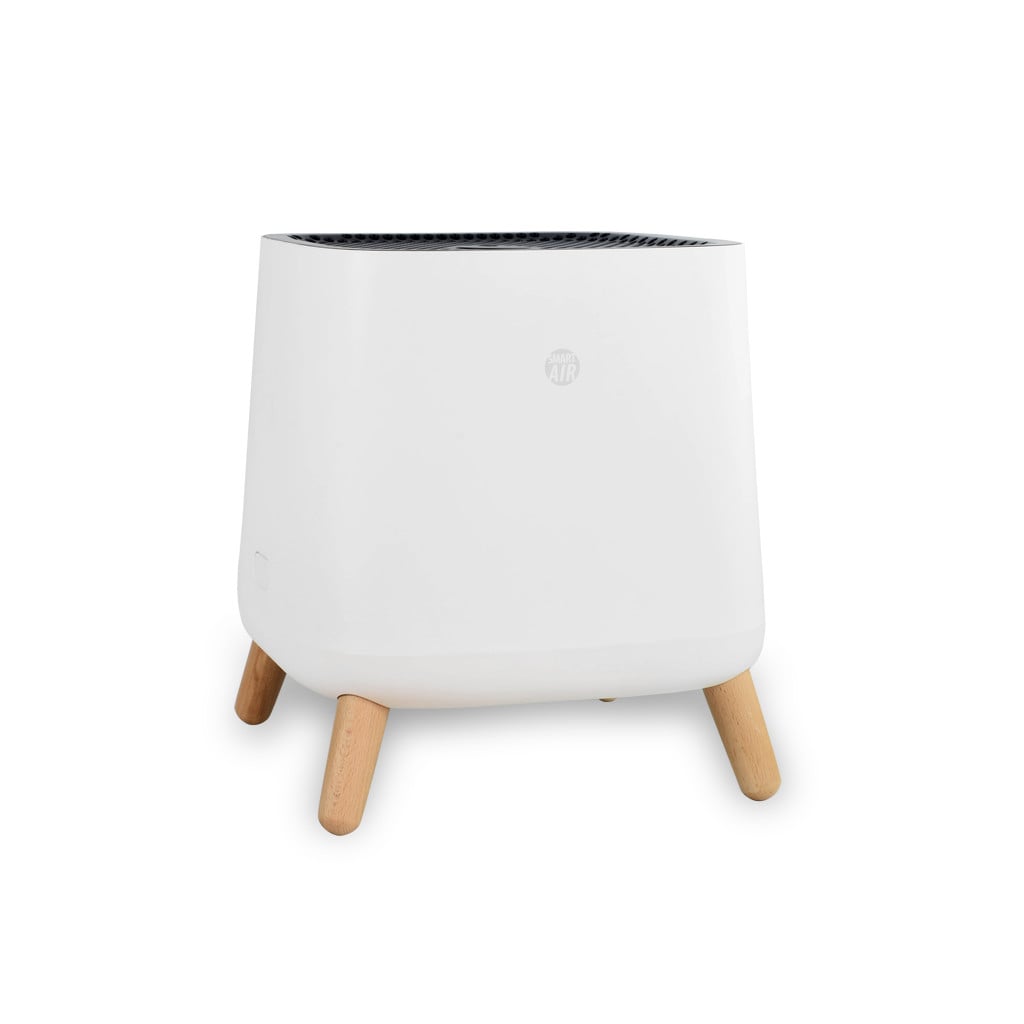
The Sqair: simple, ioniser-free air cleaning
Key features:
- Runs as quiet as 23 dB on low, suitable for bedroom usage
- Scales up to cover living areas up to around 43 m²
- H12 HEPA filtration for dust, pollen and PM2.5
- Built-in carbon filter for everyday odours
- No ionisers or ozone-producing technologies

4. The word ‘ioniser’ often goes by different names
Because many people are wary of ionisers (especially due to ozone concerns), companies often rebrand them under different names, including:
- “Plasma ion technology”
- “Plasmacluster” / “PlasmaWave”
- “Negative ion generator”
- “Cold plasma”
- “Hypoallergenic mode”
- “Nanoe”
- “Streamer"
Different name, same mechanism: charging particles so they stick to surfaces.
If a purifier advertises “ionic”, “plasma”, or “active air cleaning”, always double-check what it actually does.
5. They can increase visible dust, not reduce it

Because ionisers push particles out of the air and onto surfaces, you often end up with:
- More dust settling on furniture
- Black streaking on walls (common with bipolar/“plasma” units overseas)
- Dust build-up inside the purifier housing
A proper HEPA purifier captures dust inside the filter and removes it from circulation entirely.
6. Health side: ozone, byproducts, and why NZ schools were told to avoid ionisers

Ionisers can generate small amounts of ozone as a by-product. Even when the levels are low, ozone is a highly reactive gas. Indoors, it can react with everyday chemicals, things like cleaning products, perfumes, building materials and even the natural oils on skin and surfaces to create new VOCs and aldehydes.
So instead of reducing chemical pollution, ionisers can unintentionally add extra byproducts to your indoor air.
This is one reason many public health and education bodies advise against ionisation devices. In New Zealand, the Ministry of Education’s official ventilation guidance was very clear by requesting schools do not purchase air purifiers with ionisers for classrooms:
“We recommend air cleaners with high-efficiency HEPA filters, and do not use emerging technologies that emit any substances into the air (for example ionisers, plasma discharge, ozone generators, photocatalytic oxidation or hydrogen peroxide).”
That’s a strong signal that ionisers and other “active” purifier technologies aren’t yet considered safe or reliable in real-world indoor environments.
For further reading, take a look at the following:
1. California Air Resources Board: Hazardous Ozone-Generating Air Purifiers
2. EPA: Ozone Generators sold as air cleaners
7. So why doesn’t Snap Air sell ioniser purifiers?
Because they don’t fit what we stand for.
No gimmicks to inflate CADR
No cheap “add-on” used to justify a higher price
No hidden chemistry that could add byproducts to your air
All the purifiers we sell stick to transparent, well-understood tech:
- High airflow
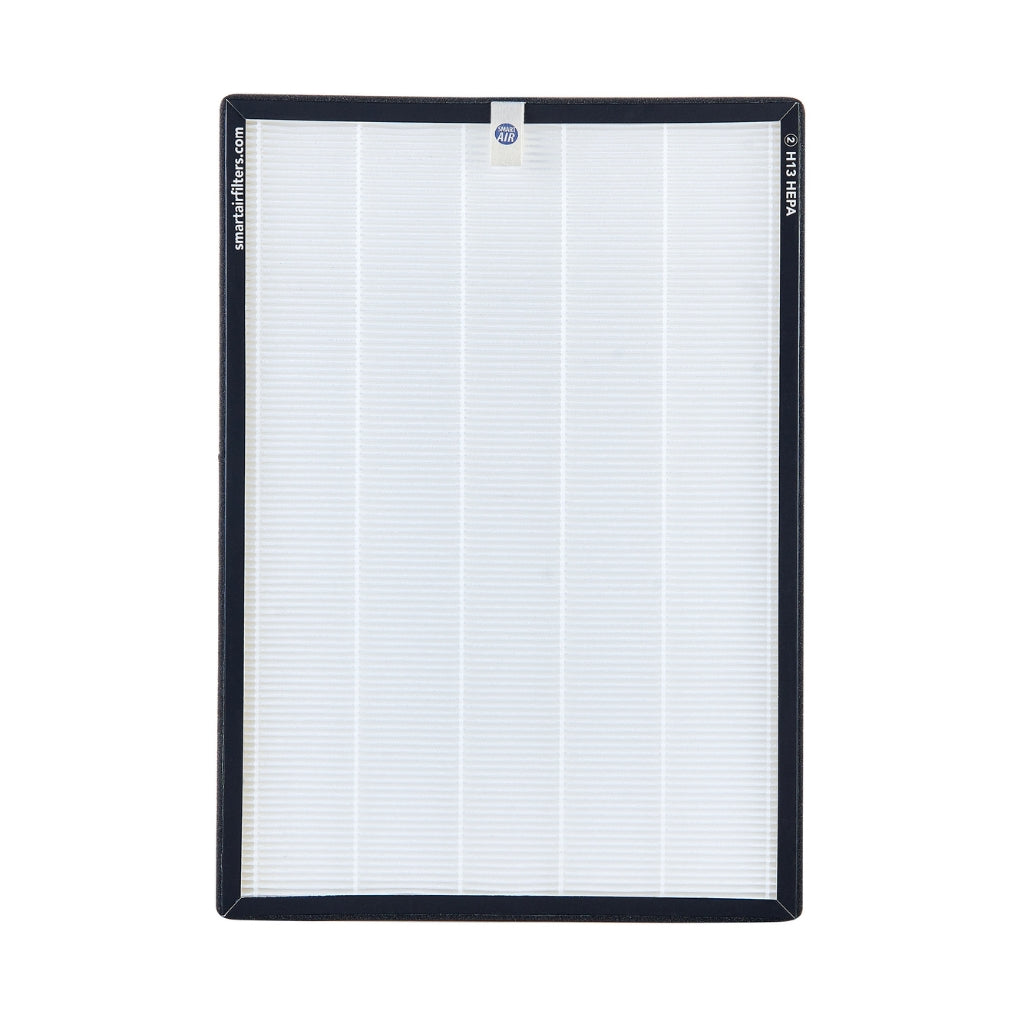
- Proper HEPA filters
- Carbon filters where odours/VOCs genuinely need to be reduced
- No ionisers, no plasma marketing, no mystery “active” systems
When you see a CADR figure on our site, it’s coming from actual filtered airflow, not ions knocking particles onto your floors.
8. What to look for instead of ionisers

If you’re shopping around and want genuinely cleaner air, focus on:
HEPA filter: H11 or greater for particles
CADR / airflow: big enough for your room size and target air changes per hour
Carbon filter: only if you need help with smells or VOCs
Noise levels: so you can actually run it at an effective speed
Honest specs: no vague “plasma”, “ionic shield” or “active molecular” language
You don’t need fancy-sounding tech to get clean air. You just need a purifier with the following:
A decent fan + a good HEPA filter + enough airflow for your space.
Looking for a simpler, ioniser-free air purifier?
If you’re after clean air without added technologies, our range of HEPA air purifiers focuses on what actually works. Strong airflow, proven filtration, and low noise. No ionisers, no ozone, and no unnecessary extras
Are negative ion air purifiers safe to use?
Some ionisers can produce small amounts of ozone as a by-product, which is why they’re often discouraged for indoor use. Even when ozone levels are low, many people prefer not to introduce additional substances into their indoor air when effective alternatives exist.
Do ionisers actually clean the air?
Ionisers can cause particles to clump together or settle onto surfaces, which may reduce airborne particle counts in tests. However, this doesn’t necessarily mean particles are being removed from the room, they may simply end up on furniture, floors, or walls instead of being captured in a filter.
Why do so many air purifiers include ionisers?
Ionisers are inexpensive to add and can make performance numbers look better in lab tests. They also sound advanced on a spec sheet, which can help products stand out - even if real-world benefits are limited.
If I turn the ioniser off, is the purifier still effective?
In many cases, yes, but performance may be lower than advertised. Manufacturers rarely publish CADR figures with the ioniser disabled, making it difficult to know the purifier’s true filter-only performance.
What’s the safest alternative to an ioniser-based purifier?
A properly sized air purifier that relies on HEPA filtration is the simplest and most proven option. HEPA filters physically capture particles like dust, pollen, viruses, smoke and PM2.5 without adding new substances to the air.
Relevant Articles:


Share