



Air Purifiers for Sleep: What Actually Matters (NZ Guide)

A lot of people start thinking about air purifiers after a run of bad nights. Waking up with a blocked nose, dry throat, or itchy eyes is a reasonable prompt. The air in a closed bedroom can build up particles throughout the day and evening, and when you shut the door and go to sleep, those allergens and fine particles don't just disappear.
Running a HEPA purifier in your bedroom overnight can genuinely help, but there's a practical catch: if it's too loud, you'll just turn it off. The goal is finding something that actually keeps the air clean at a speed quiet enough to sleep through. This guide walks through how to think about that tradeoff.
This guide explains:
- Why bedroom air quality matters overnight (including a note on CO2)
- The noise versus cleaning power tradeoff
- How to size a purifier for your room
- How the Sqair and SA600 compare for bedroom use
- Practical tips for overnight use
Quick Summary: Air Purifiers & Sleep
Fine particles like dust, pollen, and pet dander stay airborne in a closed bedroom overnight
Aim for noise under 30 dB at the speed you'll actually run it on
CADR at a quiet speed matters more than peak CADR at full power
A larger purifier on low is often quieter and more effective than a smaller one on high
No display lights is worth prioritising, as they're more disruptive in a dark room than most people expect
Table of contents
1. Why bedroom air quality matters overnight

The bedroom is one of the best places to run a purifier consistently. You're typically in there for 7 to 9 hours with the door closed, breathing the same air the whole time.
During the day, dust, pollen, pet dander, smoke particles, and other fine particles make their way into your home. They settle, get stirred up, and circulate. When you close the bedroom door for the night, a lot of that is still floating around in the air. It doesn't disappear just because you're asleep.
For people with allergies, hayfever, dust sensitivity, or pets that come into the bedroom, this is often when symptoms are at their worst. A HEPA purifier running overnight gradually reduces the background level of those particles. Many people notice the difference within a few nights, though results do vary and it won't fix underlying issues.
A note on CO2: There's another overnight air quality factor worth knowing about, even though an air purifier can't help with it. In a closed bedroom, CO2 levels build up from your breathing and can climb well above 1000 ppm by morning. At those levels, some people notice poorer sleep quality or that groggy, stuffy feeling on waking. An air purifier won't reduce CO2, as it doesn't bring in fresh air. The fix for CO2 is ventilation: a cracked window or door is usually enough to keep levels reasonable. The upside is that if you're ventilating overnight, a purifier is a good companion. It helps filter whatever particles come in with that fresh air, so you're not trading one problem for another.
It's not a cure for anything. But running a purifier alongside good ventilation covers both bases: fresher air and fewer particles.
Dust, pollen, and pet dander don't disappear when you go to sleep. In a closed bedroom, they stay airborne for hours. A purifier running overnight keeps working while you rest.
2. The core tradeoff: noise versus cleaning power

Here's where most people run into trouble. A purifier might be rated for your room size, but that rating is typically based on running at higher speeds. Drop it to a quiet, sleep-friendly speed and many units deliver significantly less airflow, sometimes not enough to make a meaningful difference.
So you end up choosing: run it loud enough to actually clean the air, or run it quietly and hope for the best.
The better solution is a purifier with enough CADR at a low speed to clean your bedroom properly, so you don't have to choose. That's usually where stepping up one model size pays off. A larger unit running on low delivers more airflow than a smaller one on medium, and does it more quietly.
Under 30 dB is the general target for sleep. A quiet room typically sits around 30 to 35 dB. Below 30 dB is whisper-quiet, and most people can't pick it up over ambient room noise.
A larger purifier running quietly on low often cleans more air than a smaller one running flat-out, and you won't hear it.
3. Sizing: how much airflow does a bedroom actually need?
The most useful way to think about this is air changes per hour (ACH): how many times the purifier can cycle through the full volume of your room each hour.
For a bedroom, 3 or more air changes per hour is a reasonable target. It keeps particle levels down through the night without needing the unit on high speed.
A rough rule of thumb: multiply your room size (m²) by 7.5 to get a minimum CADR to aim for.
| Room Size |
Minimum CADR for ~3 ACH |
| 9m² | ~65m³/h |
| 12m² | ~90m³/h |
| 15m² | ~115m³/h |
| 20m² | ~150m³/h |
| 24m² | ~180m³/h |
The key thing to check is whether a purifier can hit that CADR at a speed that's also quiet enough to sleep through. If it only reaches your target on medium or high, it's probably not the right fit for overnight use.
One thing worth knowing when comparing purifiers: it's common for manufacturers to quote their headline CADR figure at full speed, and their noise figure at the lowest speed. Those two numbers never apply at the same time. So a purifier that looks quiet on paper might only achieve that noise level when it's barely moving any air, and the impressive CADR might only apply when it's running loud. It takes a bit of digging to find out what a unit actually delivers at a quiet, sleep-friendly speed. Which is why we publish the full figures for every speed setting across our range.
4. The Sqair and SA600: how they compare for bedrooms
We've kept this focused on two models, the Sqair and the SA600, as they're the best fit for most bedroom situations.
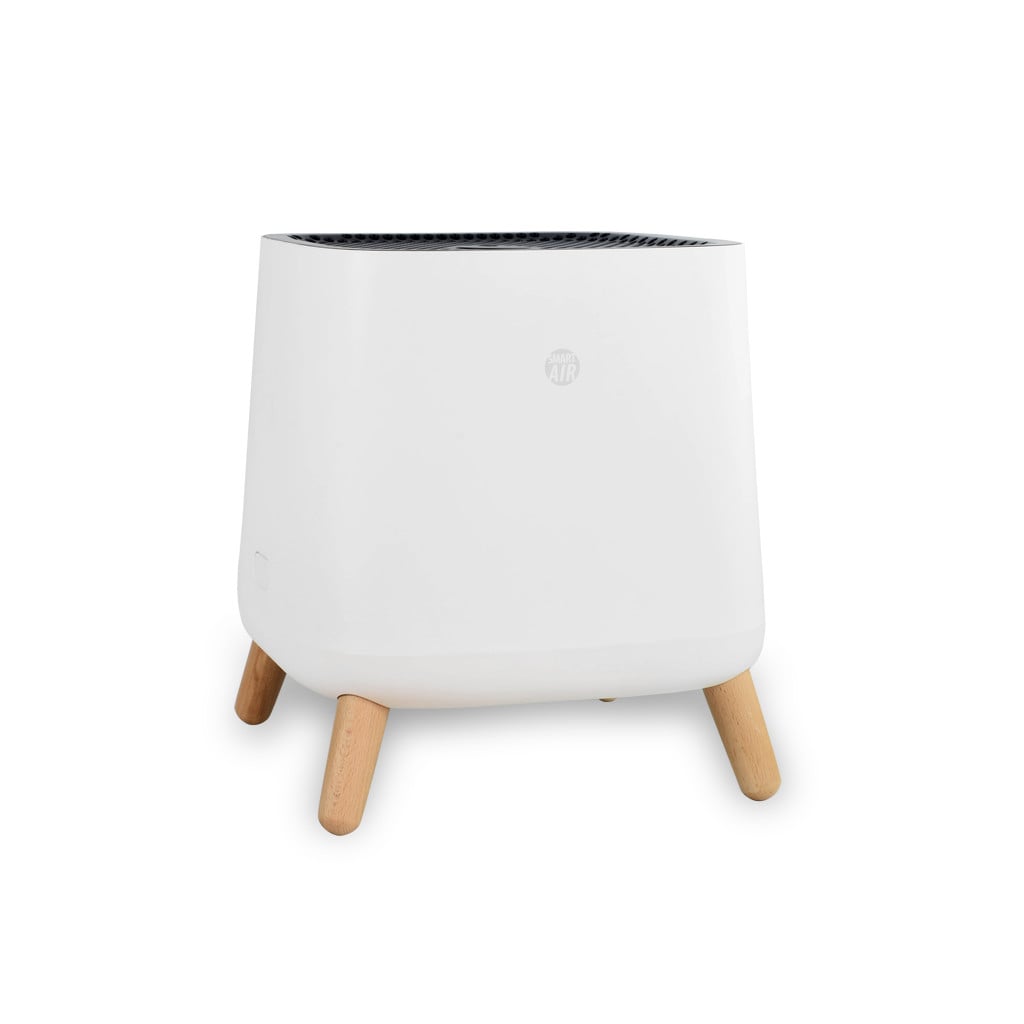
Smart Air Sqair
The Sqair is a simple 3-speed purifier with an H12 HEPA filter and carbon included as standard.
For smaller bedrooms up to around 9m², the Sqair on low hits 3 air changes per hour at a near-silent 23 dB. For bigger rooms you'd need to run it higher, and 43 dB on medium is audible, especially at night.
A solid option if your bedroom is on the smaller side and budget is a factor, or you don't mind some white noise.

| Speed | CADR | Space Cleaned (3x/hour) | Noise |
| Low | 65m³/h | 9m² | 23dB |
| Med | 180m³/h | 24m² | 43dB |
| High | 315m³/h | 43m² | 52dB |
Smart Air SA600
The SA600 has 5 speeds and a dual-inlet design, giving it considerably more range than the Sqair.
Speed 1 runs at just 16 dB, below what most people can even perceive in a quiet room, while still delivering enough airflow for bedrooms up to around 18m². Step up to Speed 2 for more cleaning power with barely any added noise.
For most NZ bedrooms, it's the more versatile pick. Quiet enough on low for sleep, and plenty of headroom for daytime use including in larger areas like living rooms.

| Speed | CADR | Space Cleaned (3x/hour) | Noise |
| Speed 1 | 125m³/h | 18m² | 16dB |
| Speed 2 | 180m³/h | 24m² | 28dB |
| Speed 3 | 240m³/h | 32m² | 34dB |
| Speed 4 | 320m³/h | 43m² | 41dB |
| Speed 5 | 508m³/h | 68m² | 51dB |
5. Don't overlook the lights
It's a small detail, but display lights and indicator panels can be more disruptive in a dark bedroom than you'd expect.
Most of our purifiers have no lights or displays at all. The SA600 does have a small indicator panel, but it includes an auto do-not-disturb mode that switches all lights off after two minutes. So once you've set your speed and settled in, there's nothing left to disturb the room.
If you're comparing other brands, it's worth checking whether the display can be fully switched off, as many can't.

6. A note on white noise
Some people actively like a low hum (like a fan) in the room overnight. It can mask other sounds and become part of a sleep routine. If that sounds like you, you have more flexibility on noise, and running the purifier a step up from its lowest speed can be worth it for the extra airflow.
If you're a light sleeper or noise-sensitive, the sub-30 dB figures are the ones to focus on.
7. Practical tips for overnight use
Start it before bed. Running the purifier for an hour before you sleep means it's already made a dent in particle levels by the time you're in the room. Then drop it to a quiet speed for the night.
Keep the door mostly closed. The purifier works best when it's cleaning a defined volume of air rather than an open-ended space.
Placement matters a little. Somewhere with decent airflow around it works better than a corner tucked behind furniture. It doesn't need to be perfectly positioned, just not blocked.
Wrapping up
The bedroom is probably the highest-value place to run a purifier consistently. Here's what to keep in mind:
- Dust, pollen, pet dander, and fine particles stay airborne in a closed bedroom overnight — a purifier running quietly through the night reduces what you're breathing
- Aim for 3+ air changes per hour at a speed quiet enough to sleep through
- Under 30 dB is the target for most people; the SA600 on Speed 1 runs at 16 dB
- A larger purifier on low is often quieter and more effective than a smaller one on high
- If you also notice that stuffy feeling in the morning, a slightly cracked window alongside your purifier covers both bases: fresh air in, and a filter to clean whatever comes with it
- Check that any purifier you're comparing publishes CADR and noise figures at the same speed setting, many don't
Find your bedroom purifier
These HEPA air purifiers are quiet enough for overnight use, honestly specced, and built to run continuously without fuss.
Can I run an air purifier in my bedroom all night?
Yes. All our purifiers are designed for continuous use. At low speeds they draw very little power and are quiet enough to leave on indefinitely.
What noise level is quiet enough for sleeping?
Most people don't notice anything below about 30 dB. The SA600 on Speed 1 runs at 16 dB, which is genuinely below what most people can perceive over normal ambient room sounds.
Do air purifiers help with morning congestion?
They can help by reducing airborne particles like dust, pollen, and pet dander that build up overnight. Many people notice a difference within a few nights of consistent use, though results vary depending on the underlying cause.
Is bigger always better for a bedroom?
Not necessarily, but a unit with more headroom can run at a lower percentage of its power range, which usually means quieter operation for the same or better cleaning effect.
What if my partner is more noise-sensitive than me?
The SA600 on Speed 1 at 16 dB is a good starting point. It's about as quiet as a purifier gets while still delivering useful airflow.
Will an air purifier reduce CO2 in my bedroom overnight?
No. Air purifiers filter particles from the air already in the room. They don't bring in fresh air, so they don't affect CO2 levels. If your bedroom feels stuffy in the morning, a slightly open window or door is the most effective fix. The good news is that a purifier works well alongside ventilation. It helps filter the particles that come in with fresh air, so you get the benefit of both.
Relevant Articles:


Share