



Cleaner, safer air for clinics and the people who depend on it
Quiet, hospital grade HEPA purifiers and CO2 monitoring for New Zealand medical, dental, allied health and aged care settings. Lower the airborne load in waiting and treatment rooms, help protect vulnerable patients, and keep your team well and on the floor.
Commercial/Healthcare & clinics
In a clinic, the air is part of patient safety
Waiting rooms gather unwell people in one enclosed space, often for a while, often beside someone whose immune system is already under pressure. Respiratory bugs travel through that shared air. The good news is that the evidence for cleaning it is now real world, not theoretical.
An honest read on the evidence: the researchers behind the hospital studies were clear that a filter on its own is not a guarantee. Clean air works as one layer, alongside ventilation, vaccination, and staff staying home when unwell. That is exactly how we will help you set it up.
What clinics are actually up against
Healthcare spaces have a tougher brief than most. Knowing the specific pressures helps target the right fix, rather than buying a box and hoping.
Waiting rooms
Unwell people, enclosed space, time on the clock. It is the highest risk spot for airborne spread in most clinics, and usually the first place to clean the air.
Vulnerable patients
Older people, infants, and anyone immunocompromised through cancer treatment, transplant or chronic illness are more exposed to airborne infection. Cleaner air is a quiet way to look after them.
Keeping staff well
A clinic short two people is a clinic running on the back foot. Reducing the airborne load helps cut the bugs that pass between staff and patients, and the sick days that follow.
Aerosol generating work
Dental drilling, scaling and some respiratory procedures throw fine aerosols into the air. High clean air output between patients helps clear a treatment room faster.
Clinical odours and VOCs
Disinfectants, dental materials and cleaning products carry smells and VOCs. An activated carbon filter helps manage these, alongside fresh air.
Seasonal surges
Winter brings flu, RSV and Covid through the door in waves. A purifier already running, quietly, all day, is ready before the surge arrives rather than after.
Layered, measured, and honest about the limits
No gimmicks. The same few proven things that public health researchers recommend, set up properly for clinical spaces.
Ventilation for fresh air
Bringing in outdoor air dilutes airborne virus and CO2. Where you have mechanical ventilation, make the most of it. A purifier does not replace this, and we will say so plainly.
HEPA filtration for what is left
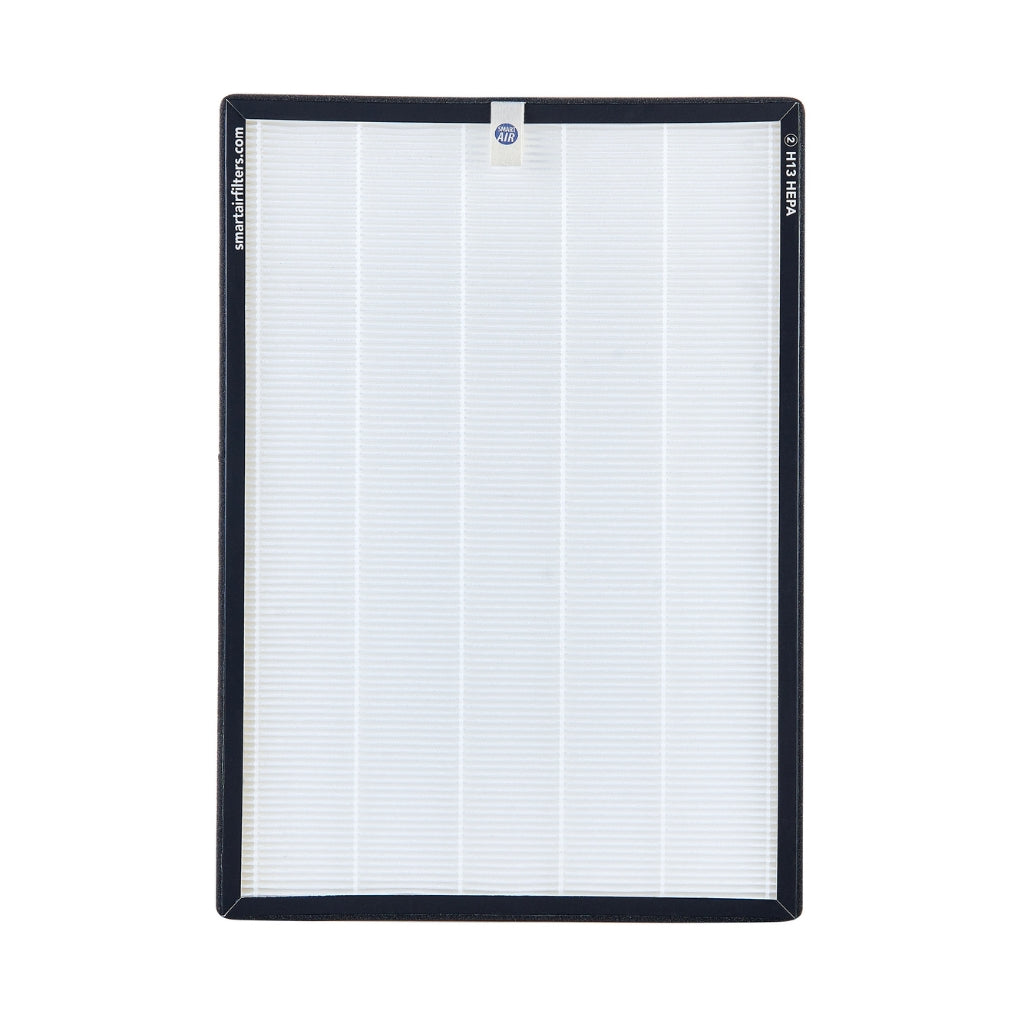
When ventilation alone cannot do the job, HEPA filtration captures the fine, virus carrying particles. We size by CADR and air changes per hour for your actual rooms. An optional H14 filter steps up to hospital grade capture.
Measure it with CO2
A CO2 monitor shows when a waiting room needs more fresh air, and confirms the setup is doing its job. The recognised benchmark is keeping CO2 below 800ppm.
Why the SA700 fits clinical spaces
The SA700 was the natural starting point for clinics. It mounts on the wall or ceiling to keep the floor clear, runs at a quiet 42dB so it stays on through consults, and uses about 12W, roughly the power of a Wi-Fi router. The aluminium body is fire resistant and built for continuous, around the clock use.
It also gives you a genuine filter choice. The included E11 filter delivers the most clean air for larger waiting rooms. The optional H14 filter is certified hospital and cleanroom grade, capturing 99.995% of particles in a single pass, the right call where a patient group is especially vulnerable.

Smart Air SA700
720 m³/h clean air, 42dB, 12W. Wall, ceiling or floor mounted. Optional H14 hospital grade filter.
E11 filter (included)
- Most clean air output (720 m³/h), best for larger waiting rooms
- Captures at least 95% of particles per pass, fast air changes
- Two pre-installed and ready to run out of the box
H14 filter (optional upgrade)
- Hospital and cleanroom grade, certified to EN1822
- Captures 99.995% of particles in a single pass
- Longer life, so it works out cheaper to run over time
Which purifier suits which clinical space
Most clinics are a mix of small consult rooms and larger shared areas, so the right answer is usually a couple of different units. Here is a practical starting point. We will confirm sizing for your floor plan.
| Space | Rough size | Good fit | Why |
|---|---|---|---|
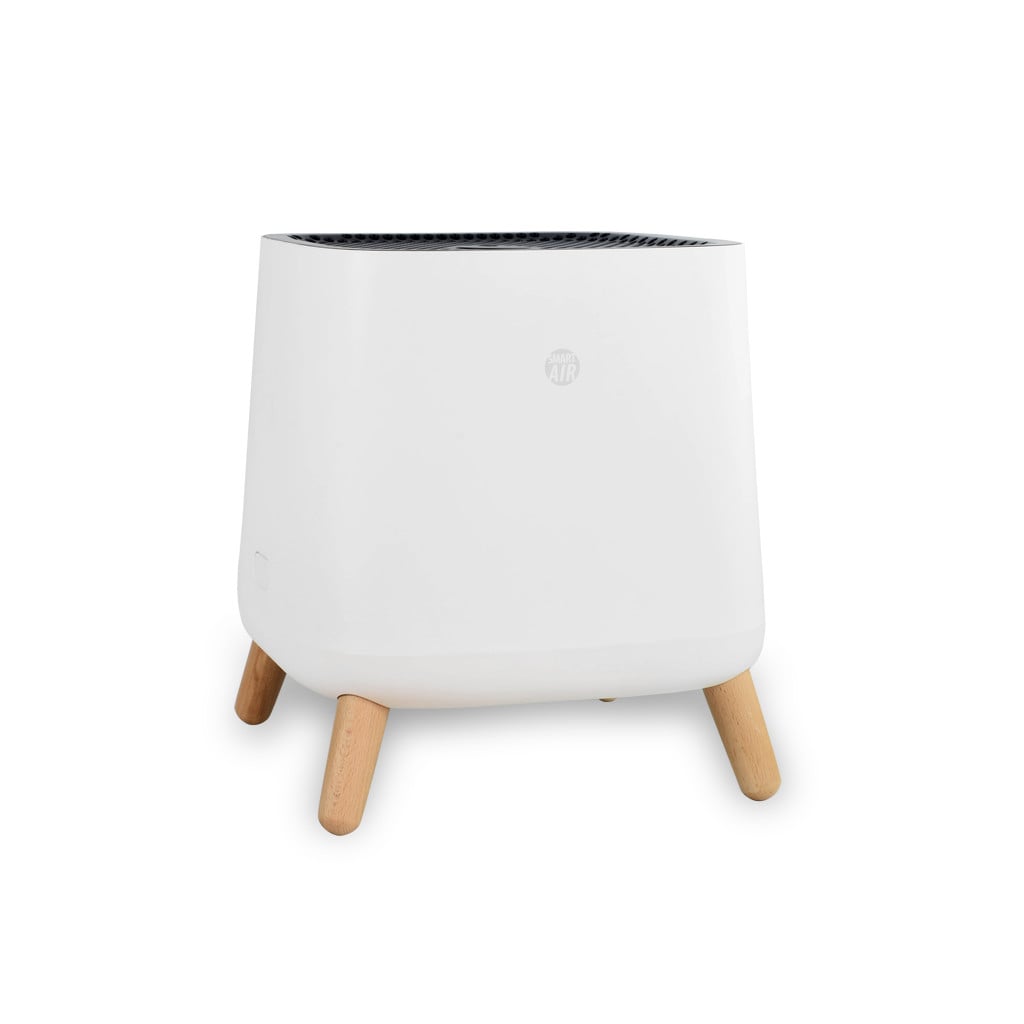
| Consult and treatment rooms | Up to ~25m² | SA600 or Sqair | The SA600 runs at 16dB on low, quiet enough to leave on during consults. The Sqair is the value pick for small rooms. |
| Dental surgeries, larger treatment rooms | Up to ~60m² | SA700 or SA600 | The SA700 wall mounts to keep the floor clear, and high clean air output helps clear aerosols between patients. H14 option for higher risk work. |
| Waiting rooms, open reception | Up to ~85m² | SA700 or Blast Mini | Both deliver high clean air output for the busiest, highest risk space in the clinic. The SA700 mounts out of the way, the Blast Mini moves on castors. |
| Large waiting areas, aged care lounges, day units | Up to ~130m² | Blast Mk II | The highest clean air output we stock, yet barely noticeable at 43dB on full. Built to run all day in a big, busy space. |
Room sizes are a guide based on roughly 3 air changes per hour. Higher risk spaces benefit from more, and public health guidance suggests aiming for a CADR two to four times the room volume. Send us your rooms and we will size it properly.
Quiet, efficient purifiers built to run all day
Sized by clean air delivered (CADR). The SA700 leads for clinical spaces, with the Blast units for the largest rooms and the Sqair and SA600 for small consult rooms.
Smart Air SA700
Wall, ceiling or floor mounted, around the power of a Wi-Fi router, with an optional H14 hospital grade filter. Built for continuous clinical use.
bulk pricing on request Details →
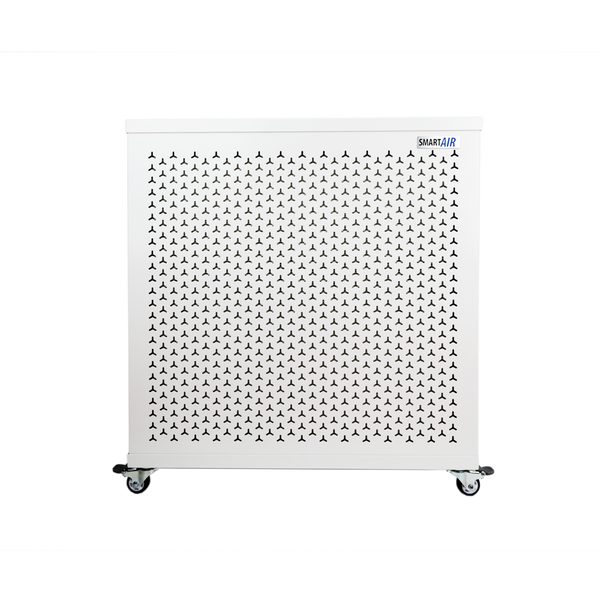
Blast Mini Mk II
Three speeds and a washable pre-filter, on castors so it moves between rooms. H13 HEPA as standard. Clears an 85m² space in around 17 minutes on high.
bulk pricing on request Details →
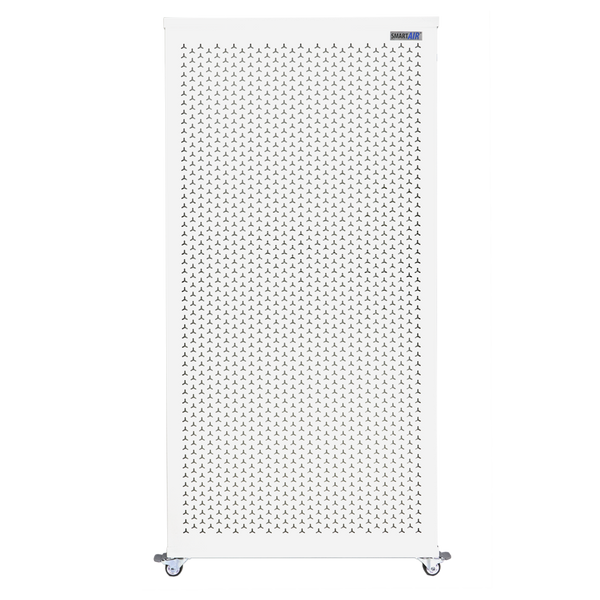
Blast Mk II
The highest CADR we have seen in New Zealand, yet barely noticeable at 43dB on full. Built for large waiting areas and day units. H13 HEPA as standard.
bulk pricing on request Details →
Approved supplier to the UK's NHS Supply Chain
Smart Air, the manufacturer behind our range, was recently approved as an official supplier to the UK's NHS Supply Chain, with the Blast and Blast Mini named as particularly well suited for healthcare settings. It is a UK health system approval rather than a New Zealand certification, but it sits alongside the same units already running in hospitals, clinics and care settings worldwide.
Small consult and treatment rooms?
For single consult rooms, treatment bays and quiet spaces, the SA600 and Sqair are the right scale. The SA600 runs at just 16dB on low, so it stays on through appointments without anyone noticing.
Bulk and multi room pricing available. Backed by Christchurch based support. See how the full range compares in our guide to the best value air purifiers in NZ.
Know when a waiting room needs fresh air
A full waiting room builds CO2 quickly, and rising CO2 is a signal that fresh air is running low and airborne risk is climbing. A monitor on the wall turns that into a number reception staff can act on, by opening a door or window when it climbs.
Honest pairing: monitors do not clean the air, and purifiers do not lower CO2. You want both signals, fresh air for CO2, filtration for particles.

Smart Air CO2 Monitor
A simple 3 in 1 for CO2, temperature and humidity, with real time Wi-Fi alerts. Wall mountable, up to 30 day battery. Ideal for waiting rooms and shared clinical areas.
What clean air will and will not do in a clinic
We would rather set the right expectations now than oversell to a healthcare buyer who knows better.
What a good setup does
- Removes fine, virus carrying particles and other bioaerosols from the air
- Lowers the airborne load in waiting and treatment rooms
- Helps protect immunocompromised and vulnerable patients and staff
- Runs quietly and cheaply enough to leave on around the clock
What it will not do
- Replace ventilation, infection control or PPE. It is one layer, not the whole plan
- Lower CO2 or add fresh air. That is a ventilation job
- Sterilise surfaces. It cleans the air, not the bench or the door handle
- Guarantee nobody is exposed. It reduces risk, it does not remove it
A note on "active" air treatments
You will see ionisers, bipolar ionisation and similar add ons marketed to clinics for virus control. We keep our distance, and so do the public health researchers we follow. NZ guidance recommends switching ionisers off and avoiding electrostatic precipitators in rooms with people present, because the evidence is unclear and some devices can produce byproducts such as ozone. We stick to what is measurable and proven: mechanical HEPA filtration and fresh air. Our guide to air purifiers for viruses explains the reasoning.
Show patients you take their air seriously
Running Smart Air purifiers in your clinic? Request free Air+ stickers for the door or window. A simple, honest signal to patients and whānau that the air in your waiting room is being looked after.
Clinic air purifiers, answered
Is there real evidence purifiers help in healthcare settings?
Yes. When researchers at Addenbrooke's Hospital ran portable HEPA filters on Covid wards, they removed almost all airborne traces of the virus and sharply cut other airborne bacteria, fungi and viruses. The researchers were honest that it works as one layer alongside ventilation, not a standalone fix.
Should we choose the H14 hospital grade filter?
It depends on the space. The included E11 filter gives the most clean air and fastest air changes, which suits larger waiting rooms. The optional H14 filter is certified to EN1822 and captures 99.995% of particles per pass, the better call where your patient group is especially vulnerable. You can switch between them and keep the spare set.
Will it be quiet enough for consult rooms?
Yes, when sized right. The SA600 runs at 16dB on low, quieter than most people can hear, and the SA700 sits at 42dB at full output. We size so the unit does its job without intruding on a consultation.
Can it help clear aerosols between patients in a treatment room?
Higher clean air output means faster air changes, which helps clear airborne particles between appointments. We size the unit to the room so you get enough air changes to make a real difference, and pair it with ventilation where you can.
How much does it cost to run continuously?
Very little. The SA700 draws about 12W, roughly the power of a Wi-Fi router, which is around 7 cents a day running non stop. The larger Blast units use more but are still cheap to run. We can give per unit figures with a quote.
Do you do bulk and multi site pricing for clinic groups?
Yes. Tell us how many sites, rooms and units and we will put together honest pricing, including ongoing filter cost. We can also set up CO2 monitoring with a shared dashboard for visibility across locations.
What about ionising or "air sanitising" units other suppliers push?
We do not sell them. NZ public health guidance recommends switching ionisers off and avoiding electrostatic precipitators in occupied rooms. We stick to proven HEPA filtration and ventilation. Our viruses guide explains why.
Can you supply filter certification for procurement?
Yes, we can provide the relevant filter certification on request, including the EN1822 certification for the H14 filter. Just ask when you enquire and we will sort it.
Let's sort your clinic
Tell us the rooms, rough sizes and how they are used. We will recommend the right setup with honest sizing and bulk pricing. No pressure, no jargon.
You send a few details. Rooms, rough sizes, and any higher risk spaces.
We size it properly. By CADR and air changes, with E11 or H14 where it counts.
You get a clear quote. Honest pricing, including ongoing filter cost.
Prefer email? Reach us directly at commercial@snapair.co.nz
Run a clinic and want to offer clean air to your patients at home too? Ask us about our clinic partner programme.