



Air Purifiers and Airborne Contact Dermatitis in NZ

Most people think of skin irritation as something you touch. A new soap, a plant in the garden, a metal in a watch strap. But for a lot of people, the trigger is not something they touch at all. It is in the air.
Airborne contact dermatitis is skin inflammation caused by tiny particles that settle onto exposed skin from the air around you. It often gets missed, partly because the term is not widely known, and partly because the air in a room is easy to overlook. If your skin flares and you cannot pin down what you touched, the air is worth a look.
This guide walks through what airborne contact dermatitis is, why the air in your bedroom matters more than you might expect, and how an air purifier fits in. We will be honest about what a purifier can and cannot do, because it is one useful layer, not a cure.
This article explains:
- What airborne contact dermatitis is, and how it differs from ordinary contact dermatitis
- Why a compromised skin barrier makes airborne particles a bigger deal
- What an air purifier can and cannot do for irritated skin
- What to look for when choosing one, and how to set it up
Quick Summary: Air Purifiers & Asthma
Airborne contact dermatitis happens when particles in the air settle on exposed skin, rather than from something you directly touch
A weakened skin barrier, as in eczema, lets more of that load through, so lowering the airborne particles around you can ease the pressure
A HEPA air purifier reduces the airborne particle load in a room. It does not repair the skin barrier or remove allergens already settled in bedding
The bedroom is a priority. It is where you spend the most continuous time, and where skin does a lot of its overnight repair
Lead on high CADR (how much clean air per hour), then choose an H13 filter for the finest particles. The SA600 does both and runs at 16 dB on low
Run it continuously and keep the filters fresh. A purifier works best alongside washing bedding, ventilation and managing any damp source
Table of contents
1. What airborne contact dermatitis actually is
Ordinary contact dermatitis needs direct contact. Your skin touches something it reacts to, and that spot flares. Airborne contact dermatitis works differently. The particles are suspended in the air, they settle onto skin that is out in the open, and they trigger the same kind of inflammatory reaction. The route is the air, not a touch.
The giveaway is where it shows up. Airborne contact dermatitis tends to affect the areas that stay uncovered: the face, eyelids, neck, the V of the chest, the forearms and the backs of the hands. The upper eyelids often cop it worst, because particles settle there easily and get trapped when you blink. Skin under clothing is usually spared. That pattern is what helps a clinician tell it apart from other rashes.
Plenty of everyday particles can be behind it, including:
| Common airborne trigger | Where it comes from |
|---|---|
| Pollen and plant particles | Grass, weeds and trees, worst through spring and summer |
| Dust mite debris | Bedding, carpet and soft furnishings, stirred into the air as you move |
| Mould spores | Damp homes, bathrooms, wardrobes and anywhere with poor airflow |
| Pet dander | Cats and dogs, light enough to stay airborne for a long time |
| Fragrance and spray volatiles | Air fresheners, cleaning sprays, perfumes and aerosols |
| VOCs and formaldehyde | New furniture, paint, and off-gassing from building materials |
Once these land on skin, they do not always just sit there. Research suggests skin can start taking up some airborne allergens within about half an hour of contact, which is one reason continuous, low-level exposure adds up over a night.
2. Why a compromised skin barrier changes the picture
Healthy skin is a good wall. It keeps most of this out. But in atopic eczema the barrier is weaker, with reduced ceramides and, for many people, a filaggrin difference that leaves the skin more porous and more reactive.
That creates two problems that feed each other. First, particles that intact skin would block get through more easily, so the same load that does nothing to most people can set off a real reaction. Second, once the skin has been sensitised to a particular airborne allergen, even small re-exposures can provoke a response out of proportion to the amount.
There is a quieter effect too. Even exposure that is too low to cause a visible flare can keep the itch signalling ticking over in the background. That feeds the itch-scratch cycle, and scratching damages the barrier further, which lets more through again. Reducing the airborne load is a way of taking pressure off that loop.
The bedroom is the single longest stretch of continuous exposure in your day, and it lines up with when skin does much of its repair. That is why cleaner bedroom air tends to matter more than anywhere else in the house.

3. What an air purifier can and cannot do for your skin
This is where it helps to be plain. An air purifier is good at one job: pulling airborne particles out of the air in a room. That is useful for airborne contact dermatitis, because the trigger is airborne. But it is not a treatment, and it will not fix everything.
✓ What it can do
- Lower the airborne load. Continuously reduce pollen, dust mite debris, dander, mould spores and fine PM2.5 in the room.
- Keep the bedroom cleaner overnight, during your longest stretch of exposure.
- Help with some irritant gases, if it has a real carbon filter, for things like fragrance and spray VOCs.
- Run quietly in the background so it is easy to keep going every night.
✗ What it cannot do
- Repair the skin barrier or replace your skin care and treatment plan.
- Remove allergens already settled in your mattress, bedding or carpet.
- Lower CO2, which only fresh air and ventilation do.
- Cure eczema or dermatitis. It reduces a trigger, it does not fix the underlying condition.
On the evidence: the research here is still developing, and there are not many trials testing purifiers specifically for skin conditions. One randomised trial in children with atopic dermatitis found lower eczema severity scores among those using air purifiers, which is encouraging, but the overall body of trial evidence is limited. What is better established is that HEPA purifiers do reduce airborne allergen concentrations in a room, often substantially. The honest position is that a purifier is a reasonable, low-risk thing to try if airborne particles are part of your picture, not a guaranteed fix.
4. What matters when choosing one: CADR first, then H13
Two numbers do most of the work. The first is CADR, or Clean Air Delivery Rate. It tells you how much clean air the purifier delivers each hour, which decides how many times it can clean the whole room. Allergens are constantly being stirred back into the air as you move around, so you want enough air changes to keep up, not just a single slow pass.
Here is where the number can mislead you, and it is how cheaper units catch people out. The CADR a purifier is advertised with is almost always its maximum, measured on the highest and loudest speed. Nobody runs a bedroom purifier flat out overnight. So a budget unit rated at, say, 120 m3/h might scrape the floor on paper, but on the quiet low speed you would actually sleep with, its real output is a fraction of that, and it is not clearing the room.
What you want is headroom: a purifier that hits your target while running low and quiet, with more in reserve for when pollen is bad. The SA600 is a good example. Even on its quietest 16 dB setting it is already at the floor for a 15 m2 room, and it has four more speeds above that. So you can keep it whisper-quiet most of the time and turn it up when you need to, rather than maxing out a small unit just to reach the minimum.
Watch the headline number. A CADR figure is usually the maximum, on the loudest speed, so a cheap unit that just reaches the floor there will fall well short on the quiet setting you actually sleep with. Rated output also drops as the filter loads over its life, and a budget unit's number is sometimes propped up by a low grade filter or an ioniser, neither of which is what you want against fine particles on already-sensitive skin. Look for real headroom and a genuine H13, not just a number that clears the floor.
The second number is filter grade. For most homes, a H12 or even H11 HEPA paired with strong CADR does a great job, and we usually say so. This use case is the exception where we would lean toward H13. Here is the reasoning: when pollen fragments and some mould spores break down, they reach the sub-micron range, and a H13 filter captures more at those finest sizes. If your skin barrier is already compromised and primed to react, that extra headroom at the fine end is worth having. The key is not to trade away airflow to get it. You want high CADR and H13, not one at the cost of the other.
If fragrances, sprays or VOCs are among your triggers, look for a real activated carbon filter with actual carbon pellets, not a thin coated mesh. HEPA handles particles, carbon handles gases and odours. They are different jobs. You can read more on what to prioritise in our guide on what features matter when choosing an air purifier.
5. What a skin clinician sees in practice
We started looking into this properly after Lee Cameron at Medacare Skin Clinic in Invercargill, got in touch. Their clinic works with patients dealing with airborne skin irritation, and they had been recommending clean air as part of the picture, alongside standard skin care.

“The patients who see the biggest change are often the ones who deal with the air in their bedroom. Airborne particles settle on skin that is already compromised, and easing that load overnight, when the skin is trying to repair, takes real pressure off. It is frequently the piece that has been overlooked once the skin care is already sorted.”
That real-world view is a big part of why we put this guide together. There is very little written about airborne skin irritation from a New Zealand angle, and it deserves better information. We are also happy to work with other skin clinics who see the same thing in their patients, so if that is you, feel free to get in touch.
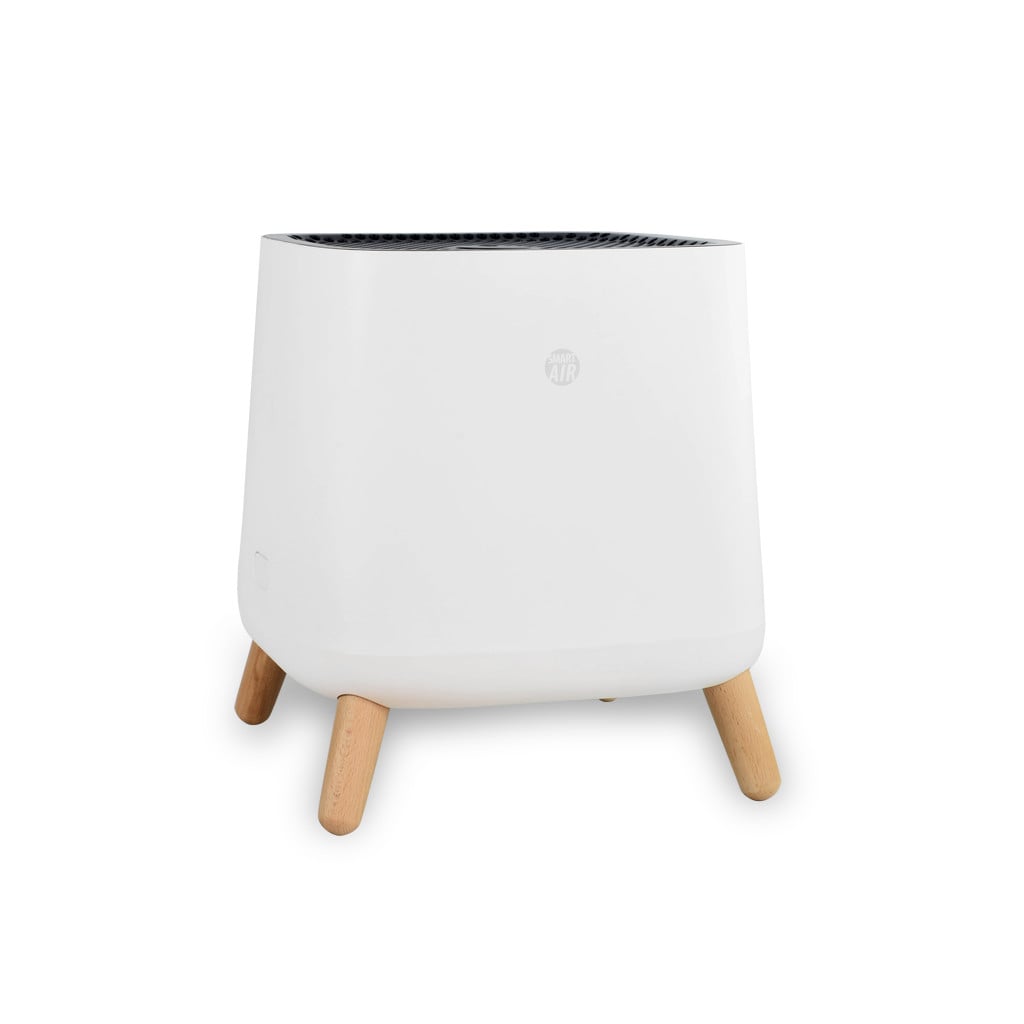
Smart Air SA600: a powerful and quiet H13 purifier
Key features:
- 508 m3/h CADR, enough for rooms up to around 60 m2 with room to spare
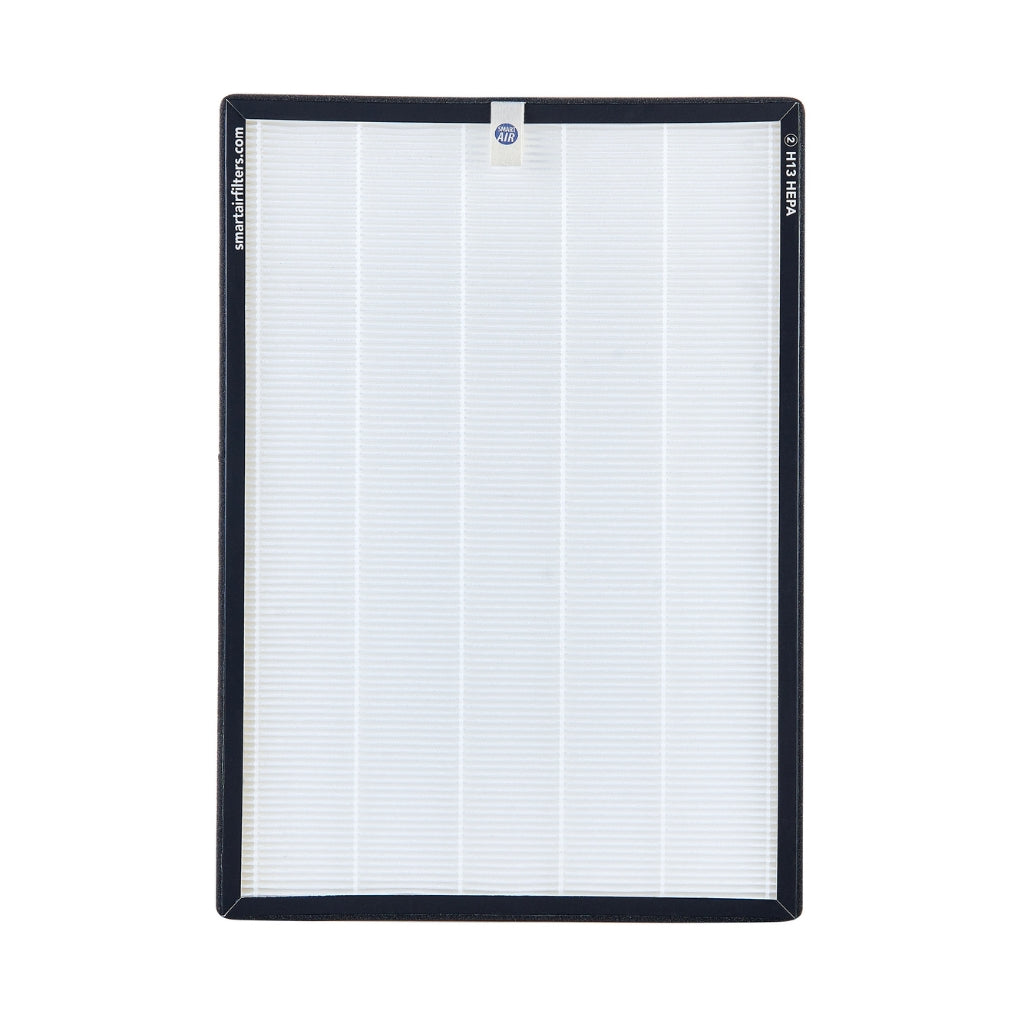
- Two H13 HEPA filters, strong capture right down at the finest particle sizes
- 16 dB on Speed 1, quiet enough to run all night without noticing it
- Five speeds, plus dual carbon filters for everyday odours and some VOCs
- No ionisers and no ozone, just a strong fan and real filters

6. Setting it up so it actually helps
A purifier only helps if it is used well. A few practical points make most of the difference:
- Start in the bedroom. It is your longest continuous exposure and it lines up with overnight skin repair. If you buy one purifier, put it here.
- Run it continuously. Allergens keep getting reintroduced as you move around, so steady running beats switching it on for an hour here and there. On a quiet low speed this costs very little to run.
- Size it with headroom. Use the CADR rule of thumb, then pick a unit whose top output is comfortably above your target. It can then sit on a low, quiet speed and still keep up.
- Keep the filters fresh. A clogged filter loses efficiency, so do not let it run dirty. Our guide on how often to replace air purifier filters covers the timing.
- Treat it as one layer. Wash bedding hot and regularly, consider allergen covers for pillows and mattress, ventilate to keep damp and mould in check, and deal with any moisture source at the root. The purifier handles what is airborne, not what has settled.
7. Larger rooms and open-plan homes

The SA600 suits most bedrooms and covers a decent living area too. If your space is larger, or you want an open-plan living zone covered, step up the CADR rather than settling for a unit that will only keep up on high.
For bigger rooms, the Blast Mini Mk II delivers 740 m3/h for spaces up to around 85 m2, and the Blast Mk II goes further again. Both use H13 filters. If your priority is the highest filter grade available, the SA700 can be run with an optional H14 upgrade, which reaches the finest grade we stock, though its clean air output steps down to 490 m3/h with that filter fitted. That is a fair trade only if maximum capture at the fine end matters more to you than raw airflow. For most people managing airborne skin irritation in a bedroom, the SA600 hits the balance well.
The takeaway for irritated skin:
If airborne particles are part of what sets your skin off, reducing the load in the room where you sleep is a practical, low-effort change to try. It will not replace your skin care or fix a damp problem, but it can take real pressure off during your longest stretch of exposure.
- Airborne contact dermatitis comes from particles settling on exposed skin, not from direct contact.
- A compromised skin barrier lets more of that load through, so lowering it matters more for atopic skin.
- The bedroom is the priority, run a purifier there continuously.
- Lead on CADR for enough air changes, then choose H13 for the finest particles.
- The SA600 pairs high CADR with H13 and runs at 16 dB on low, which suits overnight use.
- Pair the purifier with washing bedding, allergen covers and good ventilation for the best result.
HEPA air purifiers for cleaner air
All three use real HEPA filtration and high clean-air output, with no ionisers or ozone. The right one depends on your room size and how high you want the filter grade. The SA600 is the bedroom pick, the SA700 offers the highest filter grade with its H14 upgrade option, and the Blast Mini Mk II suits larger or open-plan rooms.
What is airborne contact dermatitis?
It is skin inflammation caused by particles that settle on your skin from the air, rather than from something you directly touch. It tends to affect exposed areas like the face, eyelids, neck and forearms, and it often gets missed because the air is easy to overlook.
Can an air purifier cure eczema or dermatitis?
No. A purifier reduces one trigger, the airborne particle load, which can ease the pressure on your skin. It does not repair the skin barrier or replace your treatment. Think of it as one useful layer alongside your skin care, not a cure.
Where should I put the purifier?
The bedroom is the main priority, and it can be placed anywhere unobstructed. It is your longest stretch of continuous exposure and it lines up with overnight skin repair. Run it continuously rather than in short bursts, since particles keep being stirred back into the air.
Will it remove allergens from my mattress and bedding?
No. A purifier only cleans what is airborne. Allergens settled in your mattress, bedding and carpet stay put, so wash bedding hot and regularly, and consider allergen covers for pillows and the mattress. The purifier handles the airborne share.
Relevant Articles:


Share