



Air Purifiers for Viruses
Viruses and bacteria mostly travel in tiny respiratory aerosols, the particles we breathe out when we talk, cough or sneeze. A HEPA purifier captures those aerosols and lowers how much you're exposed to, which reduces risk. It's one useful layer alongside fresh air and ventilation, not a force field, and it can't clean a surface or remove risk entirely.
- Captures fine aerosols
- No ioniser, no ozone
- Christchurch support
- Best value
Aerosols build up fastest in busy, closed rooms, so a purifier helps most when it runs continuously. The Sqair sits at 23 dB on low and the SA600 at just 16 dB, quiet enough to leave on in a bedroom or a shared room all day.

Find your fit in two taps
Most people are protecting the rooms where the household gathers and sleeps. Tell us where it'll run and how big the space is, and we'll point you to the right unit. Busy or higher-risk rooms benefit from more air changes, so when in doubt, size up. No quiz, no email.
Sizes are matched to keep around three air changes an hour at a comfortable noise level for each setting. Bedrooms stay under 30 dB for sleep; living areas can run louder by day for extra airflow.

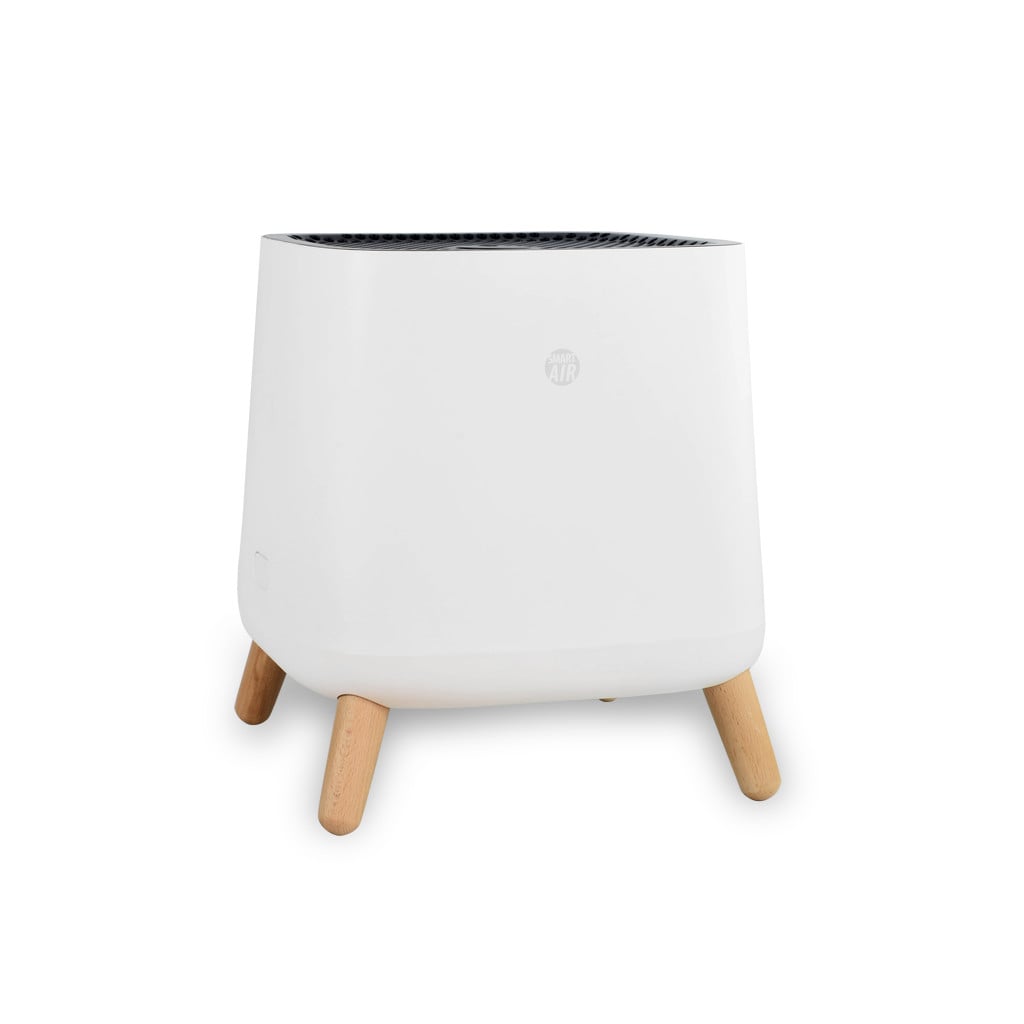
Smart Air Sqair
- 315m³/h CADR
- 43 m²room size
- 23 dBfrom, on low

Smart Air SA600
- 508m³/h CADR
- 60 m²room size
- 16 dBfrom, on low

Smart Air SA700
- 720m³/h CADR
- 78 m²room size
- 42 dBsteady
Even bigger, or a large quiet bedroom?
The Blast range carries the same HEPA and high-CADR approach into the largest rooms, the kind of airflow that delivers more air changes per hour in busy, shared spaces. The Blast Mk II also runs at just 29 dB on low, the quietest big unit we make for a large bedroom or open-plan area.
How HEPA purifiers help with viruses
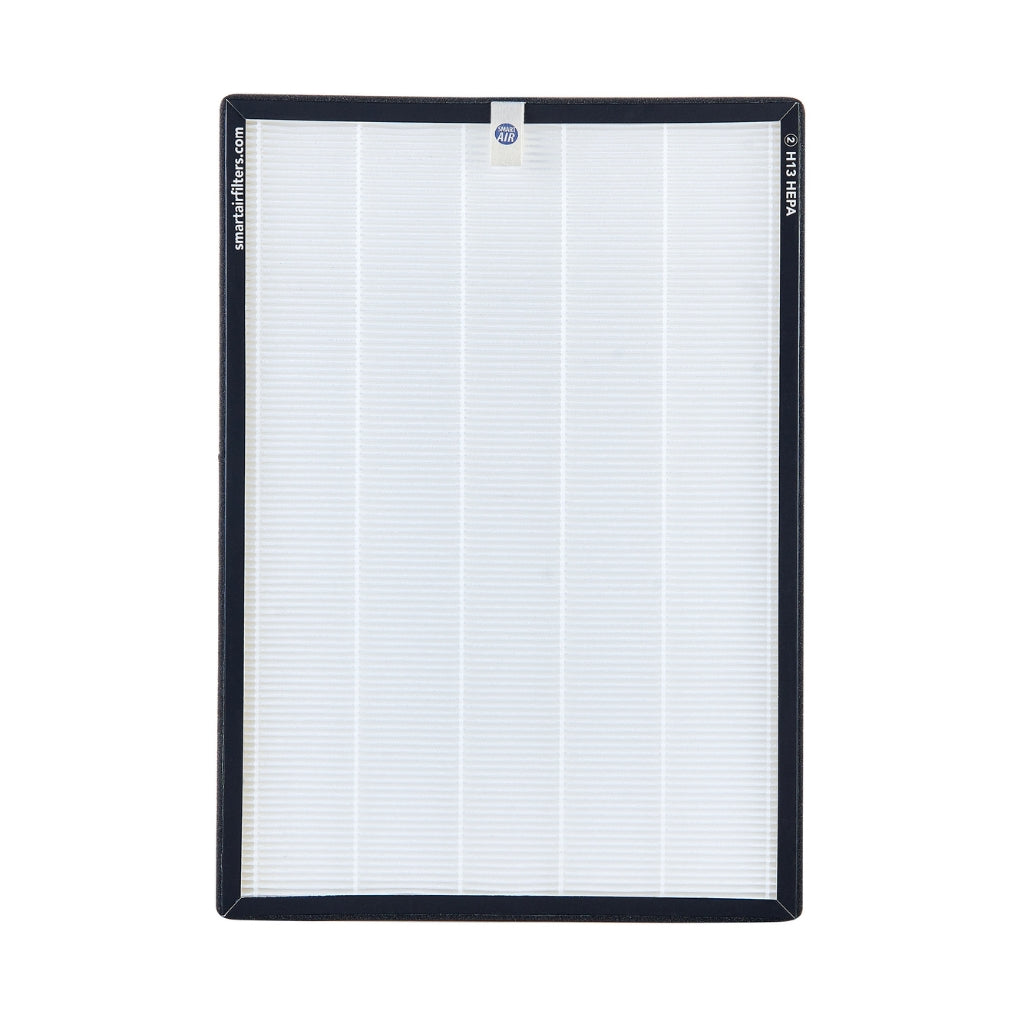
Viruses and bacteria rarely float on their own. Indoors they ride on respiratory aerosols, the fine particles people release breathing, talking, coughing and sneezing. A HEPA filter captures those aerosols as the air passes through, lowering the concentration in the room and the amount you breathe in.
There's a common myth worth clearing up. HEPA is rated 99.97% at 0.3 microns, and people assume virus-sized particles (COVID is around 0.1 micron) slip through. It's the opposite: 0.3 microns is the hardest size for a filter to catch. Particles smaller than that are captured even more effectively, because they move erratically and collide with the fibres. Genuine HEPA handles virus-carrying particles well.
What decides how fast is airflow. The recognised infection-control standard, ASHRAE 241, frames the goal as equivalent clean airflow from ventilation and filtration combined, and a HEPA purifier adds to that. At home, aim for at least 3 air changes per hour from the purifier; in busy or higher-risk rooms, 4 to 6 is better.
A purifier can help with
- Lowering airborne virus-carrying aerosols in a room
- Reducing overall exposure when paired with ventilation
- Busy, shared or poorly ventilated rooms, and higher-illness seasons
- Everyday particles too, like dust, smoke and pollen
It won't
- Clean viruses off surfaces. That's a job for wiping down
- Replace fresh air and ventilation
- Eliminate risk. It lowers it, rather than guaranteeing anything
In independent lab testing, the SA600 reduced airborne H1N1 influenza virus by more than 99.99% in a sealed test chamber.
Worth keeping in context: that's a controlled chamber test on the highest fan speed. Real-world results depend on your room size and how many air changes you get, and like any purifier it works by removing virus-carrying particles from the air, not by sterilising a room. We're happy to share the full report on request, including for commercial and clinic enquiries.
Be cautious of "sanitising" and "active" purifiers
Viruses are where air purifier marketing gets loudest. You'll see ionisers, bipolar ionisation, plasma, and "active" or "sanitising" purification, sometimes badged as NASA-inspired, often claiming huge coverage areas. It sounds more advanced than a plain filter. The data usually isn't.
The honest concerns are consistent: many of these technologies can emit ozone, a respiratory irritant; the evidence is often hard to verify outside the company's own lab; and they frequently don't publish a CADR figure, so you can't compare them fairly against a normal purifier. Even the infection-control standard, ASHRAE 241, while open to any technology, requires air cleaners to be safety-tested for ozone and other byproducts, exactly the bar these add-ons tend to struggle with.
HEPA to capture the virus-carrying aerosols.
Enough airflow (CADR) for the air changes your room needs.
We stick to plain HEPA and carbon: no ioniser, no ozone, and published CADR you can actually check. If you want the detail on why, we wrote about it in our guide to ionisers.
What Kiwi homes and shared spaces say
Bought it for my son's classroom
I bought this to gift to my son's classroom, to help reduce the risk of airborne pathogens (COVID, influenza, the common cold and so on) for him and his classmates. It is exactly what I hoped it would be. Thank you.
Edward HSmart Air SA600
Cold and flu don't spread like they used to
It's awesome, made a difference from day one. With two in my family with allergies that seem to settle overnight, and cold and flu symptoms don't go through the whole house like they used to. We love it.
Billy SSmart Air Blast Mk II
Family stopped getting sick
Needed an air purifier as my wife and daughter were constantly falling sick with congested noses. Did some research and ended up with the Sqair. Turned it on and could feel the difference in air quality immediately. Their symptoms improved dramatically after the first night.
Gabriel LSmart Air Sqair
Confidence dining out in busy spaces
We took the QT3 with us to a food court so we could eat with confidence in a busy space. A lovely confidence boost knowing our risk of getting sick would be lower. Lightweight to carry, and delivery was very quick too.
Kay JSmart Air QT3
Viruses and air purifier FAQs
Do air purifiers kill viruses like COVID?
Isn't HEPA only 99.97% at 0.3 microns, so it misses viruses?
Are ionisers or UV worth it for viruses?
How many air changes should I aim for?
Will it clean surfaces or replace ventilation?
How much is delivery and how long does it take?
Looking after a school, office or clinic?
Air changes matter even more in busy shared spaces, where guidance points to higher rates of around 4 to 6 per hour. We help schools, offices and clinics size and combine units for the space, and we're happy to share the SA600 virus test report for your records.
See our commercial optionsLearn more about viruses and clean air
We believe in open data and honest science. These sources explain how HEPA filtration reduces airborne virus particles, and how to think about clean airflow.
Ready to clear the air?
A quiet, ioniser-free HEPA purifier lowers the airborne particles that carry viruses, one honest layer alongside fresh air. Proven filtration, published CADR, no gimmicks.
Shop our purifier range