



Air Purifier Dehumidifier Combos: Worth It? (NZ Guide)

If you're dealing with a damp, musty home and also want cleaner air, it's natural to wonder whether one device can handle both. Combo air purifier dehumidifier units exist, and they sell on the promise of convenience: less clutter, one purchase, two problems solved.
The reality is more complicated. Both functions require very different internal hardware, and combining them in one box means compromises on at least one side. This doesn't mean combo units are useless, but it does mean you should understand what you're trading off before deciding.
This article explains:
- How air purifiers and dehumidifiers work differently
- Why combining them into one unit creates trade-offs
- What the combo units available in NZ actually look like in terms of specs
- When a combo might make sense, and when two separate devices are the better call
Quick Summary: Air Purifier & Dehumidifier Combos
Air purifiers and dehumidifiers solve different problems with very different technology inside
Combining them into one unit means compromising on at least one function
Most combo units on the NZ market have weak CADR figures relative to their price
High-end combos are expensive; a better-performing separate purifier and dehumidifier can be bought for less
For most homes, two focused devices will outperform one combo unit at the same or lower cost
If space is genuinely limited and your needs are modest, a high-end combo can work for a small room
Table of contents

1. Why these two devices are more different than they look
It's easy to assume that because both a purifier and a dehumidifier deal with air, they'd combine neatly. In practice, the hardware they rely on is almost completely different.
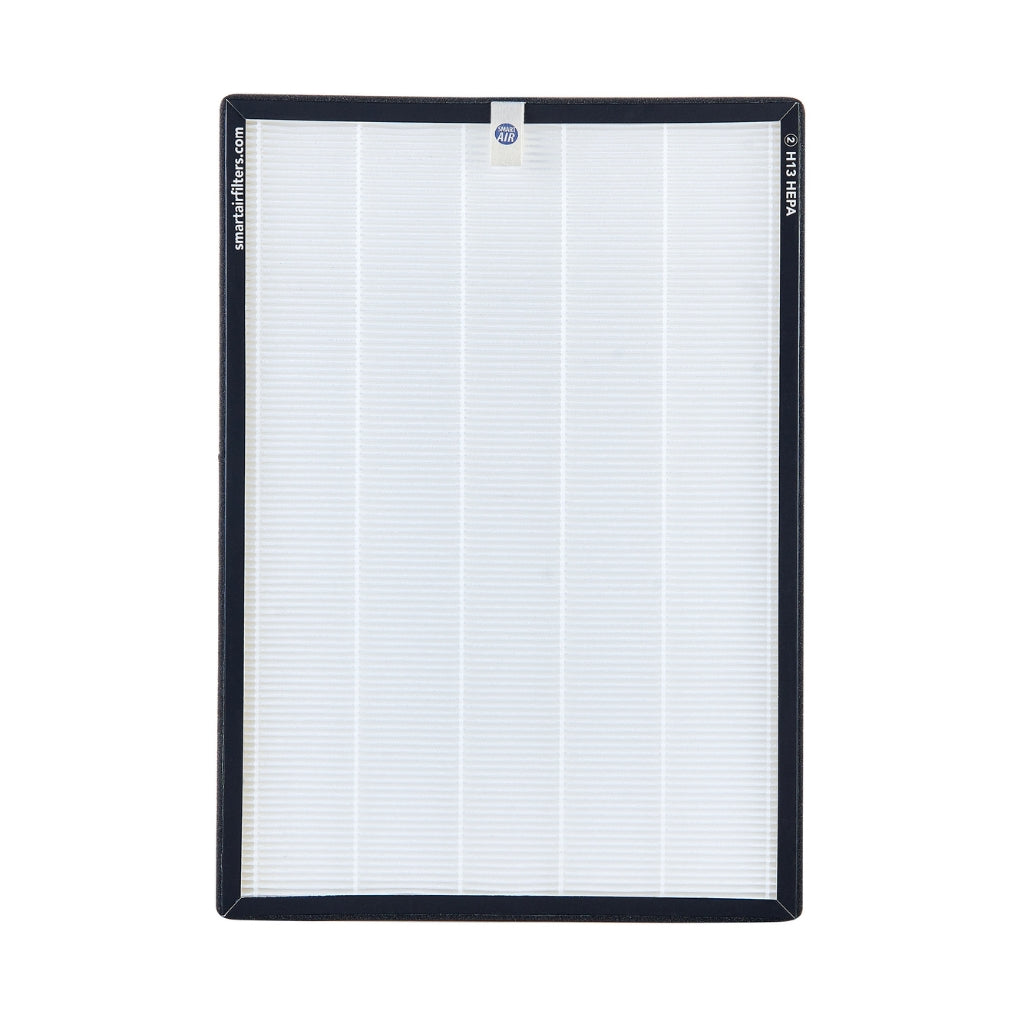
An air purifier works by pulling air through a filter, usually a HEPA filter for particles and a carbon filter for odours. The key performance metric is CADR: Clean Air Delivery Rate, measured in cubic metres per hour. More CADR means more clean air delivered. The filter does all the work, and the fan speed determines how much air moves through it.
A dehumidifier works by chilling a surface inside the unit so that water vapour in the air condenses on it, like a cold glass on a humid day. That condensed water drains into a tank. The mechanism involves a compressor and refrigerant coils, which are bulky and generate heat. The key metric is how many litres of moisture it can remove per day.
These two mechanisms have almost no shared components. To put both in one box, manufacturers have to fit a compressor, refrigerant coils, water tank, fan, and a filter system into a single casing. Something has to give, usually the fan size and filter surface area, which directly affects CADR.
A dehumidifier compressor and an air purifier filter system have almost nothing in common. Fitting both into one box means compromising the size of each, and CADR is usually what suffers most.

2. What the NZ market actually looks like
We looked at the combo units available in New Zealand and compared them on the two metrics that matter most: CADR for air purification and litres per day for dehumidification.
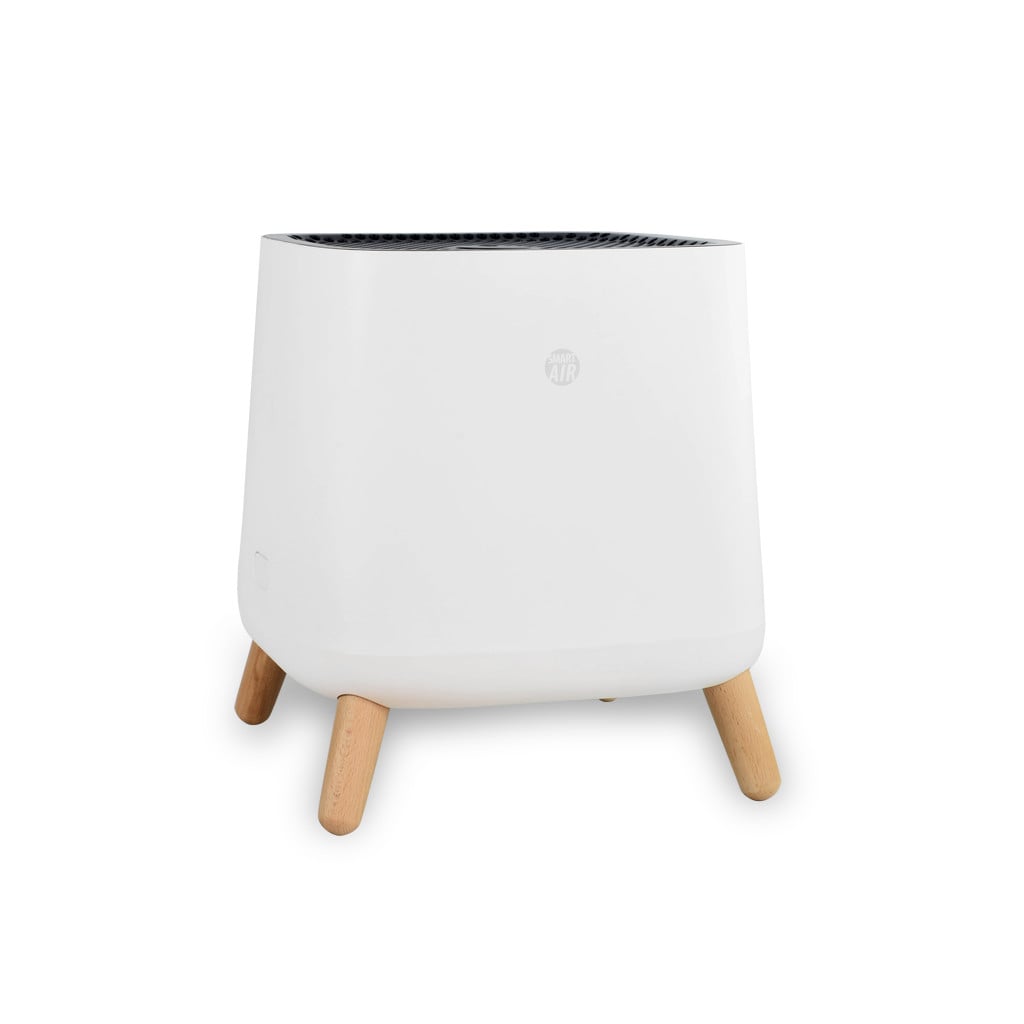
As a reference point, our entry-level air purifier, the Sqair, has a CADR of 315 m³/h and is priced at $349.99. A standalone dehumidifier with decent moisture removal starts at around $200 to $300 and removes 10 to 25 litres per day.
| Device | Price (NZD approx) | Moisture removal (L/day) | CADR (m³/hr) |
| Phillips Series 5000 | ~$1,200 | 25 | 270 |
| Breville Smart Dry 2-in-1 | ~$600 | 21 | 195 |
| Smart Air Sqair Purifier | $350 | n/a | 315 |
| Standalone Dehumifier | ~$200 - $300 | up to 25 | n/a |
High-end combo units
The Philips Series 5000 sits at the top of the market at around $1,200. It offers moisture removal of 25 litres per day and a CADR of 270 m³/h. That CADR is reasonable but still lower than the Sqair, and the price is about four times as much.
The Breville Smart Dry 2-in-1 comes in at around $600 and removes 21 litres per day, with a CADR of around 195 m³/h. That's roughly equivalent to running a Sqair on medium speed, at twice the price.
Budget combo units
Budget models from brands like Sheffield and My Genie don't publish CADR figures at all. Given their small size and modest dehumidification performance (some remove as little as 750 mL per day), it's fair to assume air purification performance is limited to the smallest spaces. Without published CADR, you're essentially buying blind on the air purification side.
3. The case for two separate devices

When you buy two separate devices, each one is built to do its job well. A standalone air purifier has more filter surface area, a larger fan, and higher CADR for the price. A standalone dehumidifier has a properly sized compressor and water tank for meaningful moisture removal.
There are also some practical advantages worth thinking about:
Flexibility. You don't need to run both functions all year. In a damp NZ winter you might run the dehumidifier constantly and the purifier as needed. In a dry spring, you might switch that around. Two devices let you do this without any trade-offs.
Replacement parts. Combo units can leave you stuck if replacement filters become hard to source, a common complaint from owners of discontinued models. With separate devices, you're not reliant on one manufacturer keeping both components available.
One point of failure. If a combo unit breaks, you lose both functions. If a standalone purifier or dehumidifier needs servicing, you still have the other one running.
More options. With separate devices, you can match the right purifier to your room size and needs, and the right dehumidifier to your moisture problem. Combo units force a compromise.
Two focused devices will usually outperform one combo unit at the same or lower total price. The trade-off with combos is real, and it shows up in the specs.
Smart Air SA600: Good coverage for living spaces and larger bedrooms
Key features:
- 508 m³/h CADR on high; handles rooms up to around 60 m²
- Quieter than you'd expect: 16 dB on Speed 1, meaning you can leave it running overnight in a bedroom without noticing
- H13 HEPA filter captures dust, pollen, mould spores, and fine particles including PM2.5
- Carbon filters included as standard for odour reduction
- Five speeds give flexibility to run quietly for sleep or at higher output when you need to clear the air fast
- No Wi-Fi or app required; simple controls, nothing to configure

4. When a combo unit might actually make sense
To be fair, there are situations where a combo unit is a reasonable choice.
If you have a very small room, say a single bedroom or a laundry, and you're genuinely short on floor space, a high-end combo might be a practical compromise. The Philips and Breville units do provide meaningful moisture removal alongside decent (not outstanding) air purification for a smaller area.
If the alternative is having no dehumidifier at all because you can't fit or afford two separate devices, a combo unit with published CADR figures is still better than relying on a budget purifier and no dehumidification.
The decision largely comes down to room size and what you're prioritising. For most people with a typical NZ home, two separate devices are the better outcome.
5. Does running a dehumidifier help air quality at all?
One thing worth understanding: dehumidifiers do contribute to air quality indirectly, even without a HEPA filter.
Mould needs moisture to grow. By keeping relative humidity below around 60%, you reduce the conditions that let mould establish itself and release spores into the air. So a dehumidifier helps prevent a particle problem from developing, even though it doesn't filter existing particles.
That said, if there's already mould present in your home, a dehumidifier and an air purifier together won't fix the underlying issue. The mould source needs to be physically removed and the moisture problem addressed at the source (leaks, poor ventilation, structural dampness). An air purifier will help filter mould spores that are airborne in the meantime, but it's not a long-term substitute for fixing the source.
A dehumidifier helps prevent mould by removing moisture from the air. An air purifier helps filter mould spores that are already airborne. They complement each other, but neither replaces dealing with the source.
Wrapping up: Combo or separate?
For most NZ homes, two separate devices deliver better results and more flexibility than a single combo unit.
- A combo unit requires both mechanisms to share one casing, which limits the fan and filter size, directly affecting CADR
- Most combo units on the NZ market are priced significantly higher than equivalent standalone devices
- High-end combos (Philips, Breville) perform reasonably for small rooms but are expensive relative to what you get
- Budget combos without published CADR figures offer no real way to assess air purification performance
- Two separate devices give you flexibility, better performance per dollar, and independent control of each function
- A combo unit can make sense if space is very limited and your needs are modest for both functions
Simple, effective HEPA air purifiers for NZ homes
These purifiers focus on what actually matters: strong CADR, honest specs, and HEPA filtration that handles particles well. Pair with a standalone dehumidifier if moisture is also an issue.
Do combo air purifier dehumidifier units work?
Yes, but with trade-offs. The best units on the NZ market (Philips, Breville) offer reasonable performance in both functions, but their CADR figures are lower than you'd get from a comparably priced standalone purifier. Budget combo units generally don't publish CADR at all.
What's better: a combo unit or separate devices?
For most people, two separate devices will outperform a combo unit at the same or lower total cost. You get stronger air purification, better moisture removal, more flexibility, and the ability to replace parts independently.
Can an air purifier help with mould?
It can filter mould spores that are already in the air, which helps reduce what you're breathing. But it won't fix the underlying moisture problem that's causing mould to grow. That needs to be addressed at the source.
Does a dehumidifier improve air quality?
Indirectly, yes. By keeping humidity below around 60%, you reduce the conditions that allow mould to develop, which keeps spore counts lower over time. A dehumidifier doesn't filter particles though; that's what a HEPA purifier is for.
What CADR should I look for in an air purifier?
A useful rule of thumb: multiply your room size in m² by 7.5 to get a minimum CADR target for about 3 air changes per hour. So a 20 m² bedroom wants at least 150 m³/h CADR. Running the purifier at a comfortable speed on a larger unit often beats running a smaller unit flat out.
Can I run an air purifier and dehumidifier at the same time?
Yes. They don't interfere with each other. Running both together is actually a good approach in damp conditions: the dehumidifier tackles moisture and reduces mould risk, while the purifier filters what's already airborne.
Why don't some combo units list their CADR?
CADR is an independently verifiable performance standard, and publishing a weak figure is commercially awkward. If a unit doesn't list CADR, it's usually because the number wouldn't stack up well compared to standalone purifiers.