



Air Purifiers for Viruses & Bacteria: What Works (Incl COVID)
on Jan 08 2026

Many people search for an air purifier for viruses after hearing claims about COVID, bacteria, or “air sanitising” technologies. The question is usually simple: do air purifiers actually help and if so, what kind works?
The short answer is yes, a properly chosen HEPA air purifier can help reduce airborne particles that may carry viruses and bacteria. But it’s not a silver bullet, and not all purifier features contribute equally.
In this guide we’ll cover:
- How air purifiers help with viruses and bacteria
- Why HEPA filtration and CADR matter most
- Common marketing claims to be cautious of
- How to size and use a purifier effectively
Quick Summary: Air Purifiers for Viruses
A HEPA purifier can help reduce airborne aerosols that may contain viruses and bacteria
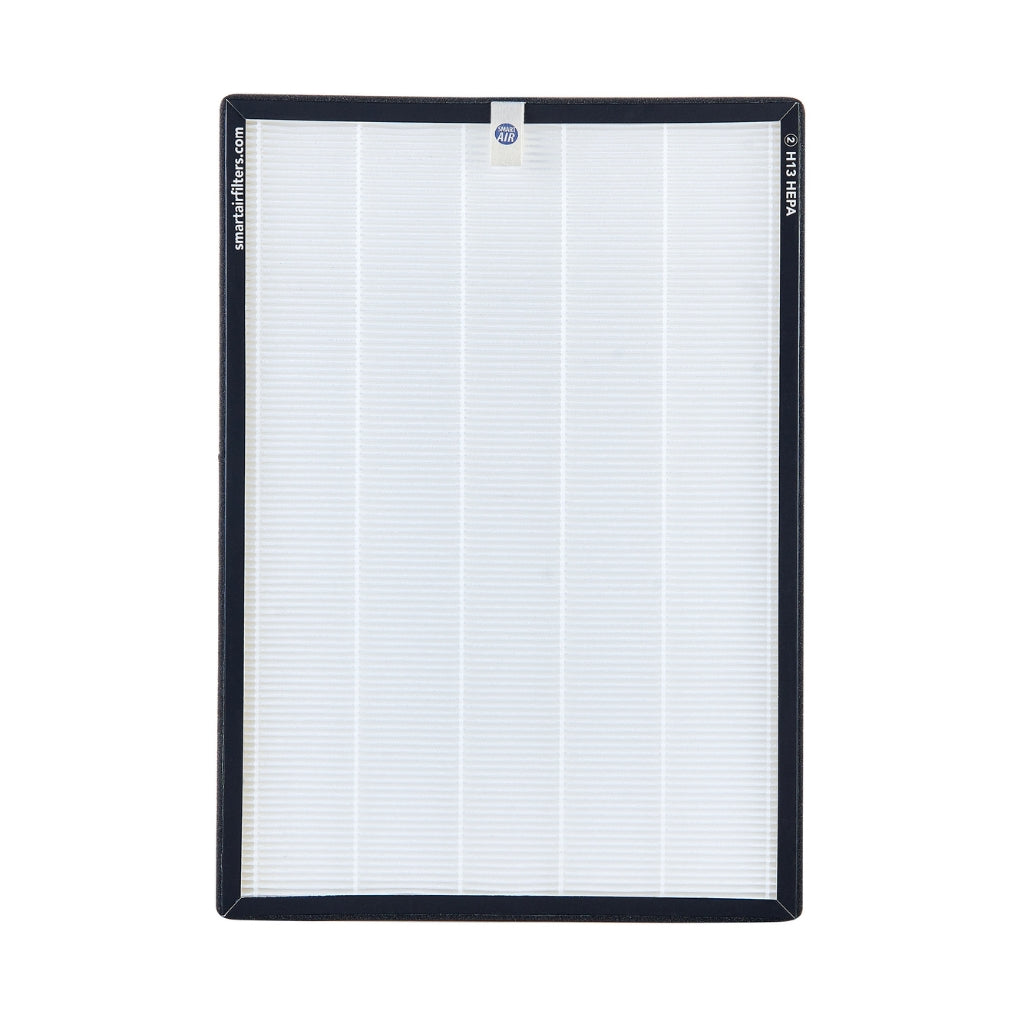
HEPA filters capture ultra-fine particles, including those smaller than 0.3 microns
CADR (Clean Air Delivery Rate) determines how quickly air is cleaned
Air cleaning helps most when used with ventilation + other layers (it’s not a standalone solution)
Be cautious with “sanitising” add-ons like ionisation, ozone, plasma, and weak UV
Table of contents
1. Do air purifiers help with viruses and bacteria? 2. HEPA filtration: clearing up a common misconception 3. CADR, room size, and air changes per hour (ACH) 4. How many air changes should you aim for? 5. Using an air purifier effectively 6. “Sanitising” add-ons: what to be cautious of 7. What air purifiers can't do
1. Do air purifiers help with viruses and bacteria?

Viruses and bacteria don’t usually float around on their own. In indoor environments, they’re typically carried in respiratory aerosols. These are tiny particles released when people breathe, talk, cough, or sneeze.
Air purifiers help by removing these airborne particles from the air, lowering the overall concentration that people are exposed to.
The US EPA recognises portable air cleaners with HEPA filters as one way to help reduce airborne contaminants indoors, including in the context of COVID-19 - particularly when used alongside other measures like ventilation
2. HEPA filtration: clearing up a common misconception
One of the most common misunderstandings about HEPA filters comes from how they’re described.
You’ll often see HEPA filters defined as being 99.97% efficient at 0.3 microns, and some people interpret this to mean HEPA is less effective at capturing smaller particles. This includes viruses, which are often smaller - COVID for example is ~0.1 microns.
In reality, this isn’t how HEPA filtration works.
Why 0.3 microns is quoted
According to the EPA, 0.3 microns is used because it’s the most difficult particle size for a HEPA filter to capture. That's known as the most penetrating particle size.
Particles larger than this are easier to trap. Importantly, particles smaller than this are also captured even more effectively, due to diffusion. This is where ultra-fine particles move erratically and collide with filter fibres
What this means in practice
HEPA filters are effective at capturing ultra-fine and nanoscale particles
Particles smaller than 0.3 microns are not “too small” for HEPA
This applies to all genuine HEPA filters, not just specific brands
Some purifier companies market their products as uniquely capable of capturing viruses or nanoparticles, implying other HEPA filters can’t. That’s marketing spin. Capturing ultra-fine particles is a core property of HEPA filtration itself, not a special add-on.
The real differentiator isn’t whether a purifier can capture these particles, it’s how much air passes through the filter, which brings us to CADR.
3. CADR, room size, and air changes per hour (ACH)

CADR (Clean Air Delivery Rate) tells you how much clean air a purifier can deliver per hour. In practical terms, it determines how often the air in a room can be cleaned, which depends on the size of the space.
As the graphic above shows, the same purifier can achieve very different results in different rooms. In a smaller room, it may clean the air several times per hour. In a larger space, that same unit will clean the air less frequently.
This is why relying only on “recommended room size” can be misleading. A more useful way to think about performance is air changes per hour (ACH). That's how many times the entire volume of air in a space is effectively filtered each hour.
4. How many air changes should you aim for?
Ventilation guidance often references around 4 air changes per hour (ACH) in total as a reasonable baseline for reducing airborne risk. Most indoor spaces already achieve some air exchange through drafts, open doors, or mechanical ventilation.
Because of this, we typically recommend aiming for at least ~3 ACH from air purification alone, with higher rates providing faster removal of airborne particles. This approach allows air purifiers to meaningfully reduce virus concentrations without needing to run constantly at full power.
Higher air change rates can be especially helpful in:
- Busy or shared spaces
- Poorly ventilated rooms
- Periods of higher illness risk
Why CADR matters more than "room size" labels
HEPA determines what gets captured. CADR determines how quickly and how often the air is cleaned.
Two purifiers with the same HEPA filter can perform very differently if one moves significantly more air than the other. This is why CADR is the most important number to compare when choosing an air purifier for viruses or bacteria.
5. Using an air purifier effectively
Run the purifier while the room is occupied, not just occasionally
Place it where air can circulate freely, rather than tucked into a corner or behind furniture
In shared or higher-risk situations, positioning it closer to where people are breathing can help
Use air purification alongside ventilation where possible
Air purifiers are most effective when treated as part of a layered approach, rather than a standalone solution.
A simple, proven approach for viruses and bacteria
Key features:
- HEPA filtration for airborne aerosols
- High CADR for repeated air cleaning
- Quiet enough for continuous use
- No ionisers, ozone, or “sanitising” gimmicks

6. “Sanitising” add-ons: what to be cautious of
This is where purifiers for viruses marketing often gets confusing!
Ionisers, plasma, and ozone-producing technologies
Some purifiers use ionisation, plasma, or similar technologies that intentionally emit substances into the air.
The EPA cautions that some of these technologies can generate ozone, which is a respiratory irritant. Even at relatively low levels, ozone can cause coughing, throat irritation, and chest discomfort.
This is an emerging technology, and little research is available that evaluates it outside of lab conditions. As typical of newer technologies, the evidence for safety and effectiveness is less documented than for more established ones, such as filtration. Bipolar ionization has the potential to generate ozone and other potentially harmful by-products
UV and germicidal technologies (GUV)
Ultraviolet germicidal technologies can be effective when properly designed. The CDC and NIOSH discuss GUV as a useful tool in certain settings when exposure time, intensity, and placement are carefully engineered.
However, inside most consumer air purifiers:
Air moves through the unit very quickly
UV exposure time is extremely short
The system is often included to increase the price
UV lights can also generate ozone
In these cases, UV contributes far less than the HEPA filter itself. HEPA filtration already captures the airborne particles that may carry viruses, making UV unnecessary for most home and office use.
“Active” and “sanitising” purification claims
Some air purifiers are marketed using terms like “active purification”, “sanitising technology”, or “NASA-inspired” air treatment. These systems often advertise very large coverage areas, sometimes far exceeding what’s typical for conventional HEPA air purifiers. The difficulty with these products is transparency.
Many don’t publish CADR figures, which are the standard way of comparing air purifier performance. CADR reflects how much clean air a unit actually delivers, making it possible to estimate air changes per hour and compare different models fairly.
Instead, these systems often rely on proprietary technologies that are difficult to independently verify and in some cases are proven to be very exaggerated.
Office Air Purifiers
If you’re looking at air purifiers for shared office spaces, we’ve covered this in more detail in our guide to air purifiers for offices, including sizing, placement, and how to think about airflow in larger rooms.

7. What air purifiers can't do
Air purifiers help with airborne particles. They don’t:
Clean viruses off surfaces
Replace ventilation
Eliminate risk entirely
They’re best understood as risk-reduction tools, not guarantees.
Wrap-up: the honest takeaway:
A properly sized HEPA air purifier with sufficient CADR can help reduce airborne particles that carry viruses and bacteria, including COVID-related aerosols.
The most effective approach focuses on:
- Proven HEPA filtration
- Enough airflow to clean the air repeatedly
- Simple, continuous operation
- Using air cleaning alongside ventilation
HEPA air purifiers for viruses and everyday indoor air
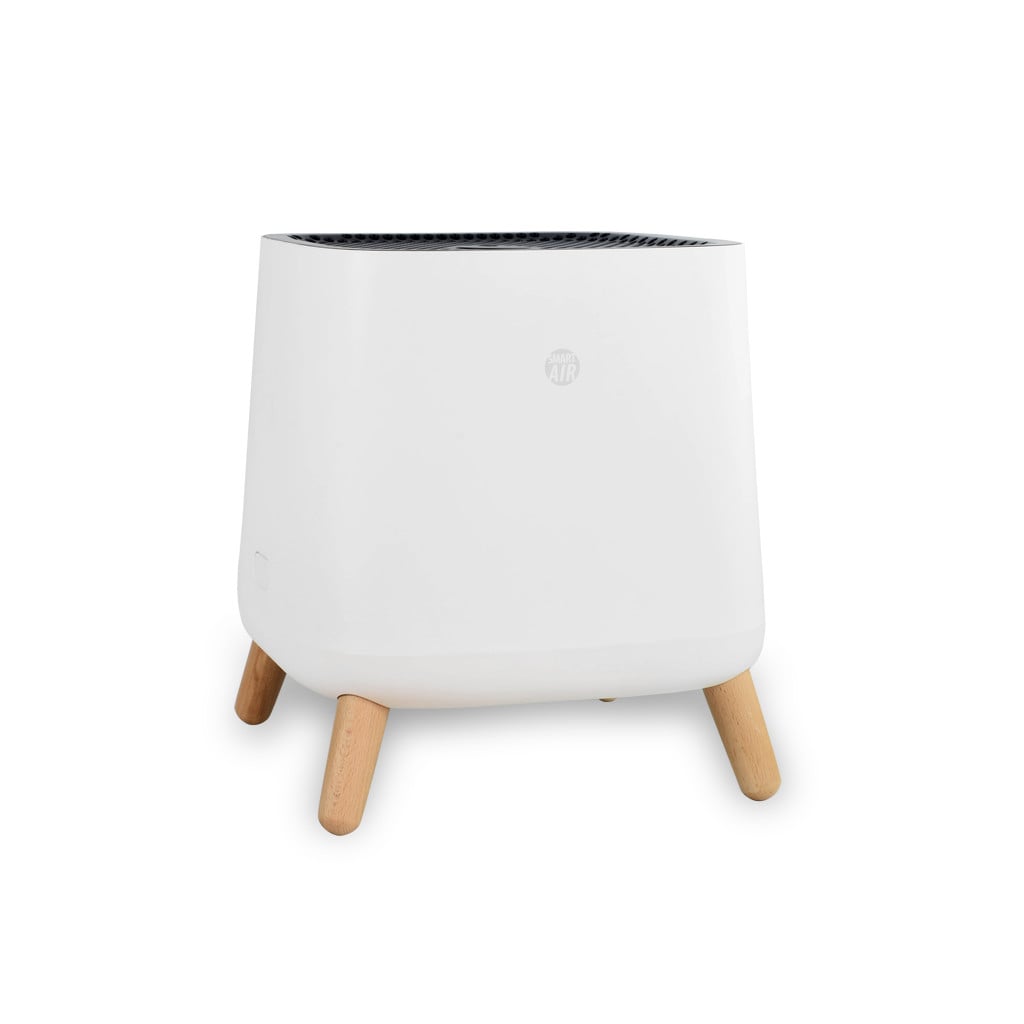
These air purifiers focus on the fundamentals, HEPA filtration and strong airflow without ionisers, ozone, or unnecessary complexity.
Do air purifiers kill COVID-19?
They’re better thought of as removing virus-carrying aerosols from the air, rather than killing viruses outright.
What’s the best air purifier for viruses?
One with HEPA filtration and enough CADR to deliver multiple air changes per hour in your space.
Are ionisers safe to use for virus control?
The EPA advises caution, as some ionising technologies can generate ozone and lack strong real-world evidence.
Is UV worth it in a home air purifier?
UV can work when properly engineered, but in most consumer purifiers it adds little compared to HEPA filtration.
Relevant Articles:


Share